


No stress please! Mechanisms of stress hyporesponsiveness of the maternal brain
- PMID: 17974588
- PMCID: PMC2375601
- DOI: 10.1113/jphysiol.2007.145896
No stress please! Mechanisms of stress hyporesponsiveness of the maternal brain
Abstract
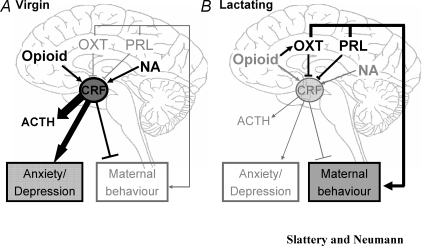
The time around birth is accompanied by behavioural and physiological adaptations of the maternal brain, which ensure reproductive functions, maternal care and the survival of the offspring. In addition, profound neuroendocrine and neurobiological adaptations have been described with respect to behavioural and neuroendocrine stress responsiveness in rodents and human mothers. Thus, the hormonal response of the hypothalamo-pituitary-adrenal (HPA) axis and the response of the sympathetic nervous system to emotional and physical stressors are severely attenuated. Moreover, anxiety-related behaviour and emotional responsiveness to stressful stimuli are reduced with the result of general calmness. These complex adaptations of the maternal brain are likely to be a consequence of an increased activity of brain systems with inhibitory effects on the HPA axis (such as the oxytocin and prolactin systems) and of a reduced activity of excitatory pathways (noradrenaline (norepinephrine), corticotrophin-releasing factor and opioids). Experimental manipulation of these systems using complementary approaches indeed demonstrates their importance in these maternal brain adaptations. Maternal stress adaptations are not only important for the healthy prenatal development of the offspring by preventing excessive glucocorticoid responses and in the promotion of postnatal maternal behaviour, but are also vital for the well-being of the mother and her mental health.
Figures
References
-
- Abou-Saleh MT, Ghubash R, Karim L, Krymski M, Bhai I. Hormonal aspects of postpartum depression. Psychoneuroendocrinology. 1998;23:465–475. - PubMed
-
- Altemus M, Deuster PA, Galliven E, Carter CS, Gold PW. Suppression of hypothalmic-pituitary-adrenal axis responses to stress in lactating women. J Clin Endocrinol Metab. 1995;80:2954–2959. - PubMed
-
- Arborelius L, Owens MJ, Plotsky PM, Nemeroff CB. The role of corticotropin-releasing factor in depression and anxiety disorders. J Endocrinol. 1999;160:1–12. - PubMed
-
- Asher I, Kaplan B, Modai I, Neri A, Valevski A, Weizman A. Mood and hormonal changes during late pregnancy and puerperium. Clin Exp Obstet Gynecol. 1995;22:321–325. - PubMed
Publication types
MeSH terms
Substances
LinkOut - more resources
Full Text Sources
Medical
