


A single dose of nicotine enhances reward responsiveness in nonsmokers: implications for development of dependence
- PMID: 17976537
- PMCID: PMC2441863
- DOI: 10.1016/j.biopsych.2007.09.015
A single dose of nicotine enhances reward responsiveness in nonsmokers: implications for development of dependence
Abstract
Background: Tobacco smoking, driven by the addictive properties of nicotine, is the most prevalent preventable cause of death in the Western world. Accumulated evidence suggests that nicotine may increase appetitive responding for nondrug incentives in the environment.
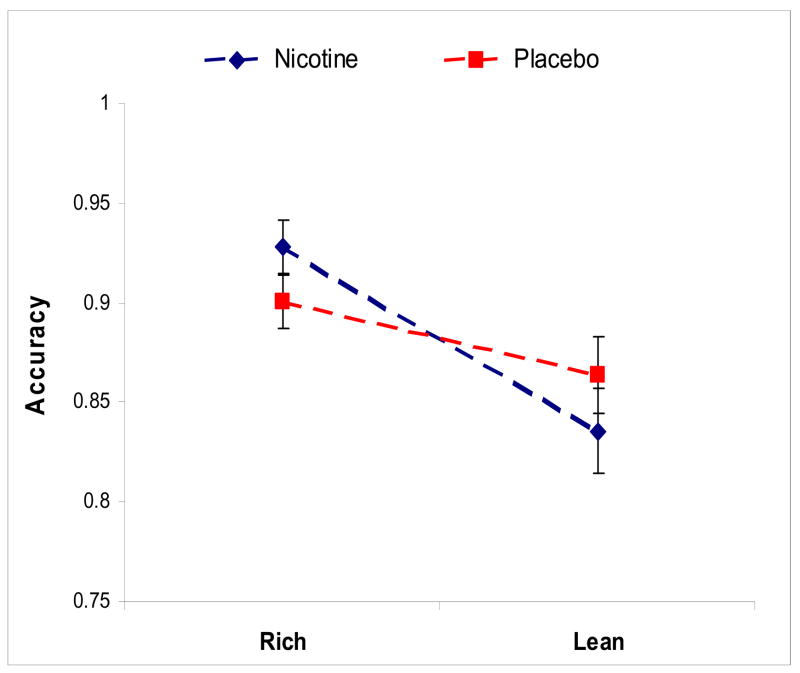
Methods: To test this hypothesis, we conducted a randomized, double-blind, placebo-controlled, crossover study of the effect of a single dose of transdermal nicotine on reward responsiveness in 30 psychiatrically healthy nonsmokers. A novel signal detection task in which correct responses were differentially rewarded in a 3:1 ratio was used to assess the extent to which participants modulated their behavior as a function of reward.
Results: Despite expected adverse effects such as nausea, nicotine significantly increased response bias toward the more frequently rewarded condition, at the expense of accuracy, independent of effects on attention or overall vigilance. Additionally, response bias on placebo was greater in participants who received nicotine in the first session, indicating that an effect of nicotine on reward responsiveness or reward-based learning persisted for at least 1 week.
Conclusions: These findings suggest that a single dose of nicotine enhances response to non-drug-related rewards in the environment, with lasting effects. This effect may contribute to reinforcement of early smoking behavior and development of nicotine dependence.
Trial registration: ClinicalTrials.gov NCT00383747.
Figures



References
-
- Dani JA, Harris RA. Nicotine addiction and comorbidity with alcohol abuse and mental illness. Nat Neurosci. 2005;8(11):1465–70. - PubMed
-
- Kenny PJ, Markou A. Nicotine self-administration acutely activates brain reward systems and induces a long-lasting increase in reward sensitivity. Neuropsychopharmacology. 2006;31(6):1203–11. - PubMed
-
- Epping-Jordan MP, Watkins SS, Koob GF, Markou A. Dramatic decreases in brain reward function during nicotine withdrawal. Nature. 1998;393(6680):76–9. - PubMed
-
- Berridge KC, Robinson TE. What is the role of dopamine in reward: hedonic impact, reward learning, or incentive salience? Brain Res Brain Res Rev. 1998;28(3):309–69. - PubMed
-
- Volkow ND, Fowler JS, Wang GJ, Swanson JM. Dopamine in drug abuse and addiction: results from imaging studies and treatment implications. Mol Psychiatry. 2004;9(6):557–69. - PubMed
Publication types
MeSH terms
Substances
Associated data
Grants and funding
LinkOut - more resources
Full Text Sources
Medical
