Irritable bowel syndrome is more common in women regardless of the menstrual phase: a Rome II-based survey
- PMID: 17982234
- PMCID: PMC2693852
- DOI: 10.3346/jkms.2007.22.5.851
Irritable bowel syndrome is more common in women regardless of the menstrual phase: a Rome II-based survey
Abstract
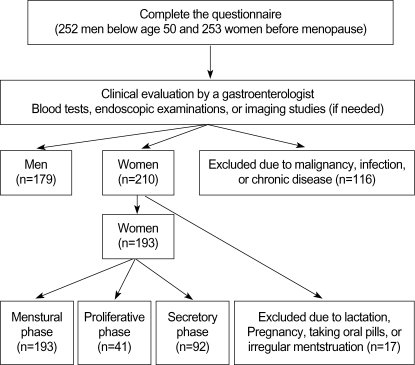
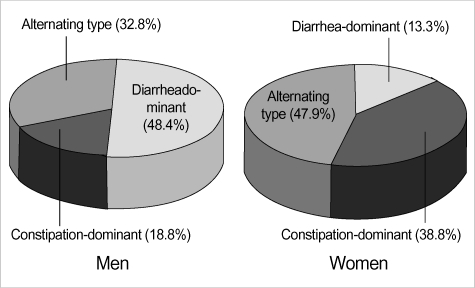
Functional gastrointestinal disorders are more common in women in relation to the fluctuations of female sex hormones. We tried to know the gender-related differences in the prevalence of irritable bowel syndrome and gastrointestinal symptoms according to the menstrual phase. A total of 253 women before menopause and 252 men below age 50 were examined by a gastroenterologist after completing the questionnaire. Blood tests, endoscopic procedures, and imaging studies were done, if needed. Women were subclassified into three groups according to their menstruation period; menstrual phase, proliferative phase, and secretory phase. Finally, 179 men and 193 women were analyzed. Irritable bowel syndrome was more frequently noticed in women than in men (p=0.01). The diarrhea-dominant type was more common in men, while constipation-dominant or alternating types were more common in women (p<0.001). Of 193 women, there was no significant difference in their gastrointestinal symptoms according to their menstrual phase. Regardless of the menstrual phase, gastrointestinal symptoms are more frequent in women. Physicians should consider different symptomatic manifestations between men and women should be considered when evaluating functional gastrointestinal disorders.
Figures
References
-
- Mayer EA, Naliboff B, Lee O, Munakata J, Chang L. Review article: gender-related differences in functional gastrointestinal disorders. Aliment Pharmacol Ther. 1999;13(Suppl 2):65–69. - PubMed
-
- Chang L, Heitkemper MM. Gender differences in irritable bowel syndrome. Gastroenterology. 2002;123:1686–1701. - PubMed
-
- Cho YK, Jung SA, Shim KN, Choi YJ, Kim HS, Lee JS, Kim SE, Kim DY, Yoo K. Relationship between bowel symptom changes and dysmenorrheal in irritable bowel syndrome in women. Korean J Gastrointest Motil. 2003;9:47–52.
-
- Drossman DA, Corazziari E, Talley NJ, editors. ROME II. The Functional Gastrointestinal Disorders. Diagnosis, Pathophysiology and Treatment: A Multinational Consensus. 2nd edn. McLean, VA, USA: Degnon Associates; 2000. Functional bowel disorders and functional abdominal pain.
-
- Triadafilopoulos G, Simms RW, Goldenberg DL. Bowel dysfunction in fibromyalgia syndrome. Dig Dis Sci. 1991;36:59–64. - PubMed
Publication types
MeSH terms
LinkOut - more resources
Full Text Sources