


Transmembrane activator and calcium-modulating cyclophilin ligand interactor mutations in common variable immunodeficiency: clinical and immunologic outcomes in heterozygotes
- PMID: 17983875
- PMCID: PMC2908504
- DOI: 10.1016/j.jaci.2007.10.001
Transmembrane activator and calcium-modulating cyclophilin ligand interactor mutations in common variable immunodeficiency: clinical and immunologic outcomes in heterozygotes
Abstract
Background: Mutations in the gene coding for transmembrane activator and calcium-modulating cyclophilin ligand interactor (TACI) have been identified in common variable immunodeficiency (CVID). Mutations coincided with immunodeficiency in families, suggesting dominant inheritance.
Objective: Because most subjects with CVID have no immunodeficient family members and heterozygous mutations predominate, the role of TACI mutations in sporadic CVID is unclear.
Methods: TACI was sequenced from the genomic DNA of 176 subjects with CVID and family members. B cells of subjects with or without mutations were examined for binding to the ligand, a proliferation inducing ligand (APRIL), and for proliferation and immunoglobulin production after ligand stimulation. Data analysis was performed to assess the clinical relevance of TACI mutations.
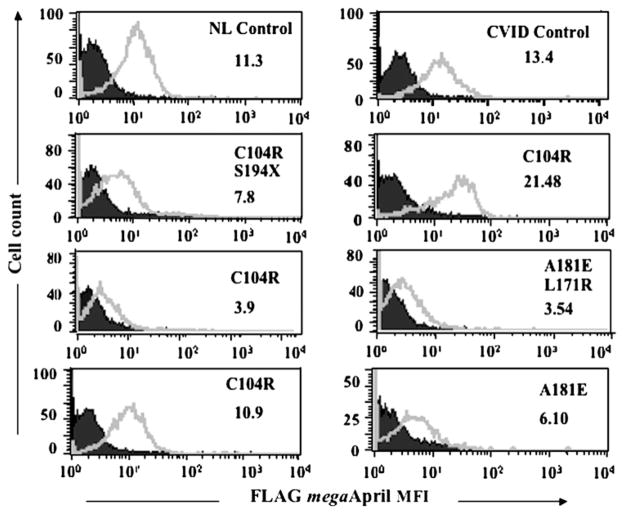
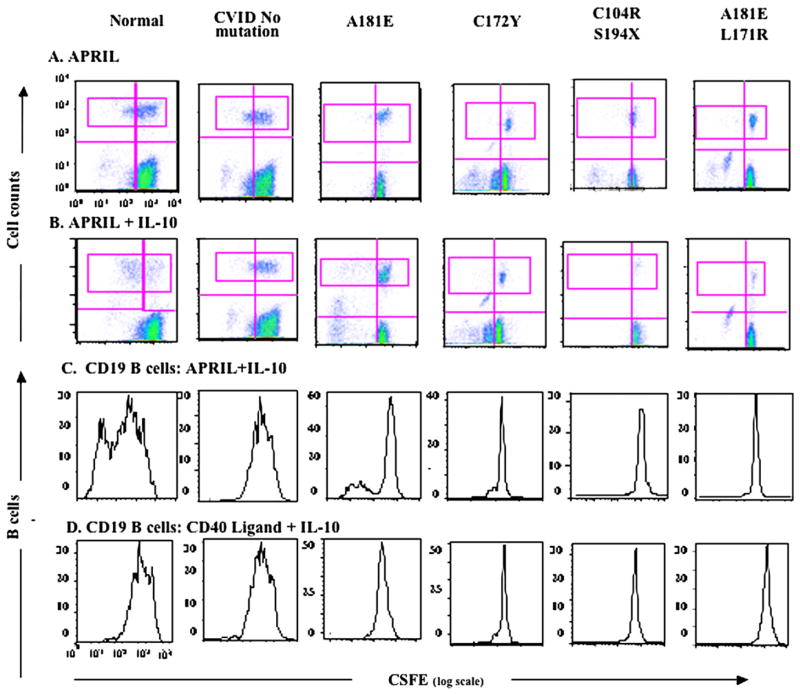
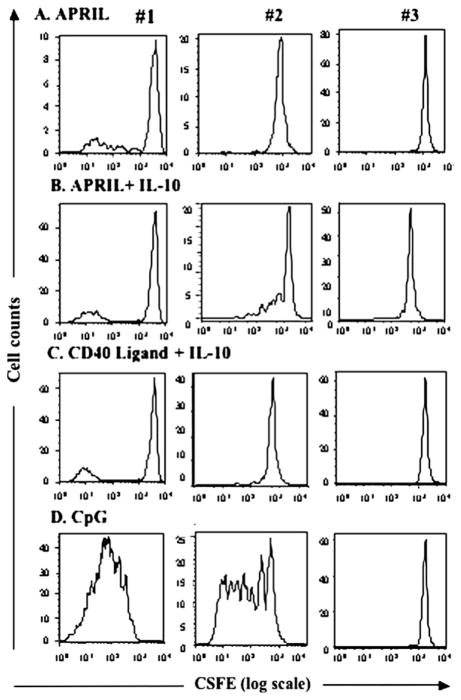
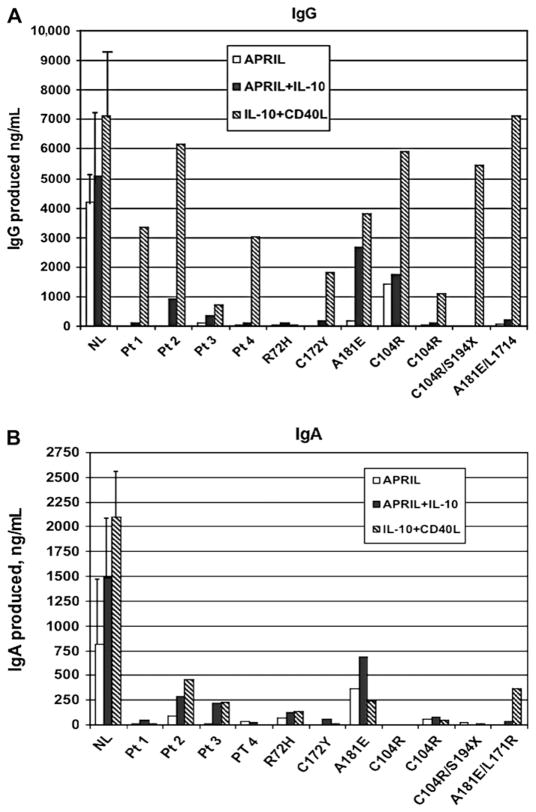
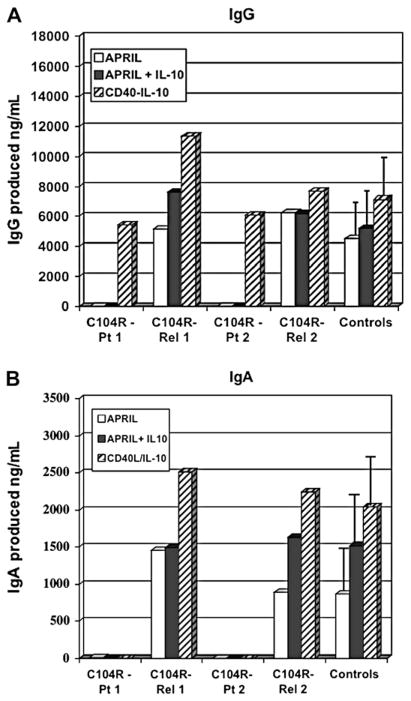
Results: Heterozygous TACI mutations were found in 13 subjects (7.3%). Six with mutations (46%) had episodes of autoimmune thrombocytopenia, in contrast with 12% of 163 subjects without mutations; splenomegaly and splenectomy were significantly increased (P = .012; P = .001.) B cells of some had impaired binding of APRIL and on culture with this ligand were defective in proliferation and immunoglobulin production; however, this was not different from B cells of subjects without mutations. Eight first-degree relatives from 5 families had the same mutations but were not immune-deficient, and their B cells produced normal amounts of IgG and IgA after APRIL stimulation.
Conclusion: Mutations in TACI significantly predispose to autoimmunity and lymphoid hyperplasia in CVID, but additional genetic or environmental factors are required to induce immune deficiency.
Clinical implications: Additional causes of this common immune deficiency syndrome remain to be determined.
Conflict of interest statement
Disclosure of potential conflict of interest: C. Cunningham-Rundles is on advisory boards for OMRIX and Talacris and has received grants/research support from the National Institutes of Health. T. W. Behrens is an employee of Genentech. B. Grimbacher has received grants/research support from DFG, USIDnet, and the European Union. J. Bussel is on advisory boards for Amgen, GlaxoSmithKline, and Baxter; has stock or other equity ownership in Amgen and GlaxoSmithKline; has received grants/research support from Amgen, Biogen-IDEC, Cangene, Genentech, GlaxoSmithKline, and Sysmex; and is on the speakers’ bureau for Baxter. The rest of the authors have declared that they have no conflict of interest.
Figures
References
-
- Conley ME, Notarangelo LD, Etzioni A. Diagnostic criteria for primary immunodeficiencies. Representing PAGID (Pan-American Group for Immunodeficiency) and ESID (European Society for Immunodeficiencies) Clin Immunol. 1999;93:190–7. - PubMed
-
- Cunningham-Rundles C, Bodian C. Common variable immunodeficiency: clinical and immunological features of 248 patients. Clin Immunol. 1999;92:34–48. - PubMed
-
- Cunningham-Rundles C. Common variable immunodeficiency. Curr Allergy Asthma Rep. 2001;1:421–9. - PubMed
-
- Salzer U, Chapel HM, Webster AD, Pan-Hammarstrom Q, Schmitt-Graeff A, Schlesier M, et al. Mutations in TNFRSF13B encoding TACI are associated with common variable immunodeficiency in humans. Nat Genet. 2005;37:820–8. - PubMed
Publication types
MeSH terms
Substances
Grants and funding
LinkOut - more resources
Full Text Sources
Other Literature Sources
Medical
Miscellaneous
