


Prevention of upper aerodigestive tract cancer in zinc-deficient rodents: inefficacy of genetic or pharmacological disruption of COX-2
- PMID: 17985342
- PMCID: PMC2679643
- DOI: 10.1002/ijc.23221
Prevention of upper aerodigestive tract cancer in zinc-deficient rodents: inefficacy of genetic or pharmacological disruption of COX-2
Abstract
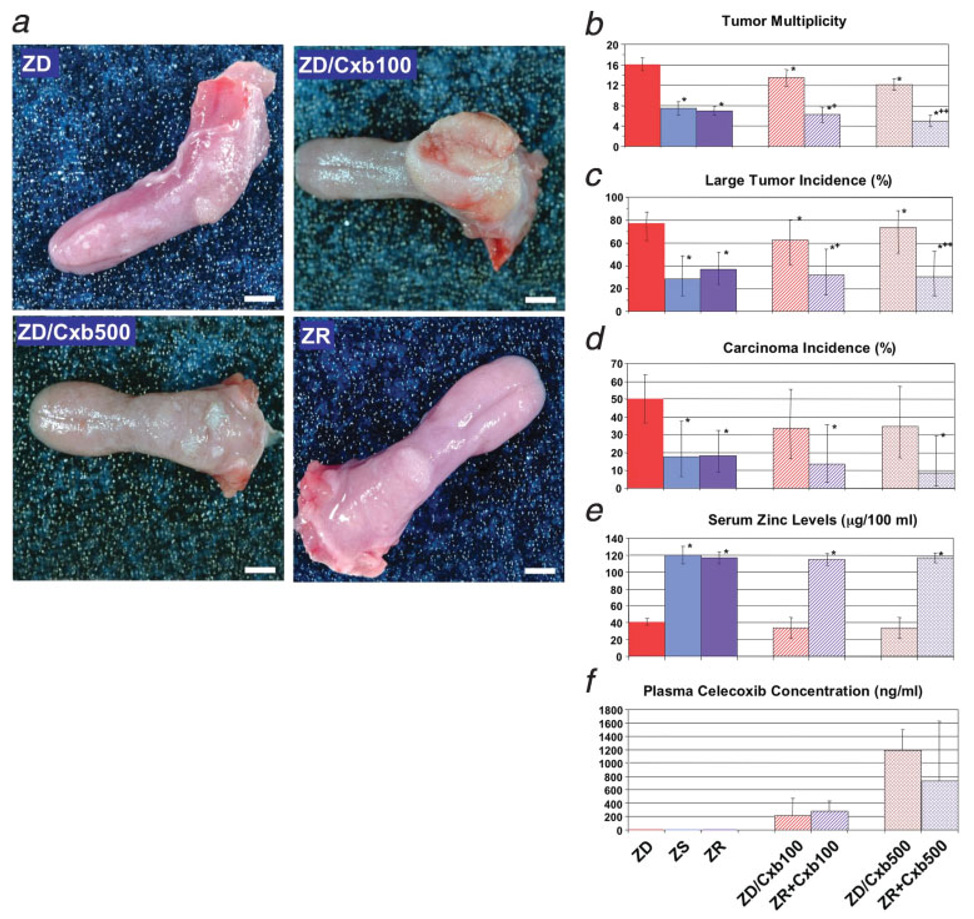
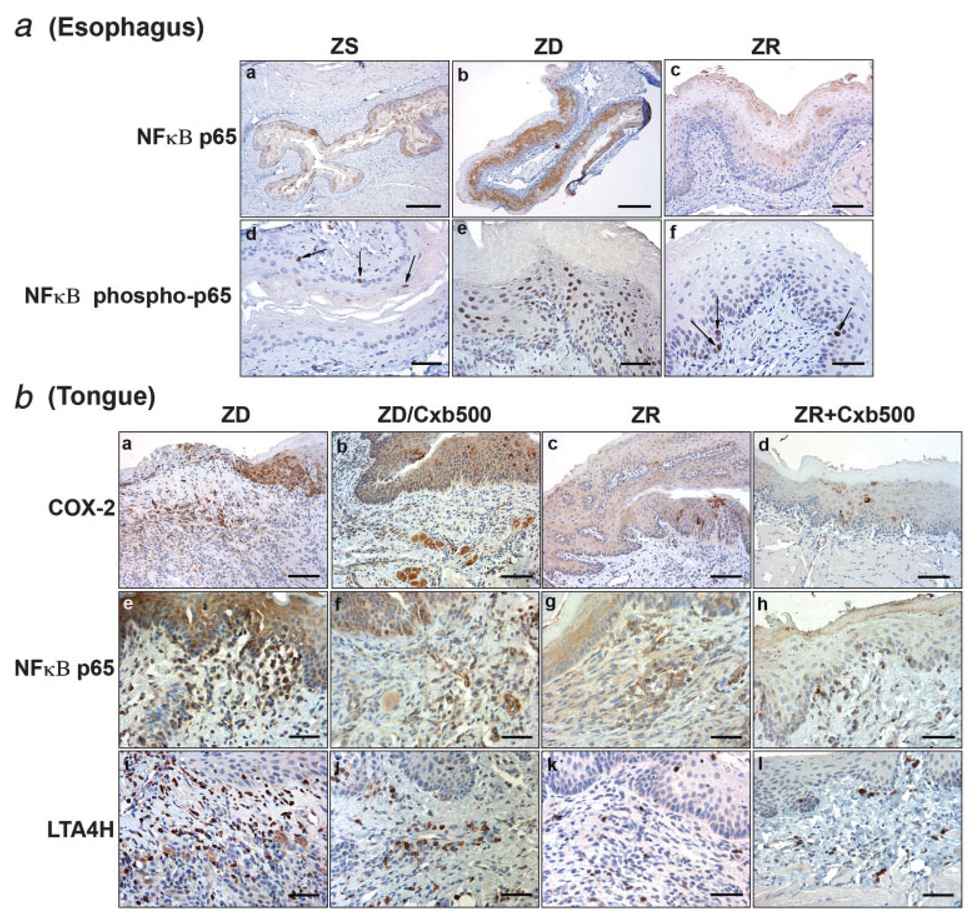
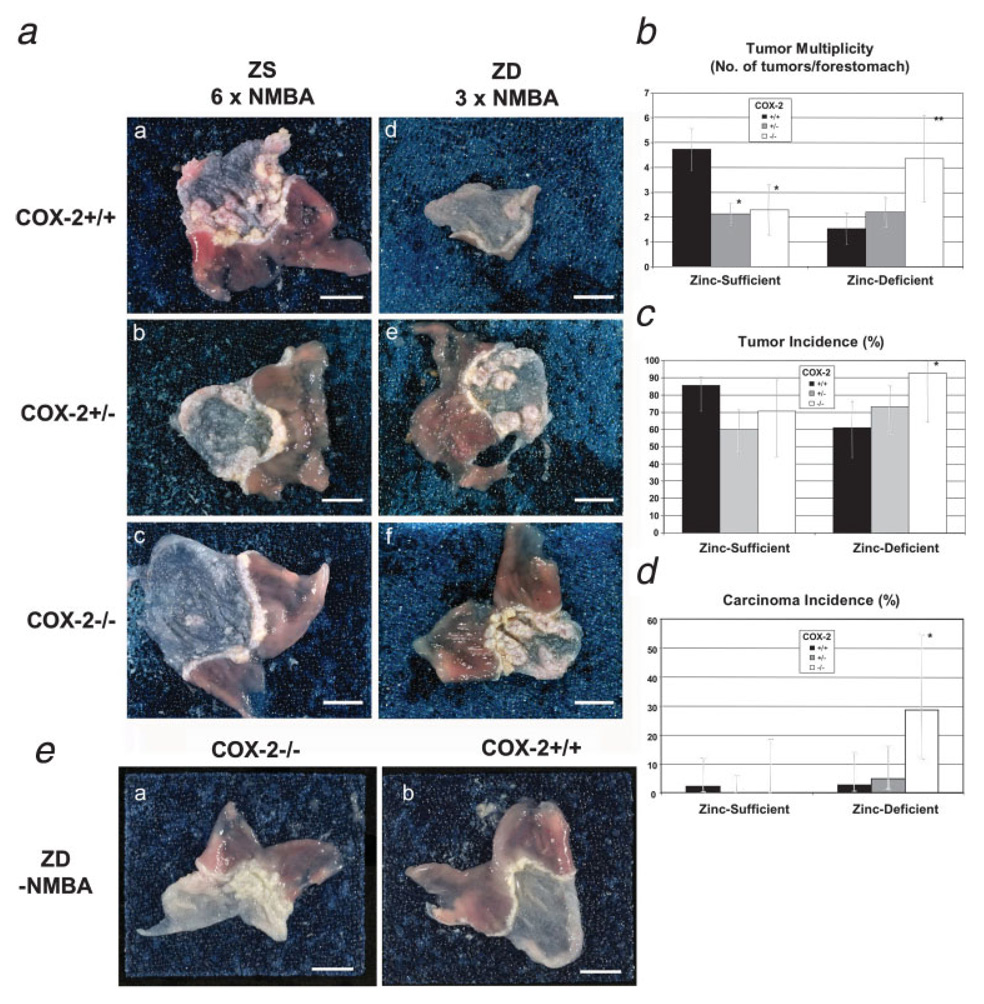
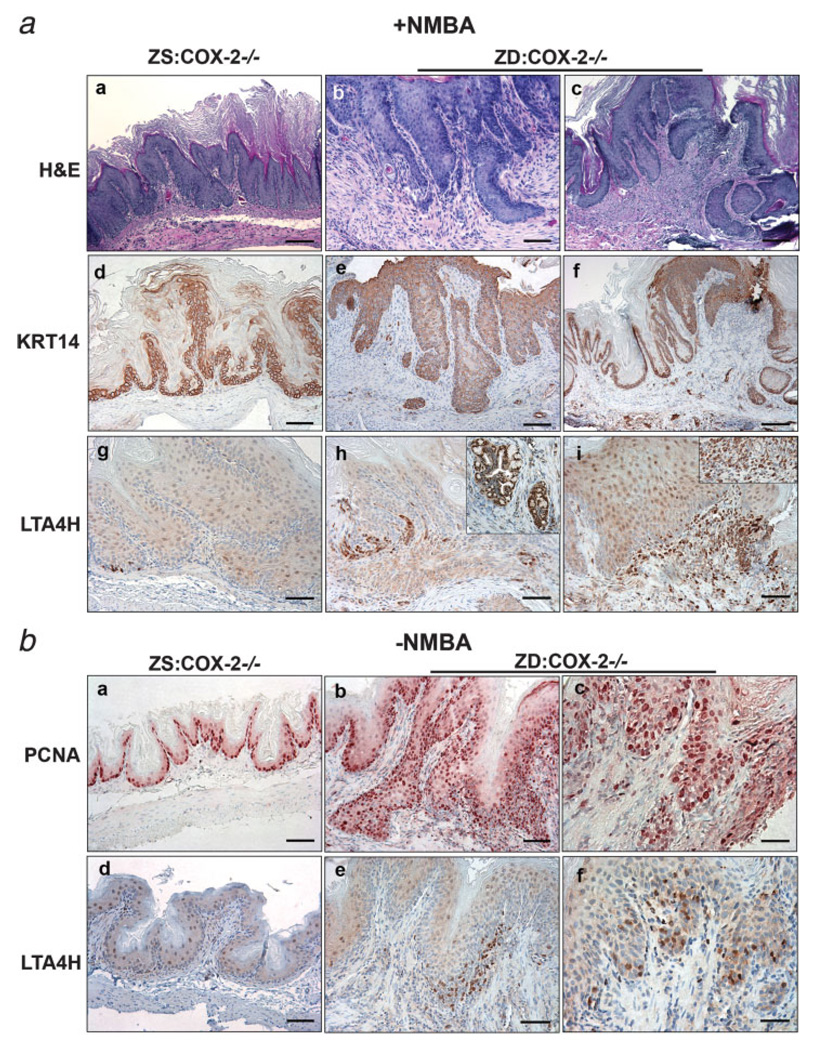
Zinc deficiency in humans is associated with an increased risk of upper aerodigestive tract (UADT) cancer. In rodents, zinc deficiency predisposes to carcinogenesis by causing proliferation and alterations in gene expression. We examined whether in zinc-deficient rodents, targeted disruption of the cyclooxygenase (COX)-2 pathway by the COX-2 selective inhibitor celecoxib or by genetic deletion prevent UADT carcinogenesis. Tongue cancer prevention studies were conducted in zinc-deficient rats previously exposed to a tongue carcinogen by celecoxib treatment with or without zinc replenishment, or by zinc replenishment alone. The ability of genetic COX-2 deletion to protect against chemically-induced forestomach tumorigenesis was examined in mice on zinc-deficient versus zinc-sufficient diet. The expression of 3 predictive biomarkers COX-2, nuclear factor (NF)-kappa B p65 and leukotriene A(4) hydrolase (LTA(4)H) was examined by immunohistochemistry. In zinc-deficient rats, celecoxib without zinc replenishment reduced lingual tumor multiplicity but not progression to malignancy. Celecoxib with zinc replenishment or zinc replenishment alone significantly lowered lingual squamous cell carcinoma incidence, as well as tumor multiplicity. Celecoxib alone reduced overexpression of the 3 biomarkers in tumors slightly, compared with intervention with zinc replenishment. Instead of being protected, zinc-deficient COX-2 null mice developed significantly greater tumor multiplicity and forestomach carcinoma incidence than wild-type controls. Additionally, zinc-deficient COX-2-/- forestomachs displayed strong LTA(4)H immunostaining, indicating activation of an alternative pathway under zinc deficiency when the COX-2 pathway is blocked. Thus, targeting only the COX-2 pathway in zinc-deficient animals did not prevent UADT carcinogenesis. Our data suggest zinc supplementation should be more thoroughly explored in human prevention clinical trials for UADT cancer.
(c) 2007 Wiley-Liss, Inc.
Figures


References
-
- Parkin DM, Bray F, Ferlay J, Pisani P. Global cancer statistics, 2002. CA Cancer J Clin. 2005;55:74–108. - PubMed
-
- Moore SR, Johnson NW, Pierce AM, Wilson DF. The epidemiology of tongue cancer: a review of global incidence. Oral Dis. 2000;6:75–84. - PubMed
-
- Makuuchi H, Machimura T, Shimada H, Mizutani K, Chino O, Kise Y, Nishi T, Tanaka H, Mitomi T, Horiuchi M, Sakai M, Gotoh J, et al. Endoscopic screening for esophageal cancer in 788 patients with head and neck cancers. Tokai J Exp Clin Med. 1996;21:139–145. - PubMed
-
- Slaughter DP, Southwick HW, Smejkal W. Field cancerization in oral stratified squamous epithelium; clinical implications of multicentric origin. Cancer. 1953;6:963–968. - PubMed
-
- Doerr TD, Prasad AS, Marks SC, Beck FW, Shamsa FH, Penny HS, Mathog RH. Zinc deficiency in head and neck cancer patients. J Am Coll Nutr. 1997;16:418–422. - PubMed
Publication types
MeSH terms
Substances
Grants and funding
LinkOut - more resources
Full Text Sources
Medical
Molecular Biology Databases
Research Materials
Miscellaneous
