


Investigating the effect of intra-operative infiltration with local anaesthesia on the development of chronic postoperative pain after inguinal hernia repair. A randomized placebo controlled triple blinded and group sequential study design [NCT00484731]
- PMID: 17986324
- PMCID: PMC2198905
- DOI: 10.1186/1471-2482-7-22
Investigating the effect of intra-operative infiltration with local anaesthesia on the development of chronic postoperative pain after inguinal hernia repair. A randomized placebo controlled triple blinded and group sequential study design [NCT00484731]
Abstract
Background: Inguinal hernia repair is one of the most frequently performed procedures in Switzerland (15'000/year). The most common complication postoperatively is development of chronic pain in up to 30% of all patients irrespective of the operative technique.
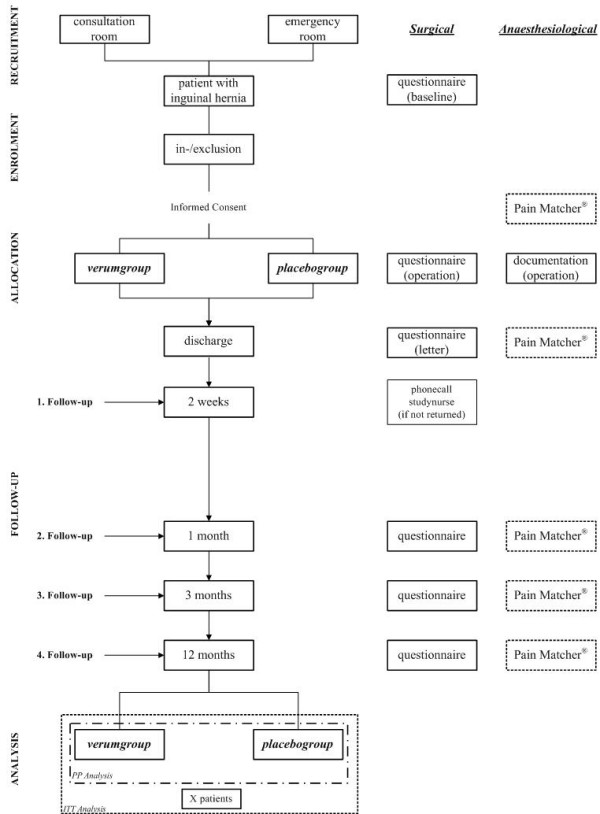
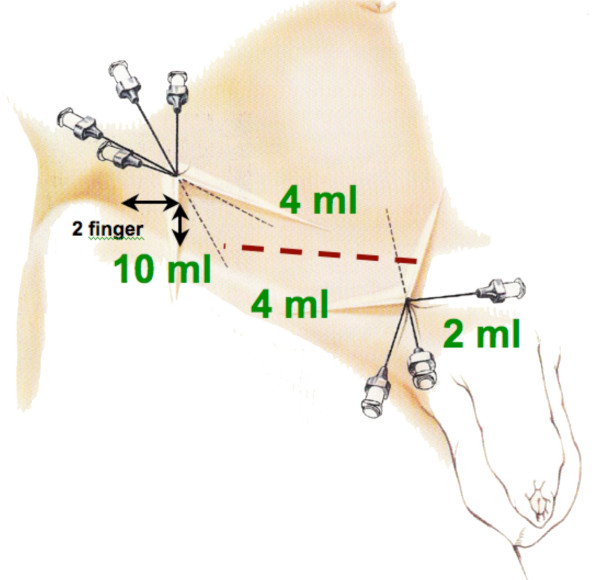
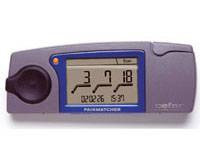
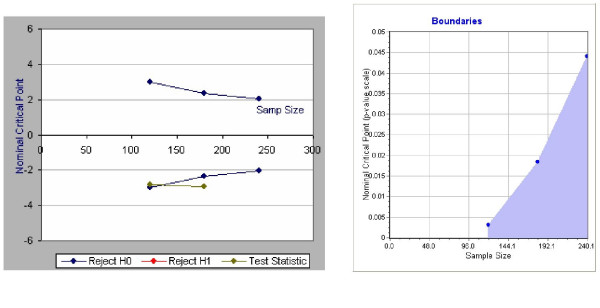
Methods/design: 264 patients scheduled for an inguinal hernia repair using one of three procedures (Lichtenstein, Barwell and TEP = total extraperitoneal hernioplasty) are being randomly allocated intra-operatively into two groups. Group I patients receive a local injection of 20 ml Carbostesin 0.25% at the end of the operation according to a standardised procedure. Group II patients get a 20 ml placebo (0.9% Saline) injection. We use pre-filled identically looking syringes for blinded injection, i.e. the patient, the surgeon and the examinator who performs the postoperative clinical follow-ups remain unaware of group allocation. The primary outcome of the study is the occurrence of developing chronic pain (defined as persistent pain at 3 months FU) measured by VAS and Pain Matcher device (Cefar Medical AB, Lund, Sweden). The study started on July 2006. In addition to a sample size re-evaluation three interim analyses are planned after 120, 180 and 240 patients had finished their 3-months follow-up to allow for early study termination.
Discussion: Using a group sequential study design the minimum number of patients are enrolled to reach a valid conclusion before the end of the study. To limit subjectivity, both a VAS and the Pain Matcher device are used for the evaluation of pain. This allows us also to compare these two methods and further assess the use of Pain Matcher in clinical routine. The occurrence of chronic pain after inguinal hernia repair has been in focus of several clinical studies but the reduction of it has been rarely investigated. We hope to significantly reduce the occurrence of this complication with our investigated intervention.
Trial registration: Our trial has been registered at ClinicalTrials.gov. The trial registration number is: [NCT00484731].
Figures
References
-
- Metzger J. [Meshes for inguinal hernia repair] Schweiz Rundsch Med Prax. 2003;92:1683–1685. - PubMed
Publication types
MeSH terms
Substances
Associated data
LinkOut - more resources
Full Text Sources
Medical
