


The island rule: made to be broken?
- PMID: 17986433
- PMCID: PMC2596178
- DOI: 10.1098/rspb.2007.1056
The island rule: made to be broken?
Abstract
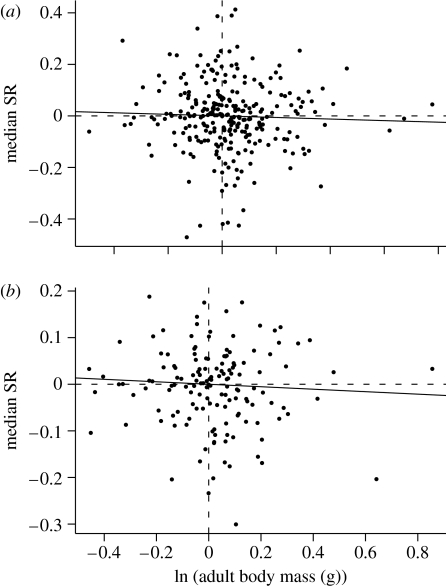
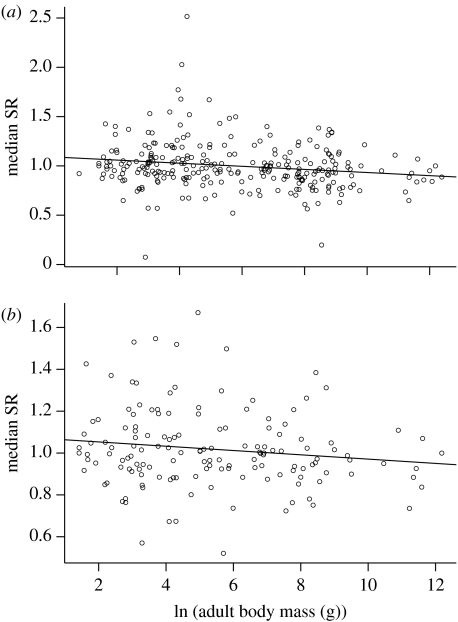
The island rule is a hypothesis whereby small mammals evolve larger size on islands while large insular mammals dwarf. The rule is believed to emanate from small mammals growing larger to control more resources and enhance metabolic efficiency, while large mammals evolve smaller size to reduce resource requirements and increase reproductive output. We show that there is no evidence for the existence of the island rule when phylogenetic comparative methods are applied to a large, high-quality dataset. Rather, there are just a few clade-specific patterns: carnivores; heteromyid rodents; and artiodactyls typically evolve smaller size on islands whereas murid rodents usually grow larger. The island rule is probably an artefact of comparing distantly related groups showing clade-specific responses to insularity. Instead of a rule, size evolution on islands is likely to be governed by the biotic and abiotic characteristics of different islands, the biology of the species in question and contingency.
Figures
References
-
- Adler G.H, Levins R. The island syndrome in rodent populations. Q. Rev. Biol. 1994;69:473–490. doi:10.1086/418744 - DOI - PubMed
-
- Angerbjörn A. The evolution of body size in mammals on islands: some comments. Am. Nat. 1985;125:304–309. doi:10.1086/284342 - DOI
-
- Benjamini Y, Yekutieli D. The control of the false discovery rate in multiple testing under dependency. Ann. Stat. 2001;29:1165–1188. doi:10.1214/aos/1013699998 - DOI
-
- Biknevicius A.R, McFarlane D.A, McPhee R.D.E. Body size in Amblyrhiza inundata (Rodentia: Caviomorpha), an extinct megafaunal rodent from the Anguilla Bank, West Indies: estimates and implications. Am. Mus. Novit. 1993;3079:1–25.
-
- Bininda-Emonds O.R.P, et al. The delayed rise of present-day mammals. Nature. 2007;446:507–512. doi:10.1038/nature05634 - DOI - PubMed
Publication types
MeSH terms
LinkOut - more resources
Full Text Sources
