


Austro-Asiatic tribes of Northeast India provide hitherto missing genetic link between South and Southeast Asia
- PMID: 17989774
- PMCID: PMC2065843
- DOI: 10.1371/journal.pone.0001141
Austro-Asiatic tribes of Northeast India provide hitherto missing genetic link between South and Southeast Asia
Abstract
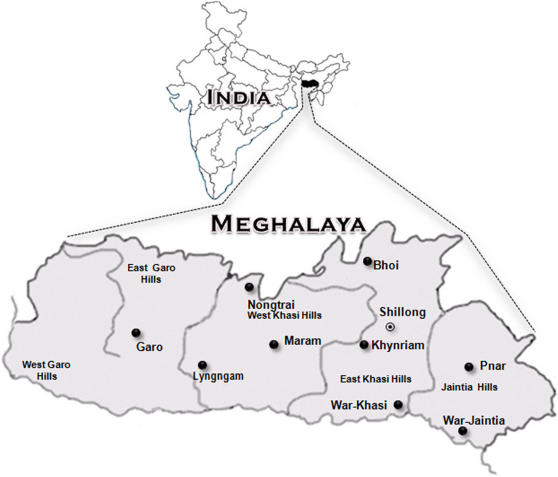
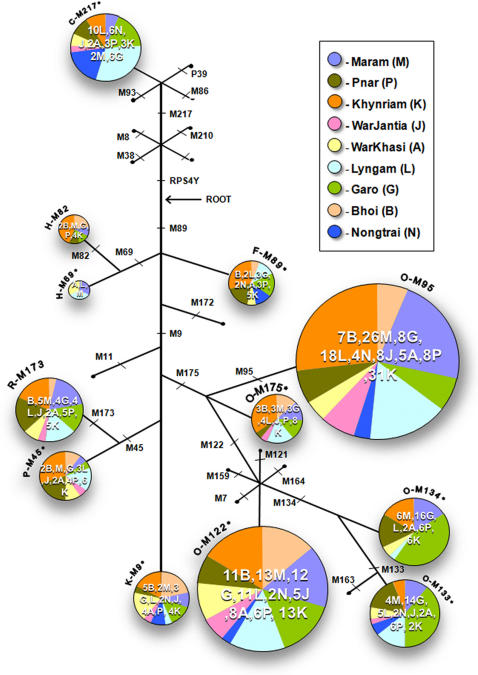
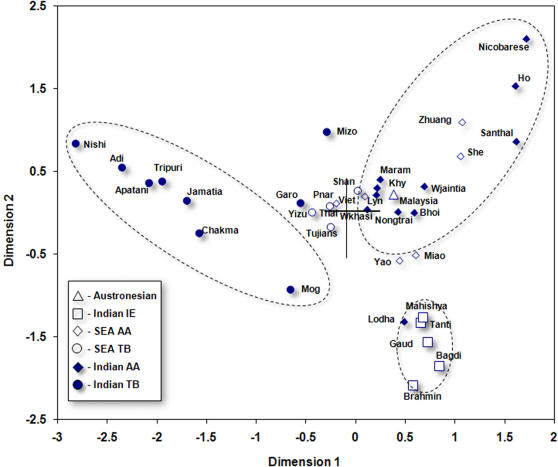
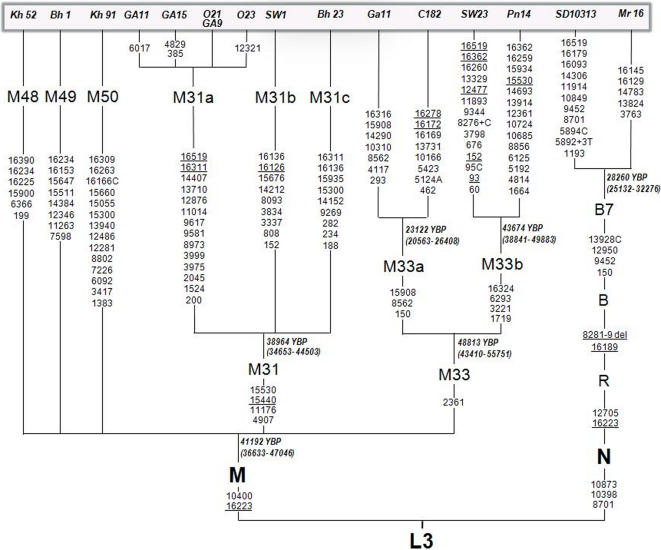
Northeast India, the only region which currently forms a land bridge between the Indian subcontinent and Southeast Asia, has been proposed as an important corridor for the initial peopling of East Asia. Given that the Austro-Asiatic linguistic family is considered to be the oldest and spoken by certain tribes in India, Northeast India and entire Southeast Asia, we expect that populations of this family from Northeast India should provide the signatures of genetic link between Indian and Southeast Asian populations. In order to test this hypothesis, we analyzed mtDNA and Y-Chromosome SNP and STR data of the eight groups of the Austro-Asiatic Khasi from Northeast India and the neighboring Garo and compared with that of other relevant Asian populations. The results suggest that the Austro-Asiatic Khasi tribes of Northeast India represent a genetic continuity between the populations of South and Southeast Asia, thereby advocating that northeast India could have been a major corridor for the movement of populations from India to East/Southeast Asia.
Conflict of interest statement
Figures
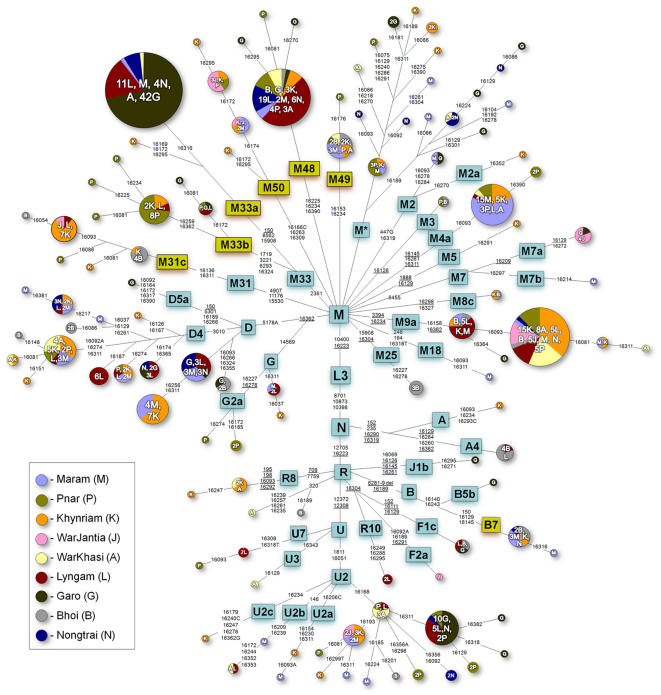
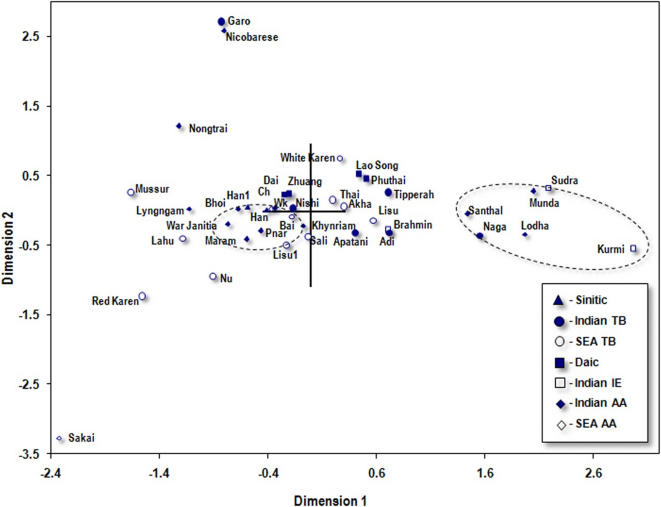
References
-
- Cavalli-Sforza LL, Menozzi P, Piazza A. Princeton, NJ: University Press; 1994. The history and geography of human genes.
-
- Jin L, Su B. Natives or immigrants: modern human origin in East Asia. Nat Rev Genet. 2000;1:126–133. - PubMed
-
- Thangaraj K, Chaubey G, Kivisild T, Reddy AG, Singh VK, et al. Reconstructing the origin of Andaman Islanders. Science. 2005;308:996. - PubMed
-
- Macaulay V, Hill C, Achilli A, Rengo C, Clarke D, et al. Single, rapid coastal settlement of Asia revealed by analysis of complete mitochondrial genomes. Science. 2005;308:1034–1036. - PubMed
-
- Kumar V, Reddy BM. Status of Austro-Asiatic groups in the peopling of India: An exploratory study based on the available prehistoric, Linguistic and Bioligcal evidences. J Biosci. 2003;28:507–522. - PubMed
Publication types
MeSH terms
Substances
LinkOut - more resources
Full Text Sources
