


Review
doi: 10.1007/s11894-007-0047-7.
Commensal bacteria and epithelial cross talk in the developing intestine
Affiliations
- PMID: 17991339
- PMCID: PMC3208513
- DOI: 10.1007/s11894-007-0047-7
Item in Clipboard
Review
Commensal bacteria and epithelial cross talk in the developing intestine
Curr Gastroenterol Rep.
2007 Oct.
Abstract
Indigenous intestinal microbes have co-evolved with the intestinal immune system to form a symbiotic ecosystem. In the postnatal period, intestinal microbes provide the developing gut with stimuli that are necessary for healthy maturation of the intestinal immune system. Cross talk between the host and commensal microbes is an essential component of gut homeostasis mechanisms also in later life. During recent years, innovative research has shed light on the molecular mechanisms of these interactions.
Figures
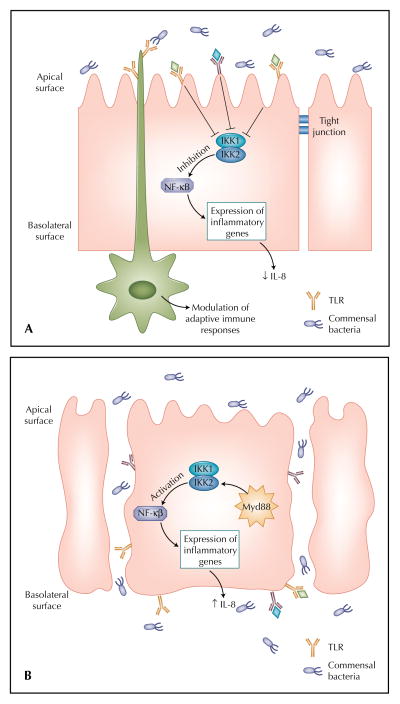
Recognition of microbes in the intestinal mucosa. When the intestinal mucosal barrier is intact (A), bacteria come into contact with the epithelial cell solely on the apical membrane. The expression of Toll-like receptors (TLRs) on the apical surface is sparse, and TLR ligation results in inhibition of the proinflammatory nuclear factor kappa B (NF-κB) pathway. Dendritic cells sample intestinal contents by opening tight junctions and extending dendrites expressing TLRs to the gut lumen. When the integrity of the epithelium is compromised by immaturity or inflammation (B), bacteria translocate within and between enterocytes and bind to TLRs on the basolateral surface of the epithelial cells. An inflammatory immune response is launched via the NF-κB pathway. IL—interleukin.
References
-
- Rautava S, Kalliomaki M, Isolauri E. New therapeutic strategy for combating the increasing burden of allergic disease: Probiotics-A Nutrition, Allergy, Mucosal Immunology and Intestinal Microbiota (NAMI) Research Group report. J Allergy Clin Immunol. 2005;116:31–37. - PubMed
-
- Schnare M, Barton GM, Holt AC, et al. Toll-like receptors control activation of adaptive immune responses. Nat Immunol. 2001;2:947–950. - PubMed
-
- Kaisho T, Akira S. Toll-like receptor function and signaling. J Allergy Clin Immunol. 2006;117:979–987. - PubMed
-
- Akira S, Uematsu S, Takeuchi O. Pathogen recognition and innate immunity. Cell. 2006;124:783–801. - PubMed
Publication types
MeSH terms
Grants and funding
LinkOut - more resources
Full Text Sources