. 2008 Feb;53(3):554-65.
doi: 10.1111/j.1365-313X.2007.03364.x. Epub 2007 Nov 7.

Reactive oxygen species mediate Na+-induced SOS1 mRNA stability in Arabidopsis

Affiliations

Reactive oxygen species mediate Na+-induced SOS1 mRNA stability in Arabidopsis

Jung-Sung Chung et al. Plant J. 2008 Feb.

Abstract

Salt Overly Sensitive 1 (SOS1), a plasma membrane Na+/H+ antiporter in Arabidopsis, is a salt tolerance determinant crucial for the maintenance of ion homeostasis in saline stress conditions. SOS1 mRNA is unstable at normal growth conditions, but its stability is substantially increased under salt stress and other ionic and dehydration stresses. In addition, H2O2 treatment increases the stability of SOS1 mRNA. SOS1 mRNA is inherently unstable and rapidly degraded with a half-life of approximately 10 min. Rapid decay of SOS1 mRNA requires new protein synthesis. Stress-induced SOS1 mRNA stability is mediated by reactive oxygen species (ROS). NADPH oxidase is also involved in the upregulation of SOS1 mRNA stability, presumably through the control of extracellular ROS production. The cis-element required for SOS1 mRNA instability resides in the 500-bp region within the 2.2 kb at the 3' end of the SOS1 mRNA. Furthermore, mutations in the SOS1 gene render sos1 mutants more tolerant to paraquat, a non-selective herbicide causing oxidative stress, indicating that SOS1 plays negative roles in tolerance of oxidative stress. A hypothetical model for the signaling pathway involving SOS1-mediated pH changes, NADPH oxidase activation, apoplastic ROS production and downstream signaling transduction is proposed, and the biological significance of ROS-mediated induction of SOS1 mRNA stability is discussed.


Figures
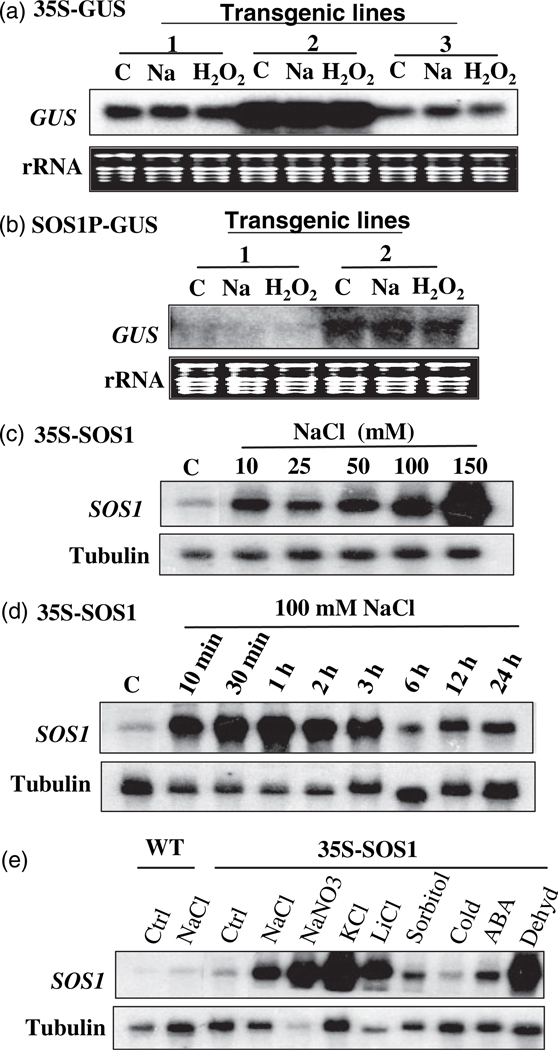
Figure 1
Figure 1. Stability of SOS1 mRNA is regulated by abiotic stresses
(a) Northern blot detecting the transcripts of the GUS gene under the control of the 35S promoter. Three independent transgenic lines were used. C, control; Na, 150 mm NaCl treatment for 5 h; H2O2, 10 mm H2O2 treatment for 1 h. (b) Northern blot detecting the transcripts of the GUS gene under the control of the SOS1 promoter. Two independent transgenic lines were used. C, control; Na, 150 mm NaCl treatment for 5 h; H2O2, 10 mm H2O2 treatment for 1 h. (c) Induction of stability of SOS1 mRNA by NaCl at different concentrations in 35S:SOS1 transgenic plants. (d) Time course of induction of stability of SOS1 mRNA by NaCl in 35S:SOS1 transgenic plants. (e) Northern blotting of SOS1 transcripts in wild-type and 35S:SOS1 transgenic plants after different treatments. Salt treatments were done by treating the seedlings with 150 mm salt in 1/2 MS liquid medium for 5 h. Sorbitol: 300 mm sorbitol for 5 h; Cold, 0°C for 24 h; ABA, 100 µm ABA for 3 h; Dehyd, dehydration by drying seedlings on a filter paper for 15 min. Tubulin and rRNA were used as loading controls.
Figure 2
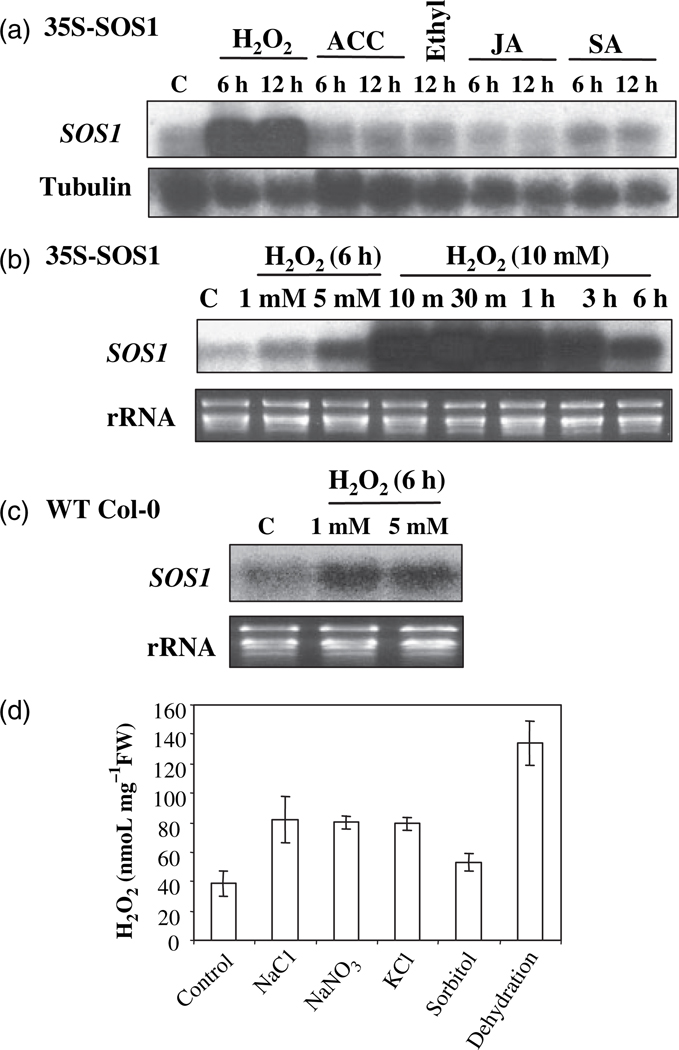
Figure 2. Stability of SOS1 mRNA is enhanced by H2O2 treatment
(a) SOS1 transcript levels in 35S:SOS1 transgenic plants after treatment with H2O2 or plant growth regulators. H2O2, 10 mm H2O2; ACC, 10 µm 1-aminocyclopropane-1-carboxylic acid (ACC); Ethylene, 100 µl l−1 ethylene gas; JA, 100 µm methyl jasmonate; SA, 0.3 mm salicylic acid. (b) The H2O2-induced stability of SOS1 mRNA is concentration dependent and the induction is rapid. SOS1 transcripts were detected in the 35S:SOS1 transgenic plants. (c) The native SOS1 transcript level is also increased by H2O2 treatments. (d) Salt and dehydration stress treatments promote the production of ROS in Arabidopsis seedlings. The stress treatments are the same as stated in Figure 1e.
Figure 3
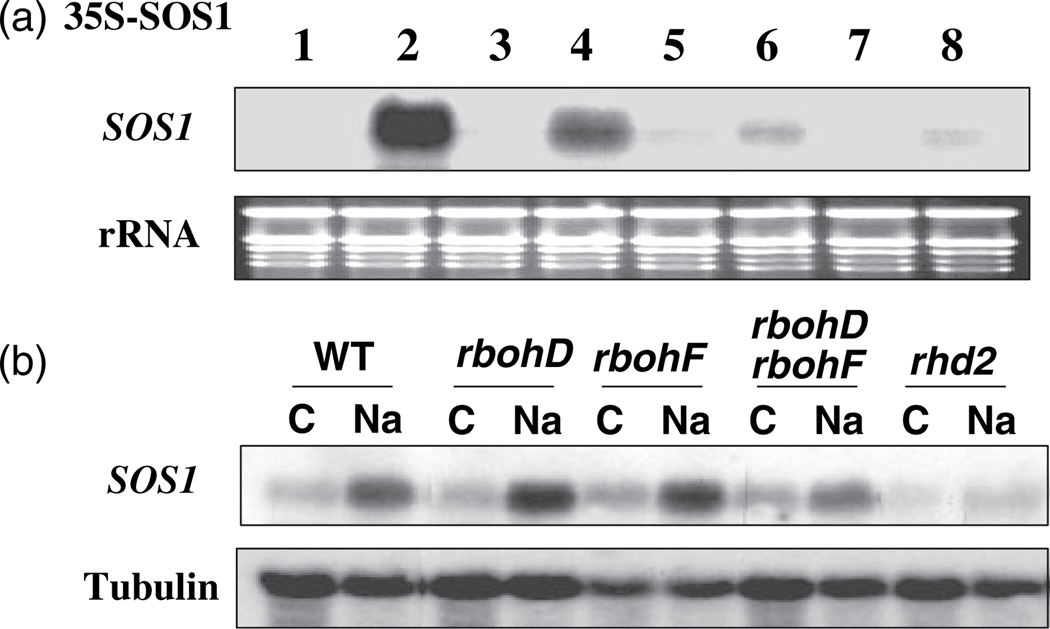
Figure 3. Salt-induced accumulation of SOS1 mRNA is mediated by ROS and dependent on NADPH oxidase activity
(a) Pharmaceutical study. The SOS1 transcripts were detected in the 35S:SOS1 transgenic plants. The treatments are: 1, Control; 2, 150 mm NaCl for 1 h; 3, 100 µm diphenylene iodonium (DPI) for 3 h; 4, 100 µm DPI for 2 h followed by 150 mm NaCl with DPI for 1 h; 5, 15 mm DMTU for 3 h; 6, 15 mm DMTU for 2 h followed by 150 mm NaCl with DMTU for 1 h; 7, 1 mm DF for 3 h; 8, 1 mm DF for 2 h followed by 150 mm NaCl with DF for 1 h. (b) Accumulation of native SOS1 transcripts in response to NaCl treatment in wild type and mutants defective in NADPH oxidases. C, control; Na, 200 mm NaCl for 5 h.
Figure 4
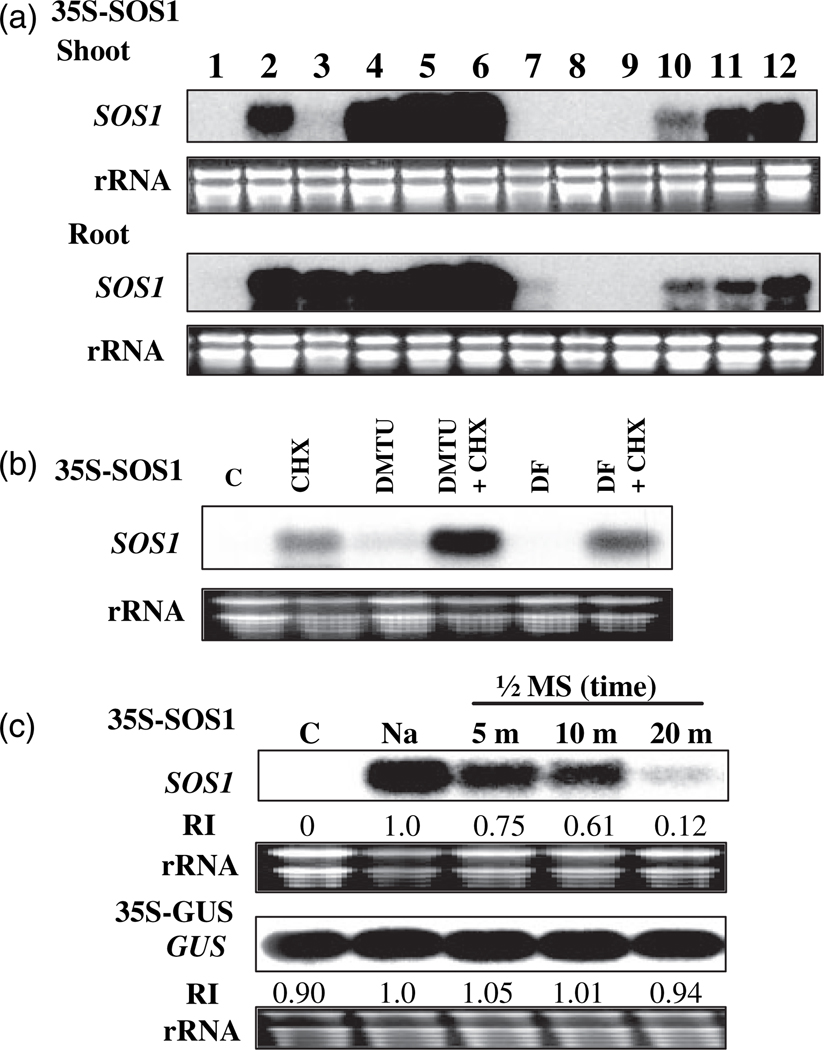
Figure 4. SOS1 mRNA decay is rapid and requires new protein synthesis Cycloheximide (CHX) was used to inhibit protein translation
(a) SOS1 mRNA stability in shoot and root is induced by CHX treatments. 1, control; 2. 200 mm NaCl for 5 h; 3. CHX 100 µm for 1 h; 4, CHX 100 µm for 5 h; 5, CHX 100 µm for 1 h followed by 200 mm NaCl for 5 h; 6, CHX 100 µm for 1 h followed by 200 mm NaCl with 100 µm CHX for 5 h; 7, 200 mm NaCl for 5 h followed by 1/2 MS salt solution for 2 h; 8, 200 mm NaCl for 5 h followed by 1/2 MS salt solution for 12 h; 9, 200 mm NaCl for 5 h followed by 1/2 MS salt solution for 24 h; 10, 200 mm NaCl for 5 h followed by 100 µm CHX for 2 h; 11, 200 mm NaCl for 5 h followed by 100 µm CHX for 12 h; 12, 200 mm NaCl for 5 h followed by 100 µm CHX for 24 h. (b) Cycloheximide-induced stability of SOS1 mRNA is not due to elicited production of reactive oxygen species. C, control; CHX, CHX 100 µm for 1 h; DMTU, 15 mm DMTU for 3 h; DMTU+CHX, 15 mm DMTU for 2 h followed by 100 µm CHX with DMTU for 1 h; DF, 1 mm DF for 3 h; DF+CHX, 1 mm DF for 2 h followed by 100 µm CHX with DF for 1 h. (c) Northern blotting showing rapid decay of SOS1 mRNA. Ten-day-old 35S:SOS1 and 35S:GUS transgenic seedlings were treated with 200 mm NaCl for 5 h (indicated as Na) and then transferred to 1/2 MS liquid medium. Seedlings were harvested at indicated time points for RNA isolation. C, control; RI, relative signal intensity. rRNA was used as a loading control.
Figure 5
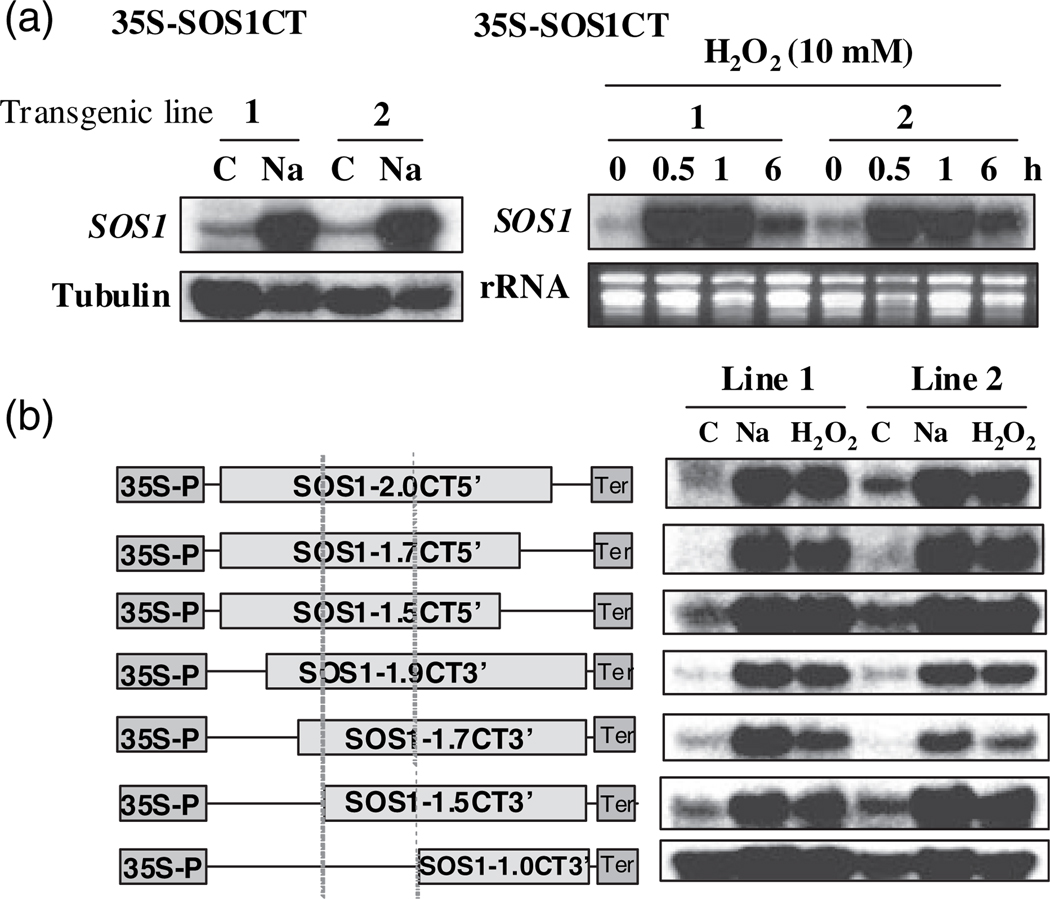
Figure 5. Identification of the cis-element required for the regulation of the stability of SOS1 mRNA
(a) The cis-element is located in the 2.2-kb region encoding the C-terminal cytosolic portion of SOS1 protein. C, control; Na, 200 mm NaCl treatment for 5 h. Tubulin and rRNA were used as loading controls. (b) The approximate 500-bp sequence within the 2.2 kb is required for instability of SOS1 mRNA. Deletion constructs of the 2.2 kb (left panel) were made and transgenic plants were obtained as described in Experimental procedures. Two independent T2 transgenic lines were used to detect the mRNA level in the transgenic plants (right panel). Vertical dotted lines show the sequence region (approximately 500 bp) required for SOS1 mRNA instability. C, control; Na, 200 mm NaCl treatment for 5 h; H2O2, 10 mm H2O2 treatment for 1 h. rRNA (as a loading control) is not shown.
Figure 6
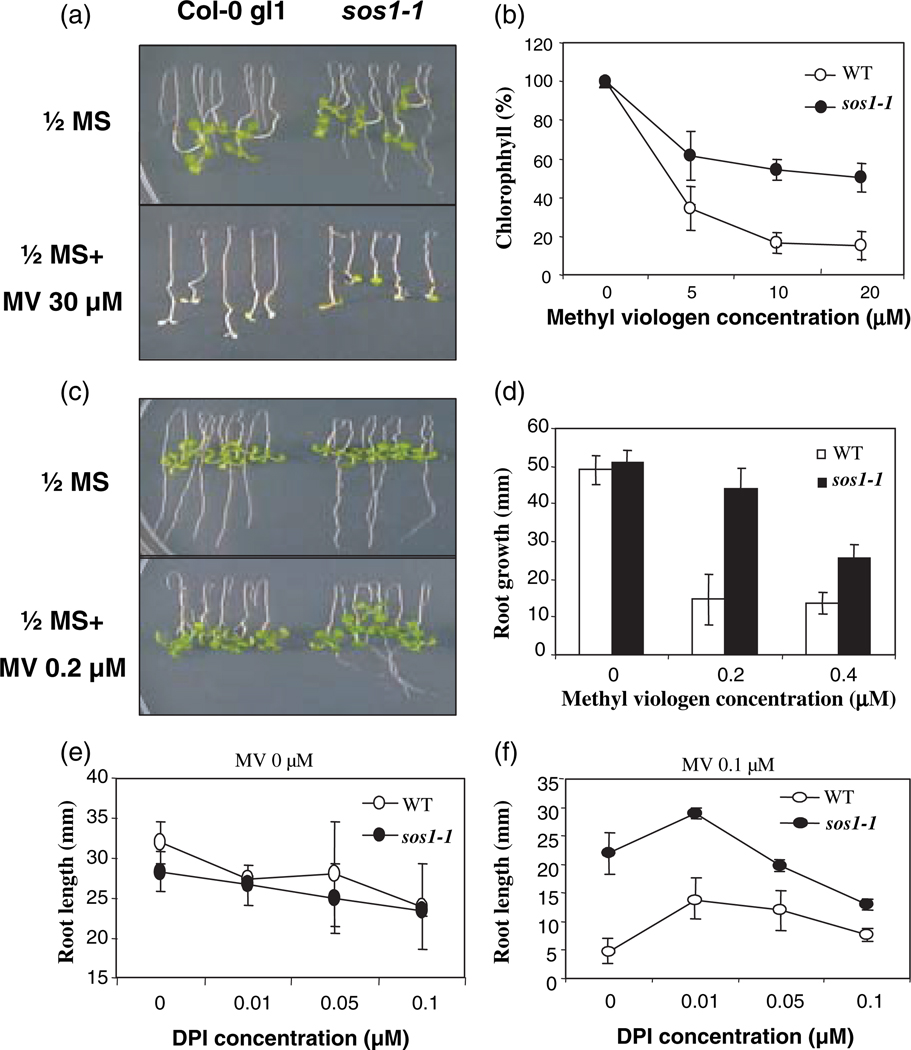
Figure 6. sos1 mutants are more tolerant of methyl viologen (MV)
(a) Root-bending assay of wild-type and sos1 mutant seedlings gown on the 1/2 MS agar medium with or without 30 µm MV. (b) Measurements of chlorophyll content. (c) Root-bending assay of wild-type and sos1 mutant seedlings grown on the 1/2 MS agar medium with or without 0.2 µm MV. (d) Quantification of root growth in response to different concentrations of MV. (e), (f) Effects of diphenylene iodonium (DPI) on MV tolerance of wild-type and sos1 mutant seedlings. Note that the sensitivity to MV is significantly affected by the presence of low concentrations of DPI (f), at which root growth of both the wild type and sos1 mutants is not significantly affected (e).
Figure 7
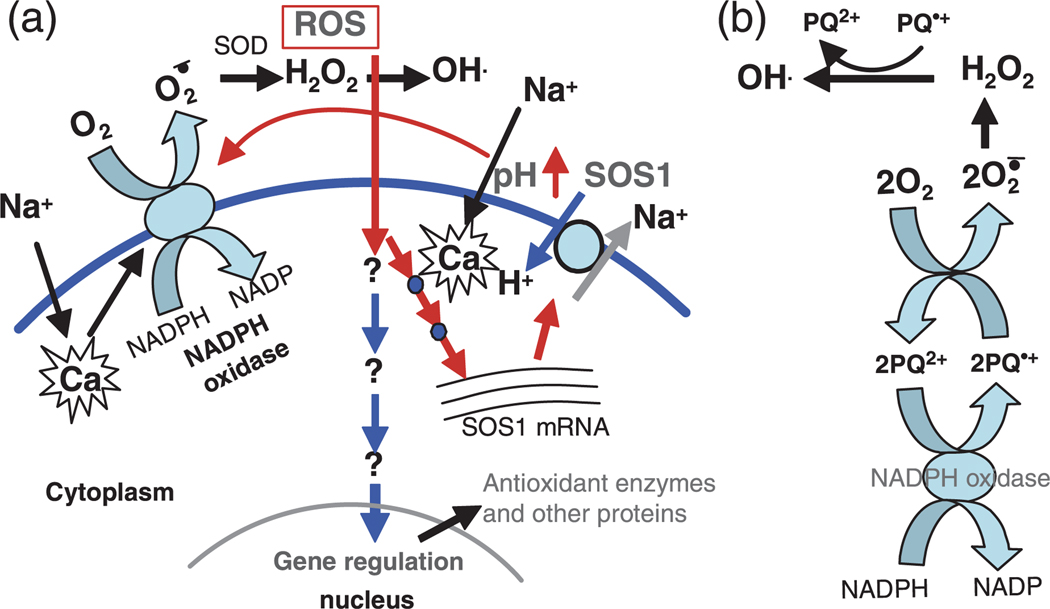
Figure 7. A proposed signaling pathway controlling SOS1 mRNA stability and SOS1-conferred paraquat sensitivity
(a) Hypothetical model showing the early signaling events and downstream signal transduction regulating the stability of SOS1 mRNA. Under Na+ stress, operation of SOS1 would cause extracellular pH elevation, which could be required for activation and/or maintenance of the plasma membrane-bound NADPH oxidase activity that produces extracellular reactive oxygen species (ROS). Extracellular ROS could serve as signaling molecules to trigger gene regulation. The stability of SOS1 mRNA could be increased through a positive feedback regulation upon salt stress. (b) Redox cycling of paraquat (PQ) coupling with the plasma membrane NADPH oxidases. The plasma membrane-bound NADPH oxidase could be an enzymatic source of electrons for the formation of free radical paraquat (PQ+) from normal divalent cation paraquat (PQ2+). Rapid reoxidation of PQ+ causes production of ROS through transfer of electrons to molecular oxygen. The PQ redox cycling, which causes enormous extracellular ROS production deleterious to plant cells, could be dependent on SOS1 activity that would be required for activation and/or maintenance of the NADPH oxidase activity. See the Discussion in the text for a detailed explanation.

References

    1. Apel K, Hirt H. Reactive oxygen species: metabolism, oxidative stress, and signal transduction. Annu. Rev. Plant. Biol. 2004;55:373–399. - PubMed
    1. Bindschedler LV, Minibayeva F, Gardner SL, Gerrish C, Davis DR, Bolwell GP. Early signaling events in the apoplatic oxidative burst in suspension-cultured French bean cells involve cAMP and Ca2+ New Phytol. 2001;151:185–194. - PubMed
    1. Bolwell GP, Butt VS, Davies DR, Zimmerlin A. The origin of the oxidative burst in plants. Free Radic. Res. 1995;23:517–532. - PubMed
    1. Bolwell GP, Blee KA, Butt VS, Davies DR, Gardner SL, Gerrish C, Minibayeva F, Rowntree EG, Wojtaszek P. Recent advances in understanding the origin of the apoplastic oxidative burst in plant cells. Free Radic. Res. 1999;31 Suppl.:S137–S145. - PubMed
    1. Bolwell GP, Bindschedler LV, Blee KA, Butt VS, Davies DR, Gardner SL, Gerrish C, Minibayeva F. The apoplastic oxidative burst in response to biotic stress in plants: a three-component system. J. Exp. Bot. 2002;53:1367–1376. - PubMed

Publication types

MeSH terms