


Loss of housekeeping selenoprotein expression in mouse liver modulates lipoprotein metabolism
- PMID: 17996733
- PMCID: PMC2175387
- DOI: 10.1016/j.bbrc.2007.10.189
Loss of housekeeping selenoprotein expression in mouse liver modulates lipoprotein metabolism
Abstract
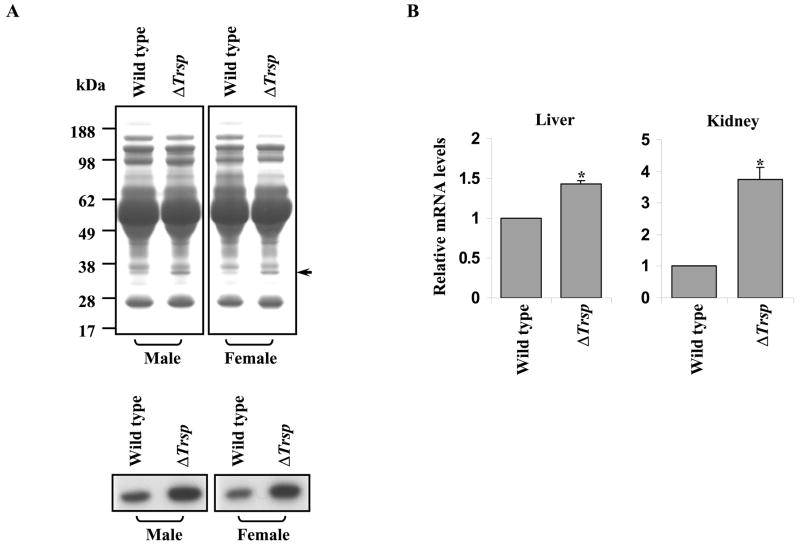
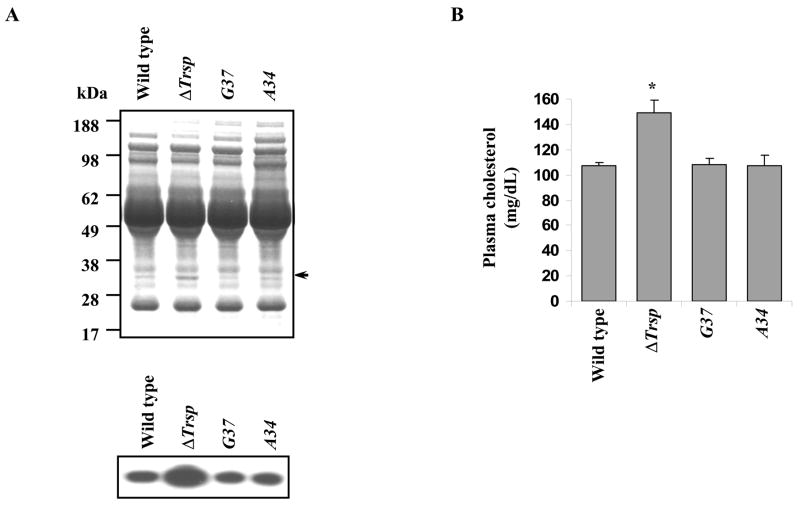
Selenium is incorporated into proteins as selenocysteine (Sec), which is dependent on its specific tRNA, designated tRNA([Ser]Sec). Targeted removal of the tRNA([Ser]Sec) gene (Trsp) in mouse hepatocytes previously demonstrated the importance of selenoproteins in liver function. Herein, analysis of plasma proteins in this Trsp knockout mouse revealed increases in apolipoprotein E (ApoE) that was accompanied by elevated plasma cholesterol levels. The expression of genes involved in cholesterol biosynthesis, metabolism and transport were also altered in knockout mice. Additionally, in two transgenic Trsp mutant mouse lines (wherein only housekeeping selenoprotein synthesis was restored), the expression of ApoE, as well as genes involved in cholesterol biosynthesis, metabolism and transport were similar to those observed in wild type mice. These data correlate with reports that selenium deficiency results in increased levels of ApoE, indicating for the first time that housekeeping selenoproteins have a role in regulating lipoprotein biosynthesis and metabolism.
Figures


References
-
- Whanger PD. Selenium and its relationship to cancer: an update dagger. Br J Nutr. 2004;91:11–28. - PubMed
-
- Rayman MP. The importance of selenium to human health. Lancet. 2000;356:233–241. - PubMed
-
- Hatfield DL. Selenium: Its Molecular Biology and Role in Human Health. Kluwer Academic Publishers; Norwell, MA: 2001.
-
- Kryukov GV, Castellano S, Novoselov SV, Lobanov AV, Zehtab O, Guigo R, Gladyshev VN. Characterization of mammalian selenoproteomes. Science. 2003;300:1439–1443. - PubMed
Publication types
MeSH terms
Substances
Grants and funding
LinkOut - more resources
Full Text Sources
Molecular Biology Databases
Miscellaneous
