


Randomized trial of Telemonitoring to Improve Heart Failure Outcomes (Tele-HF): study design
- PMID: 17996818
- PMCID: PMC2702538
- DOI: 10.1016/j.cardfail.2007.06.720
Randomized trial of Telemonitoring to Improve Heart Failure Outcomes (Tele-HF): study design
Abstract
Background: Telemonitoring, the use of communication technology to monitor clinical status, is gaining attention as a strategy to improve the care of patients with heart failure. A system of frequent monitoring could alert clinicians to early heart failure decompensation, providing the opportunity for intervention before patients become severely ill and require hospitalization. Moreover, patients' participation in a daily monitoring program could have a favorable effect on their health behaviors. The literature on telemonitoring for heart failure, however, is quite limited.
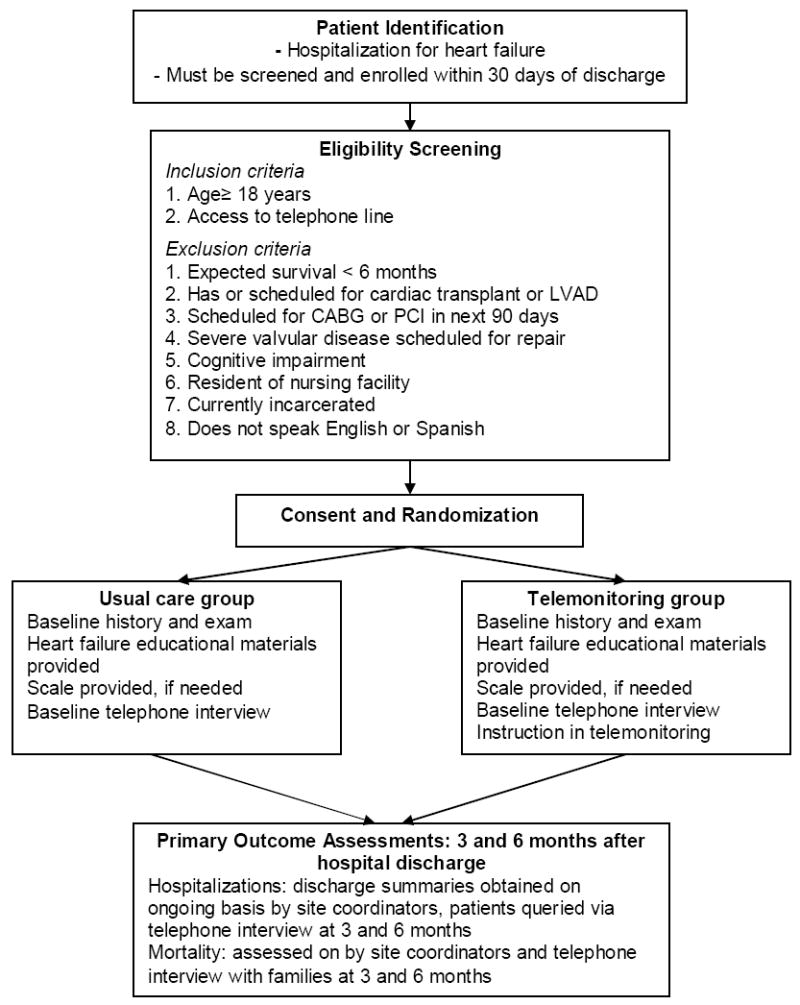
Methods and materials: Telemonitoring to Improve Heart Failure Outcomes (Tele-HF) is a randomized, controlled, trial designed to compare an automated, daily symptom, and self-reported weight monitoring intervention with usual care in reducing (all-cause) hospital readmissions and mortality among patients recently hospitalized with decompensated heart failure. The intervention will be implemented and all outcomes will be assessed over a 6-month period. The purpose of the intervention is to collect information about symptoms, clinical status and weight and to engage participants in their own self-care. Participants are recruited from general cardiology, heart failure specialty, and primary care practices across the United States.
Conclusions: The results of this study may inform future policy decisions regarding implementation of telemonitoring in treatment of heart failure.
References
-
- Dunagan WC, Littenberg B, Ewald GA, et al. Randomized trial of a nurse-administered, telephone-based disease management program for patients with heart failure. J Card Fail. 2005 Jun;11(5):358–365. - PubMed
-
- Cordisco ME, Benjaminovitz A, Hammond K, Mancini D. Use of telemonitoring to decrease the rate of hospitalization in patients with severe congestive heart failure. Am J Cardiol. 1999 Oct 1;84(7):860–862. A868. - PubMed
-
- Riegel B, Carlson B, Kopp Z, LePetri B, Glaser D, Unger A. Effect of a standardized nurse case-management telephone intervention on resource use in patients with chronic heart failure. Archives of Internal Medicine. 2002;162(6):705–712. - PubMed
Publication types
MeSH terms
Grants and funding
LinkOut - more resources
Full Text Sources
Medical
Research Materials
Miscellaneous
