


Temporal neurotransmitter conditioning restores the functional activity of adult spinal cord neurons in long-term culture
- PMID: 18005959
- PMCID: PMC2249621
- DOI: 10.1016/j.expneurol.2007.09.019
Temporal neurotransmitter conditioning restores the functional activity of adult spinal cord neurons in long-term culture
Abstract
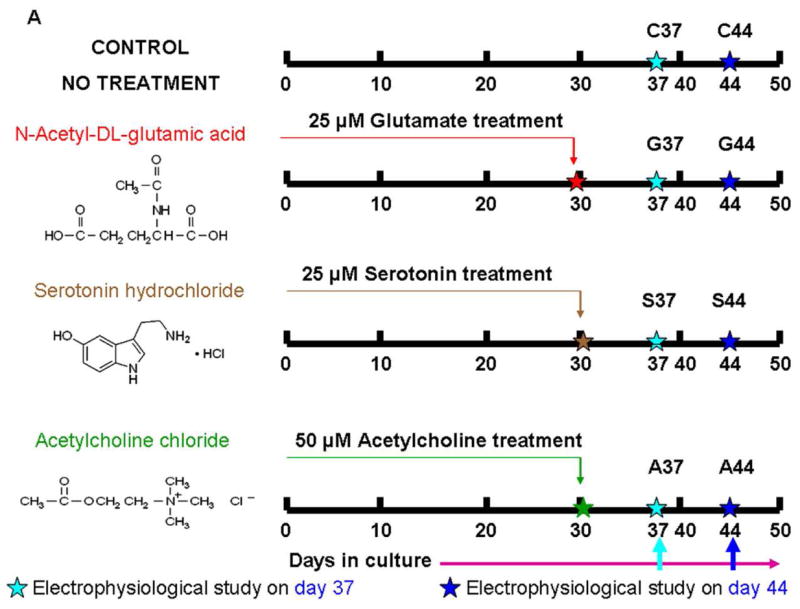
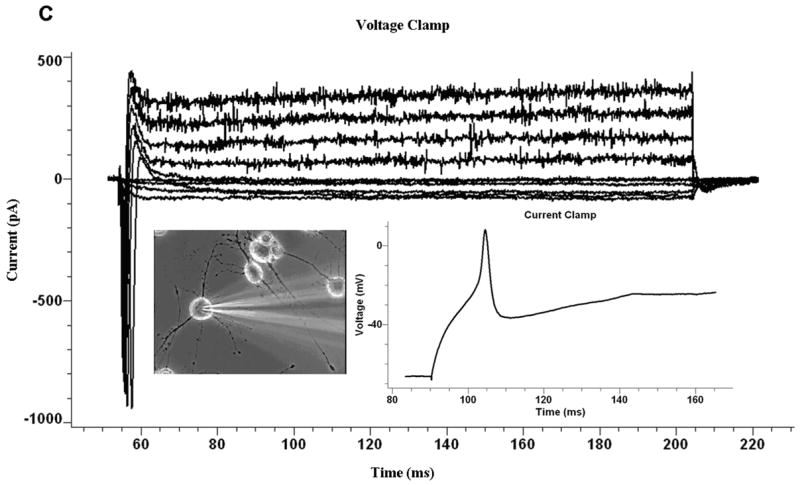
The ability to culture functional adult mammalian spinal cord neurons represents an important step in the understanding and treatment of a spectrum of neurological disorders including spinal cord injury. Previously, the limited functional recovery of these cells, as characterized by a diminished ability to initiate action potentials and to exhibit repetitive firing patterns, has arisen as a major impediment to their physiological relevance. In this report, we demonstrate that single temporal doses of the neurotransmitters serotonin, glutamate (N-acetyl-DL-glutamic acid) and acetylcholine-chloride lead to the full electrophysiological functional recovery of adult mammalian spinal cord neurons, when they are cultured under defined serum-free conditions. Approximately 60% of the neurons treated regained their electrophysiological signature, often firing single, double and, most importantly, multiple action potentials.
Figures





References
-
- Dumont RJ, Okonkwo DO, Verma RS, Hurlbert RJ, Boulos PT, Ellegala DB, Dumont AS. Acute spinal cord injury, part I: Pathophysiologic mechanisms. Clinical Neuropharmacology. 2001;24:254–264. - PubMed
-
- Schwab ME. Repairing the injured spinal cord. Science. 2002;295:10291031. - PubMed
-
- Das M, Bhargava N, Gregory C, Riedel L, Molnar P, Hickman JJ. Adult rat spinal cord culture on an organosilane surface in a novel serum-free medium. In Vitro Cell Dev Biol Anim. 2005;41:343–348. - PubMed
-
- Brewer GJ. Regeneration and proliferation of embryonic and adult rat hippocampal neurons in culture. Exp Neurol. 1999;159:237–247. - PubMed
Publication types
MeSH terms
Substances
Grants and funding
LinkOut - more resources
Full Text Sources
Other Literature Sources
