


Does short-term exposure to mobile phone base station signals increase symptoms in individuals who report sensitivity to electromagnetic fields? A double-blind randomized provocation study
- PMID: 18007992
- PMCID: PMC2072835
- DOI: 10.1289/ehp.10286
Does short-term exposure to mobile phone base station signals increase symptoms in individuals who report sensitivity to electromagnetic fields? A double-blind randomized provocation study
Abstract
Background: Individuals with idiopathic environmental illness with attribution to electromagnetic fields (IEI-EMF) believe they suffer negative health effects when exposed to electromagnetic fields from everyday objects such as mobile phone base stations.
Objectives: This study used both open provocation and double-blind tests to determine if sensitive and control individuals experience more negative health effects when exposed to base station-like signals compared with sham.
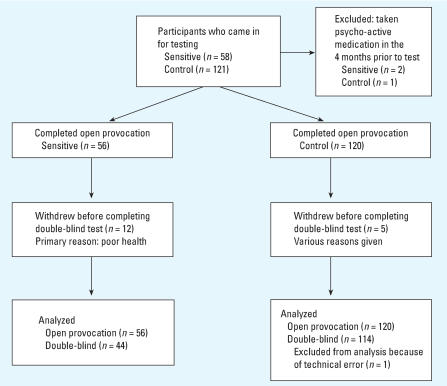
Methods: Fifty-six self-reported sensitive and 120 control participants were tested in an open provocation test. Of these, 12 sensitive and 6 controls withdrew after the first session. The remainder completed a series of double-blind tests. Subjective measures of well-being and symptoms as well as physiological measures of blood volume pulse, heart rate, and skin conductance were obtained.
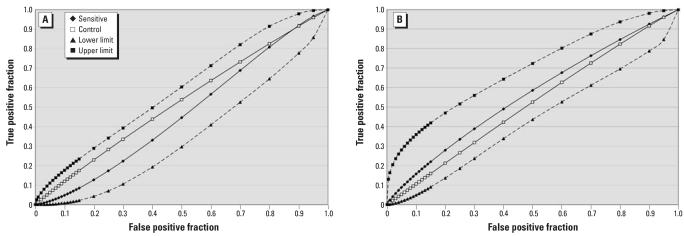
Results: During the open provocation, sensitive individuals reported lower levels of well-being in both the global system for mobile communication (GSM) and universal mobile telecommunications system (UMTS) compared with sham exposure, whereas controls reported more symptoms during the UMTS exposure. During double-blind tests the GSM signal did not have any effect on either group. Sensitive participants did report elevated levels of arousal during the UMTS condition, whereas the number or severity of symptoms experienced did not increase. Physiological measures did not differ across the three exposure conditions for either group.
Conclusions: Short-term exposure to a typical GSM base station-like signal did not affect well-being or physiological functions in sensitive or control individuals. Sensitive individuals reported elevated levels of arousal when exposed to a UMTS signal. Further analysis, however, indicated that this difference was likely to be due to the effect of order of exposure rather than the exposure itself.
Keywords: base station; electromagnetic fields; electromagnetic hypersensitivity; mobile phone; well-being.
Figures
Comment in
-
Short-term exposure to mobile phone base station signals.Environ Health Perspect. 2008 Feb;116(2):A62; author reply A64-5. doi: 10.1289/ehp.10733. Environ Health Perspect. 2008. PMID: 18288295 Free PMC article. No abstract available.
-
Mobile phone base station exposure and symptoms.Environ Health Perspect. 2008 Feb;116(2):A62-3; author reply A64-5. doi: 10.1289/ehp.10771. Environ Health Perspect. 2008. PMID: 18288296 Free PMC article. No abstract available.
-
Sensitivity to mobile phone base station signals.Environ Health Perspect. 2008 Feb;116(2):A63-4; author reply A64-5. doi: 10.1289/ehp.10870. Environ Health Perspect. 2008. PMID: 18288297 Free PMC article. No abstract available.
References
-
- BBC Worldwide Ltd. The Blue Planet. London: British Broadcasting Corp; 2003.
-
- Bergqvist U, Vogel E, editors. Possible health implications of subjective symptoms and electromagnetic fields: a report by a European group of experts for the European Commission, DG V. Solna. Sweden: European Commission DG V. National Institute for Working Life; 1997.
-
- Belloul B. University of Essex GSM and UMTS Basestation Emulator Technical Reference Manual. Version 1.5. Colchester, UK: University of Essex; 2006.
-
- Conway L. Mobile Phones and Health: An Interim Report. British Medical Associate Board of Science and Education. British Medical Association Publication Unit. 2001. [[accessed July 2003]]. Available: http://www.bma.org.uk/ap.nsf/Content/ScienceMobilePhonesInterim.
-
- Eltiti S, Wallace D, Zougkou K, Russo R, Joseph S, Rasor P, et al. Development and evaluation of the electromagnetic hypersensitivity questionnaire. Bioelectromagnetics. 2007;28:137–151. - PubMed
Publication types
MeSH terms
LinkOut - more resources
Full Text Sources
Medical