


Primary immunodeficiency disorders in Kuwait: first report from Kuwait National Primary Immunodeficiency Registry (2004--2006)
- PMID: 18008151
- PMCID: PMC7102084
- DOI: 10.1007/s10875-007-9144-5
Primary immunodeficiency disorders in Kuwait: first report from Kuwait National Primary Immunodeficiency Registry (2004--2006)
Abstract
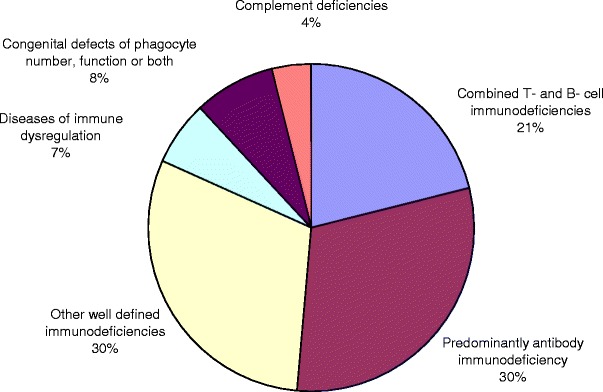
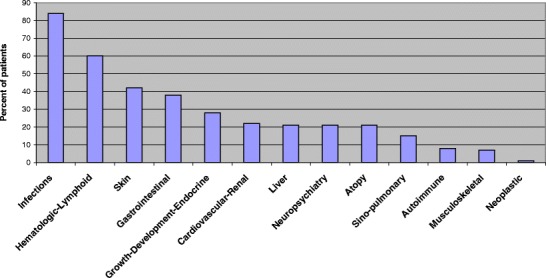
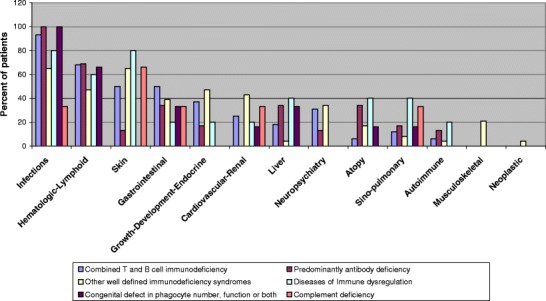
Primary immunodeficiency disorders are heterogeneous group of illnesses that predispose patients to serious complications. Registries for these disorders have provided important epidemiological data and shown both racial and geographical variations. The clinical features of 76 patients with primary immunodeficiency disorders registered in Kuwait National Primary Immunodeficiency Registry from 2004 to 2006 were recorded. Ninety-eight percent of the patients presented in childhood. The prevalence of these disorders in children was 11.98 in 100,000 children with an incidence of 10.06 in 100,000 children. The distribution of these patients according to each primary immunodeficiency category is: combined T and B cell immunodeficiencies (21%), predominantly antibody immunodeficiency (30%), other well defined immunodeficiencies (30%), diseases of immune dysregulation (7%), congenital defects of phagocyte number, function or both (8%), and complement deficiencies (4%). The consanguinity rate within the registered patients was 77%. The patients had a wide range of clinical features affecting different body systems. Primary immunodeficiency disorders are prevalent in Kuwait and have a significant impact into the health system.
Figures
References
-
- Ochs HD, Stiehm R, Winkelstein J. Antibody deficiencies. In: Stiehm ER, Ochs HD, Winkelstein JA, editors. Immunologic disorders in infants & children. 5. Philadelphia: Elsevier Saunders; 2004. pp. 356–426.
-
- Notarangelo L, Casanova JL, Conley ME, Chapel H, Fischer A, Puck J, et al. Primary immunodeficiency diseases: an update from international union of immunological societies primary immunodeficiency diseases classification committee meeting in Budapest, 2005. J Allergy Clin Immunol. 2006;117:883–896. doi: 10.1016/j.jaci.2005.12.1347. - DOI - PubMed
Publication types
MeSH terms
LinkOut - more resources
Full Text Sources
