


Immune recognition of Candida albicans beta-glucan by dectin-1
- PMID: 18008237
- PMCID: PMC2655640
- DOI: 10.1086/523110
Immune recognition of Candida albicans beta-glucan by dectin-1
Abstract
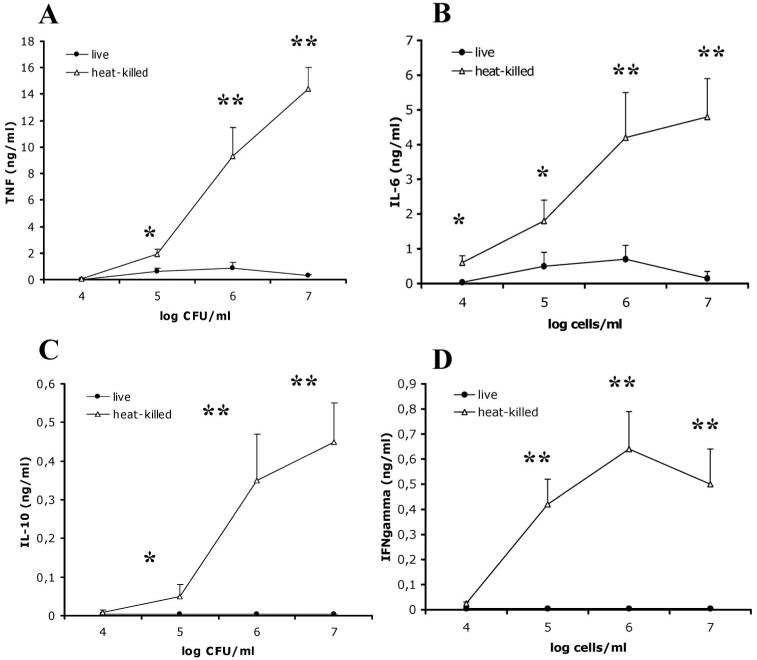
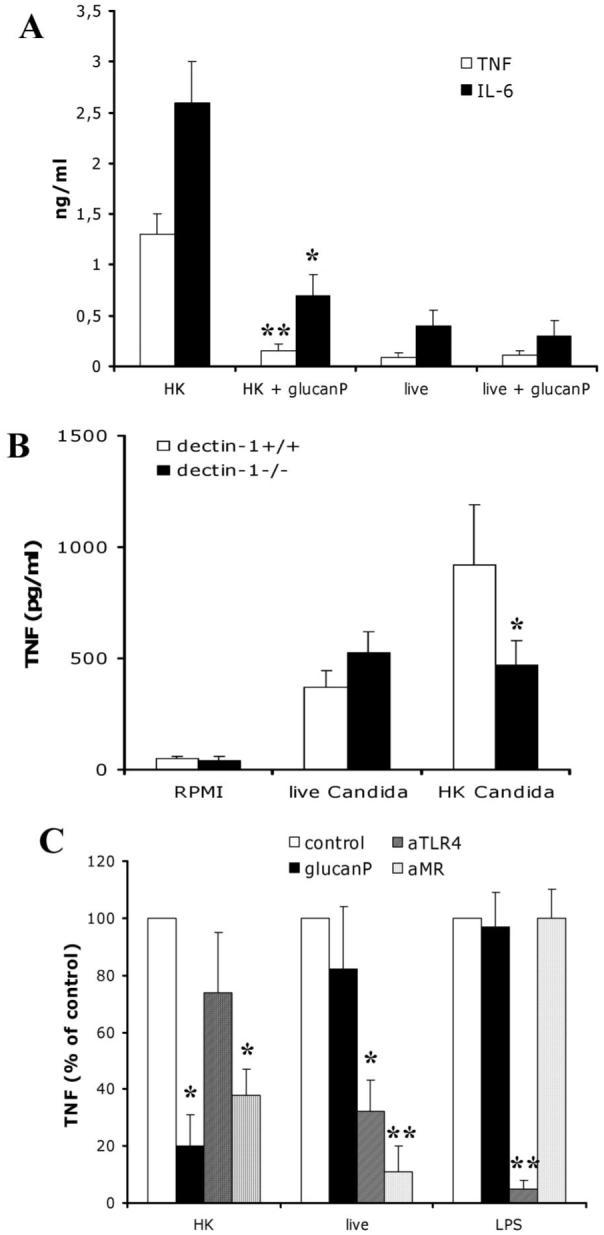
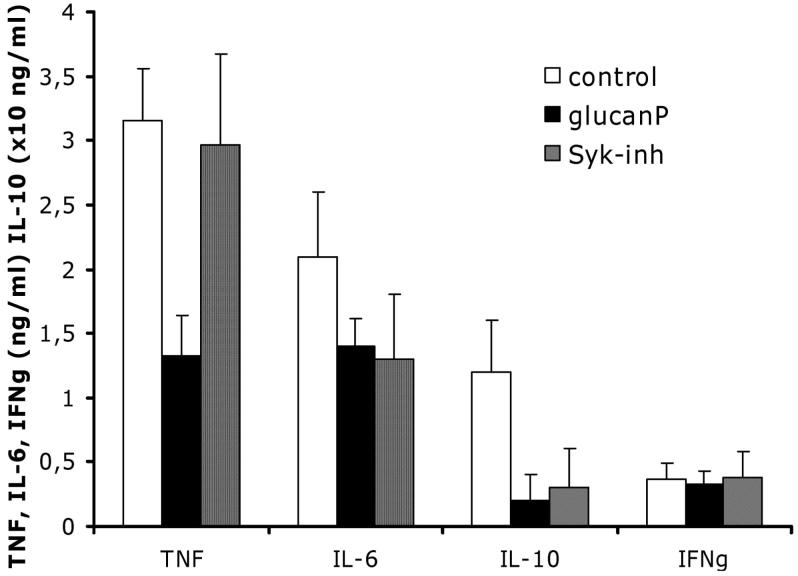
Beta (1,3)-glucans represent 40% of the cell wall of the yeast Candida albicans. The dectin-1 lectin-like receptor has shown to recognize fungal beta (1,3)-glucans and induce innate immune responses. The importance of beta-glucan-dectin-1 pathways for the recognition of C. albicans by human primary blood cells has not been firmly established. In this study we demonstrate that cytokine production by both human peripheral blood mononuclear cells and murine macrophages is dependent on the recognition of beta-glucans by dectin-1. Heat killing of C. albicans resulted in exposure of beta-glucans on the surface of the cell wall and subsequent recognition by dectin-1, whereas live yeasts stimulated monocytes mainly via recognition of cell-surface mannans. Dectin-1 induced cytokine production through the following 2 pathways: Syk-dependent production of the T-helper (Th) 2-type anti-inflammatory cytokine interleukin-10 and Toll-like receptor-Myd88-dependent stimulation of monocyte-derived proinflammatory cytokines, such as tumor necrosis factor-alpha . In contrast, stimulation of Th1-type cytokines, such as interferon-gamma , by C. albicans was independent of the recognition of beta-glucans by dectin-1. In conclusion, C. albicans induces production of monocyte-derived and T cell-derived cytokines through distinct pathways dependent on or independent of dectin-1.
Figures
References
-
- Gudlaugsson O, Gillespie S, Lee K, et al. Attributable mortality of nosocomial candidemia, revisited. Clin Infect Dis. 2003;37:1172–7. - PubMed
-
- Wisplinghoff H, Bischoff T, Tallent SM, Seifert H, Wenzel RP, Edmond MB. Nosocomial bloodstream infections in US hospitals: analysis of 24,179 cases from a prospective nationwide surveillance study. Clin Infect Dis. 2004;39:309–17. - PubMed
-
- van ’t Wout JW, Linde I, Leijh PCJ, van Furth R. Contribution of granulocytes and monocytes to resistance against experimental disseminated Candida albicans infections. Eur J Clin Microbiol Infect Dis. 1988;7:736–41. - PubMed
-
- Marodi L, Korchak HM, Johnston RB., Jr. Mechanisms of host defense against Candida species. 1. Phagocytosis by monocytes and monocyte-derived macrophages. J Immunol. 1991;146:2783–9. - PubMed
Publication types
MeSH terms
Substances
Grants and funding
LinkOut - more resources
Full Text Sources
Miscellaneous
