Linking antisocial behavior, substance use, and personality: an integrative quantitative model of the adult externalizing spectrum
- PMID: 18020714
- PMCID: PMC2242625
- DOI: 10.1037/0021-843X.116.4.645
Linking antisocial behavior, substance use, and personality: an integrative quantitative model of the adult externalizing spectrum
Abstract
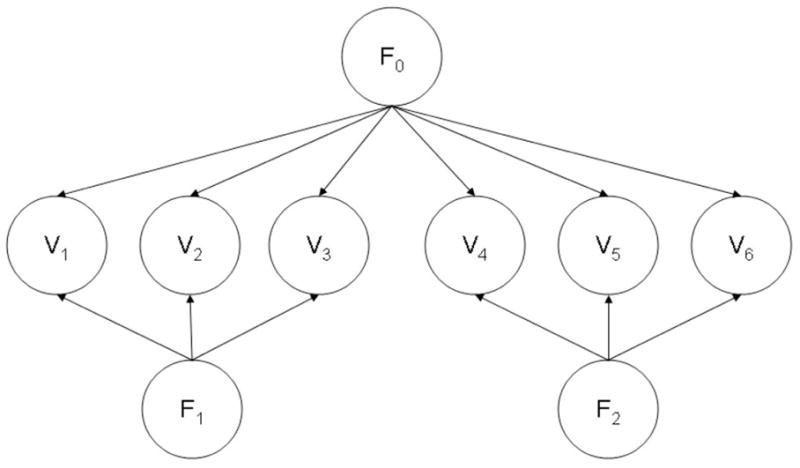
Antisocial behavior, substance use, and impulsive and aggressive personality traits often co-occur, forming a coherent spectrum of personality and psychopathology. In the current research, the authors developed a novel quantitative model of this spectrum. Over 3 waves of iterative data collection, 1,787 adult participants selected to represent a range across the externalizing spectrum provided extensive data about specific externalizing behaviors. Statistical methods such as item response theory and semiparametric factor analysis were used to model these data. The model and assessment instrument that emerged from the research shows how externalizing phenomena are organized hierarchically and cover a wide range of individual differences. The authors discuss the utility of this model for framing research on the correlates and the etiology of externalizing phenomena.
(c) 2007 APA
Figures
References
-
- Achenbach TM, Edelbrock CS. Psychopathology of childhood. Annual Review of Psychology. 1984;35:227–256. - PubMed
-
- Achenbach TM, Krukowski RA, Dumenci L, Ivanova MY. Assessment of adult psychopathology: Meta-analyses and implications of cross-informant correlations. Psychological Bulletin. 2005;131:361–382. - PubMed
-
- Achenbach TM, McConaughy SH. Empirically based assessment of child and adolescent psychopathology: Practical applications. 2. Thousand Oaks, CA: Sage; 1997.
-
- Acton GS. Measurement of impulsivity in a hierarchical model of personality traits: Implications for substance use. Substance Use and Misuse. 2003;38:67–83. - PubMed
-
- American Psychiatric Association. Diagnostic and statistical manual of mental disorders. 3. Washington, DC: Author; 1980.