


A longitudinal assessment of the links between physical activity and self-esteem in early adolescent non-Hispanic females
- PMID: 18023784
- PMCID: PMC2562306
- DOI: 10.1016/j.jadohealth.2007.07.001
A longitudinal assessment of the links between physical activity and self-esteem in early adolescent non-Hispanic females
Abstract
Purpose: For decades, researchers have proclaimed the positive psychosocial benefits of participation in physical activity. However, recent meta-analyses of the literature have found infrequent and inconclusive empirical support for the link between physical activity and psychosocial well-being. In this study, we use data from a longitudinal study to explore the links between participation in physical activity and global self-esteem among girls from childhood into early adolescence and the direction of this relationship.
Methods: Participants included 197 non-Hispanic white girls. Girls' participation in physical activity and their global self-esteem were assessed when they were 9, 11, and 13 years old. Panel regression was used to assess the lagged effect of physical activity on self-esteem and the lagged effect of self-esteem on physical activity, controlling for family socioeconomic status (SES) and girls' body mass index (BMI).
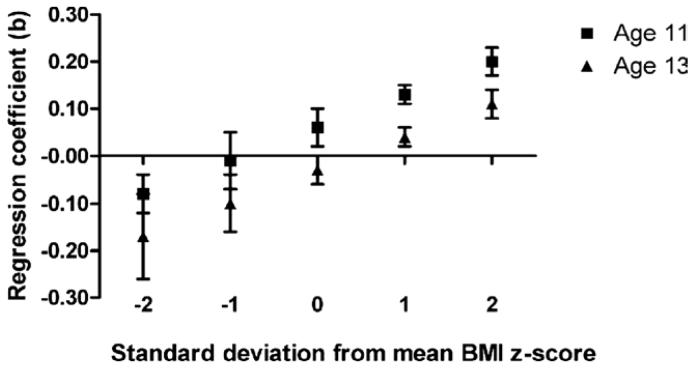
Results: A significant lagged effect of physical activity on self-esteem was identified. Specifically, higher physical activity at ages 9 and 11 years predicted higher self-esteem at ages 11 and 13 years respectively, controlling for covariates. Positive effects of physical activity on self-esteem were most apparent at age 11 and for girls with higher BMI. No support was gained for the lagged effect of self-esteem on physical activity.
Conclusions: Results suggest that participating in physical activity can lead to positive self-esteem among adolescent girls, particularly for younger girls and those at greatest risk of overweight. These findings highlight the necessity of promoting physical activity among adolescent girls as a method of fostering positive self-worth.
Figures
References
-
- Paluska SA, Schwenk TL. Physical activity and mental health: Current concepts. Sports Med. 2000;29:167–80. - PubMed
-
- Biddle SJH, Whitehead SH, O'Donovan TM, Nevill ME. Correlates of participation in physical activity for adolescent girls: A systematic review of recent literature. J Phys Act Health. 2005;2:423–34.
-
- Goodwin RD. Association between physical activity and mental disorders among adults in the United States. Prev Med. 2003;36:698–703. - PubMed
-
- Sallis J, Prochaska J, Taylor W. A review of correlates of physical activity of children and adolescents. Med Sci Sports Exerc. 2000;32:963–975. - PubMed
-
- Strong WB, Malina RM, Bumkie CJR, et al. Evidence based physical activity for school-age youth. J Pediatr. 2005;146:732–737. - PubMed
