


5-HT and 5-HT-SO4, but not tryptophan or 5-HIAA levels in single feeding neurons track animal hunger state
- PMID: 18036151
- PMCID: PMC4024471
- DOI: 10.1111/j.1471-4159.2007.05084.x
5-HT and 5-HT-SO4, but not tryptophan or 5-HIAA levels in single feeding neurons track animal hunger state
Abstract
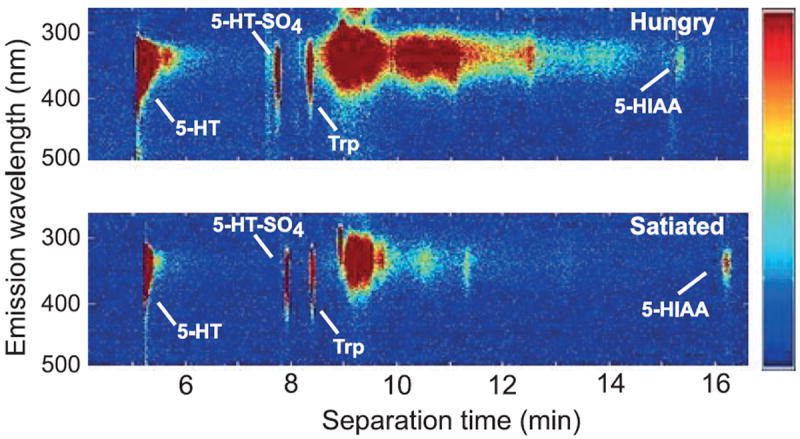
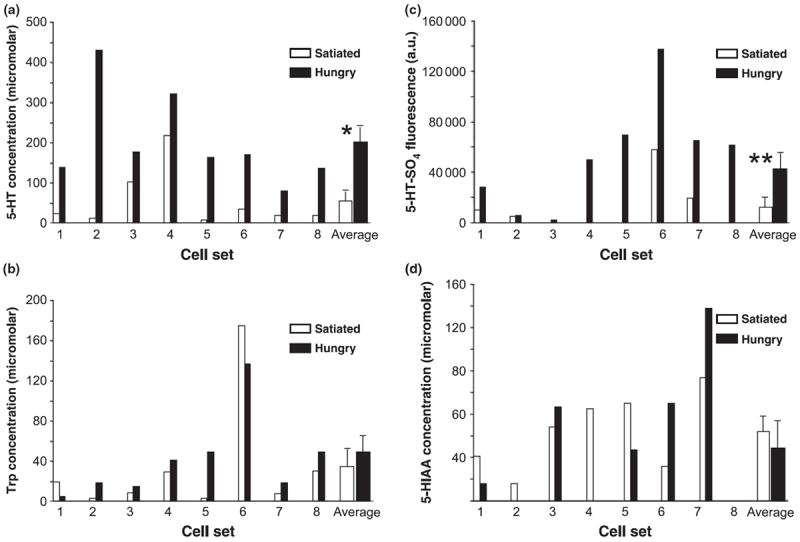
Serotonin (5-HT) is an intrinsic modulator of neural network excitation states in gastropod molluscs. 5-HT and related indole metabolites were measured in single, well-characterized serotonergic neurons of the feeding motor network of the predatory sea-slug Pleurobranchaea californica. Indole amounts were compared between paired hungry and satiated animals. Levels of 5-HT and its metabolite 5-HT-SO4 in the metacerebral giant neurons were observed in amounts approximately four-fold and two-fold, respectively, below unfed partners 24 h after a satiating meal. Intracellular levels of 5-hydroxyindole acetic acid and of free tryptophan did not differ significantly with hunger state. These data demonstrate that neurotransmitter levels and their metabolites can vary in goal-directed neural networks in a manner that follows internal state.
Figures
References
-
- Arshavsky YI, Deliagina TG, Gamkrelidze GN, Orlovsky GN, Panchin YV, Popova LB, Shupliakov OV. Pharmacologically induced elements of the hunting and feeding behavior in the pteropod mollusk Clione limacina. I. Effects of GABA. J Neurophysiol. 1993;69:512–521. - PubMed
-
- Berry MS, Pentreath VW. Properties of a symmetric pair of serotonin-containing neurones in the cerebral ganglia of Planorbis. J Exp Biol. 1976;65:361–380. - PubMed
-
- Croll RP, Albuquerque T, Fitzpatrick L. Hyperphagia resulting from gut denervation in the sea slug Pleurobranchaea. Behav Neural Biol. 1987;47:212–218. - PubMed
-
- Davis WJ, Mpitsos GJ, Pinneo JM. The behavioral hierarchy of Pleurobranchaea. I. The dominant position of the feeding behavior. J Comp Physiol. 1974;90:207–224.
-
- Davis WJ, Gillette R, Kovac MP, Croll RP, Matera E. Organization of synaptic inputs to paracerebral feeding command interneurons of Pleurobranchaea californica III. Modifications induced by experience. J Neurophysiol. 1983;49:1557–1572. - PubMed
Publication types
MeSH terms
Substances
Grants and funding
LinkOut - more resources
Full Text Sources
Research Materials
