


Decreased bone turnover with balanced resorption and formation prevent cortical bone loss during disuse (hibernation) in grizzly bears (Ursus arctos horribilis)
- PMID: 18037367
- PMCID: PMC2249622
- DOI: 10.1016/j.bone.2007.10.010
Decreased bone turnover with balanced resorption and formation prevent cortical bone loss during disuse (hibernation) in grizzly bears (Ursus arctos horribilis)
Abstract
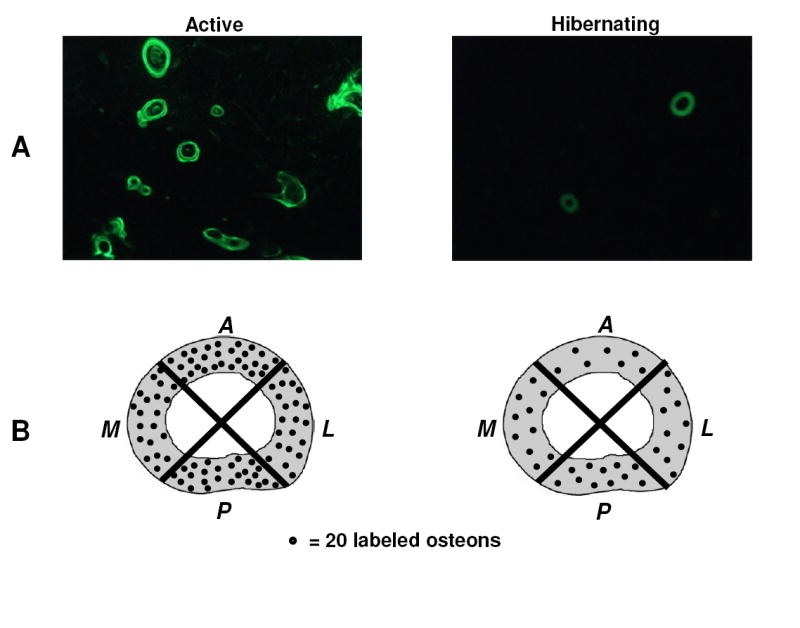
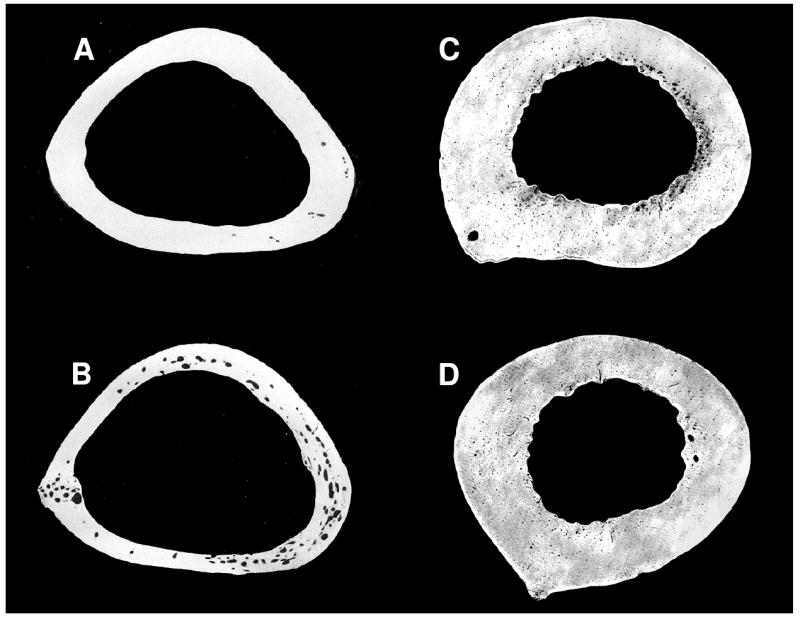
Disuse uncouples bone formation from resorption, leading to increased porosity, decreased bone geometrical properties, and decreased bone mineral content which compromises bone mechanical properties and increases fracture risk. However, black bear bone properties are not adversely affected by aging despite annual periods of disuse (i.e., hibernation), which suggests that bears either prevent bone loss during disuse or lose bone and subsequently recover it at a faster rate than other animals. Here we show decreased cortical bone turnover during hibernation with balanced formation and resorption in grizzly bear femurs. Hibernating grizzly bear femurs were less porous and more mineralized, and did not demonstrate any changes in cortical bone geometry or whole bone mechanical properties compared to active grizzly bear femurs. The activation frequency of intracortical remodeling was 75% lower during hibernation than during periods of physical activity, but the normalized mineral apposition rate was unchanged. These data indicate that bone turnover decreases during hibernation, but osteons continue to refill at normal rates. There were no changes in regional variation of porosity, geometry, or remodeling indices in femurs from hibernating bears, indicating that hibernation did not preferentially affect one region of the cortex. Thus, grizzly bears prevent bone loss during disuse by decreasing bone turnover and maintaining balanced formation and resorption, which preserves bone structure and strength. These results support the idea that bears possess a biological mechanism to prevent disuse osteoporosis.
Figures




References
-
- Takata S, Yasui N. Disuse osteoporosis. J Med Invest. 2001;48:147–56. - PubMed
-
- Caillot-Augusseau A, Lafage-Proust MH, Soler C, Pernod J, Dubois F, Alexandre C. Bone formation and resorption biological markers in cosmonauts during and after a 180-day space flight (Euromir 95) Clin Chem. 1998;44:578–85. - PubMed
-
- Weinreb M, Rodan GA, Thompson DD. Osteopenia in the immobilized rat hind limb is associated with increased bone resorption and decreased bone formation. Bone. 1989;10:187–94. - PubMed
-
- Zerwekh JE, Ruml LA, Gottschalk F, Pak CY. The effects of twelve weeks of bed rest on bone histology, biochemical markers of bone turnover, and calcium homeostasis in eleven normal subjects. J Bone Miner Res. 1998;13:1594–601. - PubMed
-
- Li CY, Price C, Delisser K, Nasser P, Laudier D, Clement M, Jepsen KJ, Schaffler MB. Long-term disuse osteoporosis seems less sensitive to bisphosphonate treatment than other osteoporosis. J Bone Miner Res. 2005;20:117–24. - PubMed
Publication types
MeSH terms
Grants and funding
LinkOut - more resources
Full Text Sources
Medical
