


Syndecan-3 is a dendritic cell-specific attachment receptor for HIV-1
- PMID: 18040049
- PMCID: PMC2148312
- DOI: 10.1073/pnas.0703747104
Syndecan-3 is a dendritic cell-specific attachment receptor for HIV-1
Abstract
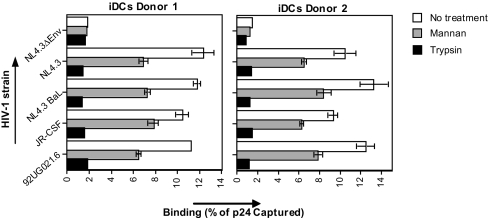
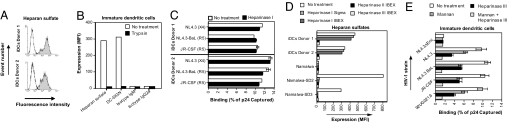
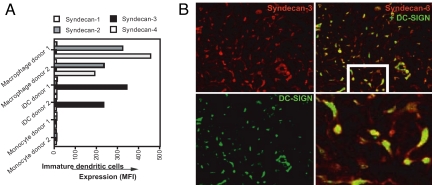
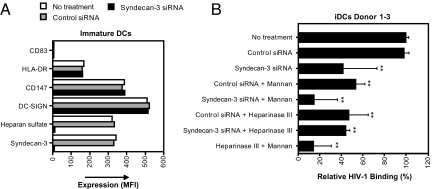
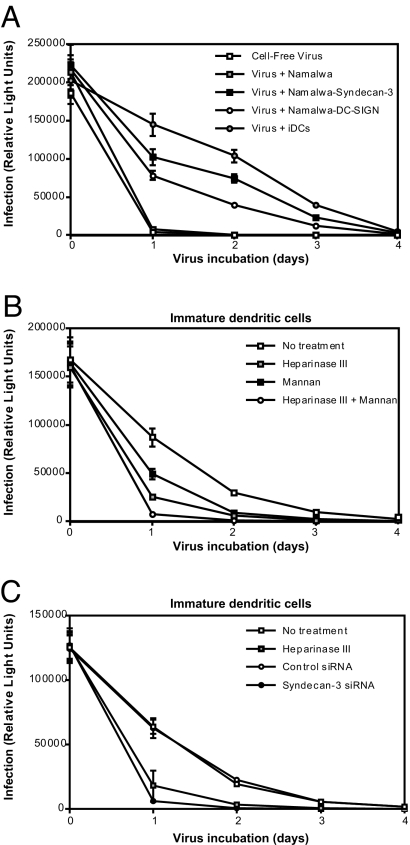
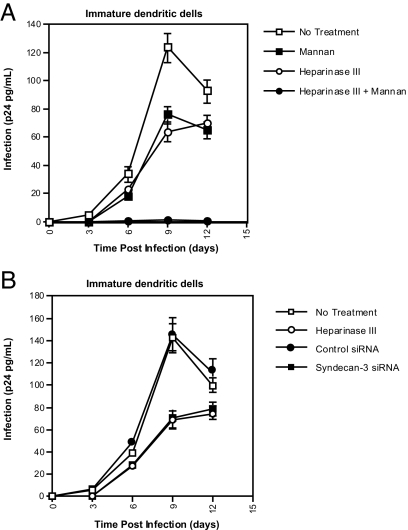
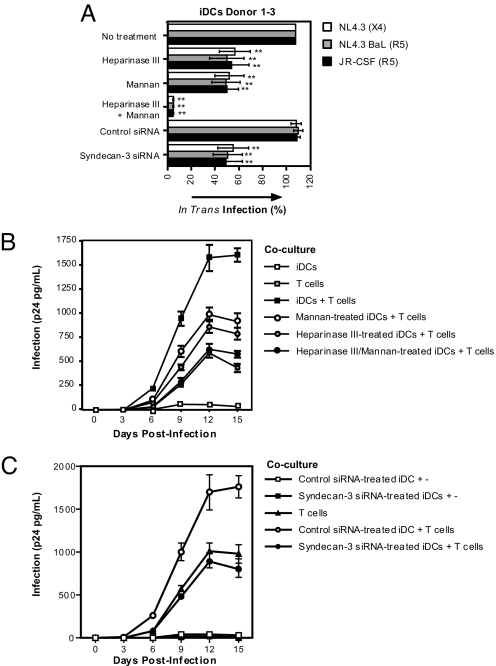
Dendritic cells (DCs) efficiently capture HIV-1 and mediate transmission to T cells, but the underlying molecular mechanism is still being debated. The C-type lectin DC-SIGN is important in HIV-1 transmission by DCs. However, various studies strongly suggest that another HIV-1 receptor on DCs is involved in the capture of HIV-1. Here we have identified syndecan-3 as a major HIV-1 attachment receptor on DCs. Syndecan-3 is a DC-specific heparan sulfate (HS) proteoglycan that captures HIV-1 through interaction with the HIV-1 envelope glycoprotein gp120. Syndecan-3 stabilizes the captured virus, enhances DC infection in cis, and promotes transmission to T cells. Removal of the HSs from the cell surface by heparinase III or by silencing syndecan-3 by siRNA partially inhibited HIV-1 transmission by immature DCs, whereas neutralizing both syndecan-3 and DC-SIGN completely abrogated HIV-1 capture and subsequent transmission. Thus, HIV-1 exploits both syndecan-3 and DC-SIGN to mediate HIV-1 transmission, and an effective microbicide should target both syndecan-3 and DC-SIGN on DCs to prevent transmission.
Conflict of interest statement
The authors declare no conflict of interest.
Figures
References
-
- Royce RA, Sena A, Cates W, Jr, Cohen MS. N Engl J Med. 1997;336:1072–1078. - PubMed
-
- Cameron PU, Freudenthal PS, Barker JM, Gezelter S, Inaba K, Steinman RM. Science. 1992;257:383–387. - PubMed
-
- Pope M, Betjes MG, Romani N, Hirmand H, Cameron PU, Hoffman L, Gezelter S, Schuler G, Steinman RM. Cell. 1994;78:389–398. - PubMed
-
- Cameron PU, Lowe MG, Crowe SM, O'Doherty U, Pope M, Gezelter S, Steinman RM. J Leukoc Biol. 1994;56:257–265. - PubMed
Publication types
MeSH terms
Substances
Grants and funding
LinkOut - more resources
Full Text Sources
Other Literature Sources
