


Familial clustering of migraine, episodic vertigo, and Ménière's disease
- PMID: 18046258
- PMCID: PMC2820370
- DOI: 10.1097/mao.0b013e31815c2abb
Familial clustering of migraine, episodic vertigo, and Ménière's disease
Abstract
Objective: To evaluate the association between migraine, episodic vertigo, and Ménière's disease in families.
Study design: Clinical report.
Setting: University Neurotology Clinic.
Patients: Index patients identified with Ménière's disease and migraine and their family members.
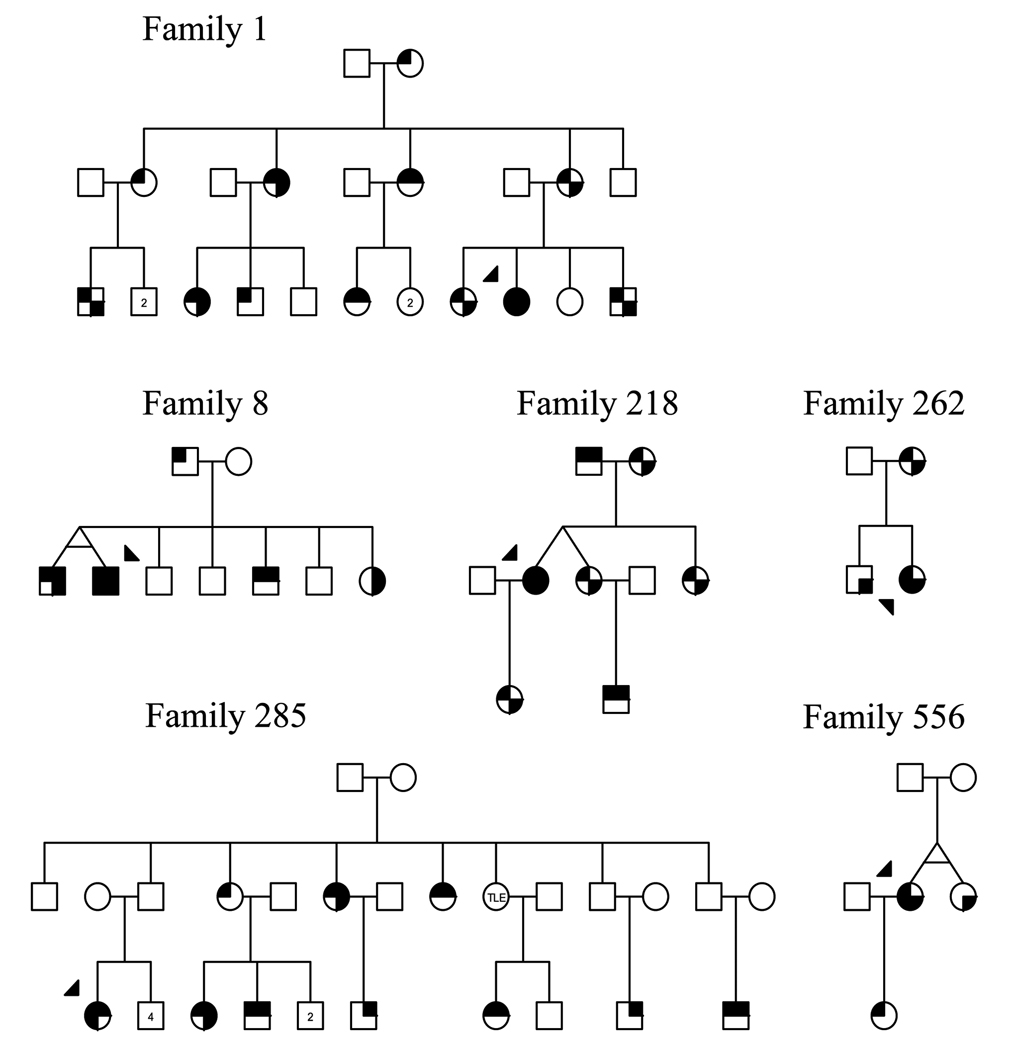
Intervention: Structured interview to assess a diagnosis of migraine, episodic vertigo, and Ménière's disease in 6 families. Genotyping was performed on 3 sets of twins to analyze monozygosity or dizygosity.
Main outcome measures: Clinical history of migraine, episodic vertigo, and Ménière's disease.
Results: Six index patients and 57 family members were interviewed either by a senior neurologist in person or over the phone by a trained study coordinator. An additional 6 family members completed questionnaires by mail. All 6 index patients had Ménière's disease and migraine. Twenty-six (41%) of the 63 relatives met International Classification of Headache Disorders II criteria for migraine headaches. Thirteen (50%) of these 26 experienced migraine with aura. Three others experienced typical aura without headache. Seventeen (27%) of 63 family members experienced recurrent spells of spontaneous episodic vertigo. There was one twin pair in each of 3 families; 2 pairs were monozygotic and one was dizygotic. In each twin pair, one twin had migraine and Ménière's disease, whereas the other experienced migraine and episodic vertigo without auditory symptoms.
Conclusion: The frequent association of episodic vertigo, migraine, and Ménière's disease in closely related individuals, including identical twins supports the heritability of a migraine-Ménière's syndrome, with variable expression of the individual features of hearing loss, episodic vertigo, and migraine headaches.
Conflict of interest statement
The authors report no conflicts of interest.
Figures
References
-
- Rassekh C, Harker L. The prevalence of migraine in Ménière’s disease. Laryngoscope. 1992;102:135–138. - PubMed
-
- Parker W. Ménière’s disease: etiologic considerations. Arch Otolaryngol Head Neck Surg. 1995;121:377–382. - PubMed
-
- Hinchcliffe R. Personal and family medical history in Ménière’s disease. J Laryngol Otol. 1967;81:661–668. - PubMed
-
- Hinchcliffe R. Headache and Ménière’s disease. Acta Otolaryngol. 1967;63:384–390. - PubMed
-
- Atkinson M. Migraine and Ménière’s disease. Arch Otolaryngol. 1962;75:46–51. - PubMed
Publication types
MeSH terms
Grants and funding
LinkOut - more resources
Full Text Sources
Medical
Miscellaneous
