


Role of the ubiquitin proteasome system in renal cell carcinoma
- PMID: 18047741
- PMCID: PMC2106368
- DOI: 10.1186/1471-2091-8-S1-S4
Role of the ubiquitin proteasome system in renal cell carcinoma
Abstract
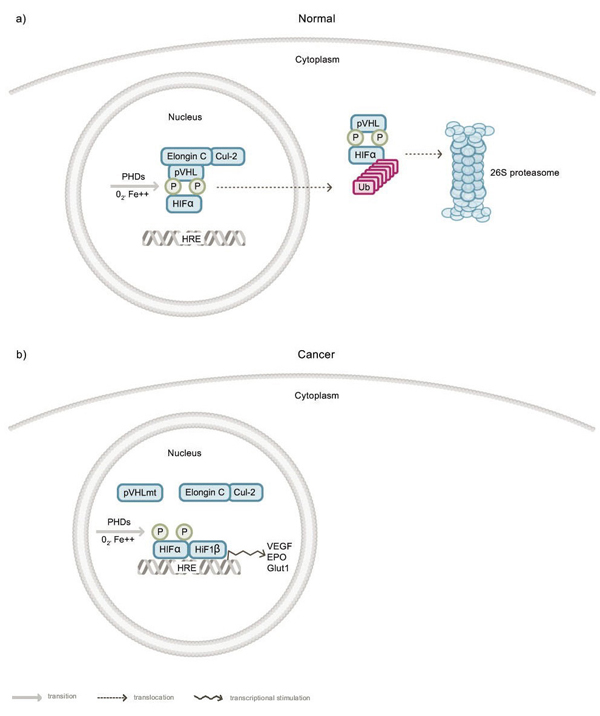
Renal cell carcinoma (RCC) accounts for approximately 2.6% of all cancers in the United States. While early stage disease is curable by surgery, the median survival of metastatic disease is only 13 months. In the last decade, there has been considerable progress in understanding the genetics of RCC. The VHL tumor suppressor gene is inactivated in the majority of RCC cases. The VHL protein (pVHL) acts as an E3 ligase that targets HIF-1, the hypoxia inducible transcription factor, for degradation by the ubiquitin proteasome system (UPS). In RCC cases with mutant pVHL, HIF-1 is stabilized and aberrantly expressed in normoxia, leading to the activation of pro-survival genes such as vascular endothelial growth factor (VEGF). This review will focus on the defect in the UPS that underlies RCC and describe the development of novel therapies that target the UPS. Publication history: Republished from Current BioData's Targeted Proteins database (TPdb; http://www.targetedproteinsdb.com).
Figures
References
-
- Shuin T, Kondo K, Torigoe S, Kishida T, Kubota Y, Hosaka M, et al. Frequent somatic mutations and loss of heterozygosity of the von Hippel-Lindau tumor suppressor gene in primary human renal cell carcinomas. Cancer Res. 54:2852–5. 1994 Jun 1. - PubMed
Publication types
MeSH terms
Substances
LinkOut - more resources
Full Text Sources
Other Literature Sources
Medical
