A systematic review of interventions for smokers who contact quitlines
- PMID: 18048627
- PMCID: PMC2598525
- DOI: 10.1136/tc.2006.019737
A systematic review of interventions for smokers who contact quitlines
Abstract
Objective: To evaluate the effect of different types of adjunctive support to stop smoking for individuals contacting telephone "quitlines," including call-back counselling, different counselling techniques and provision of self help materials.
Data sources: This review includes quitline studies identified as part of Cochrane reviews of telephone counselling and self help materials for smoking cessation. We updated the searches for this review.
Study selection: We included studies that were randomised or quasi-randomised controlled trials of any quitline or related service with follow-up of at least six months.
Data extraction: Data were extracted by one author and checked by a second. The cessation outcome was numbers quit at longest follow-up taking the strictest definition of abstinence available, and assuming participants lost to follow-up continued to smoke.
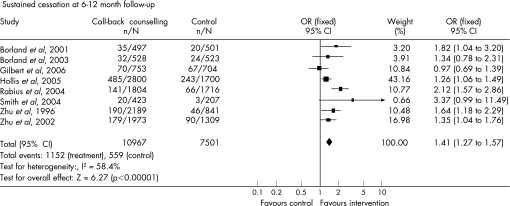
Data synthesis: We identified 14 relevant studies. Eight studies (18 500 participants) comparing multiple call-backs to a single contact increased quitting in the intervention group (Mantel-Haenszel fixed effect odds ratio 1.41, 95% confidence interval 1.27 to 1.57). Two unpublished studies without sufficient data to include in the meta-analysis also reported positive effects. Three call-back trials compared two schedules of multiple calls. Two found a significant dose-response effect and one did not detect a difference. We did not find consistent differences in comparisons between counselling approaches (two trials) or between different types of self help materials supplied following quitline contact (three trials).
Conclusions: Multiple call-back counselling improves long term cessation for smokers who contact quitline services. Offering more calls may improve success rates. We failed to detect an effect of the type of counselling or the type of self help materials supplied as adjuncts to quitline counselling.
References
-
- Ossip‐Klein D J, McIntosh S. Quitlines in North America: evidence base and applications. Am J Med Sci 2003326201–205. - PubMed
-
- Stead L F, Lancaster T, Perera R. Telephone counselling for smoking cessation. Cochrane Database Syst Rev. 2006;CD002850 - PubMed
-
- Lancaster T, Stead L F. Self‐help interventions for smoking cessation. Cochrane Database Syst Rev. 2005;CD001118 - PubMed
Publication types
MeSH terms
LinkOut - more resources
Full Text Sources
Medical
Miscellaneous