


Spatial targeted vector control in the highlands of Burundi and its impact on malaria transmission
- PMID: 18053166
- PMCID: PMC2217530
- DOI: 10.1186/1475-2875-6-158
Spatial targeted vector control in the highlands of Burundi and its impact on malaria transmission
Abstract
Background: Prevention of malaria epidemics is a priority for African countries. The 2000 malaria epidemic in Burundi prompted the government to implement measures for preventing future outbreaks. Case management with artemisinin-based combination therapy and malaria surveillance were nationally improved. A vector control programme was initiated in one of the most affected highland provinces. The focal distribution of malaria vectors in the highlands was the starting point for designing a targeted vector control strategy. The objective of this study was to present the results of this strategy on malaria transmission in an African highland region.
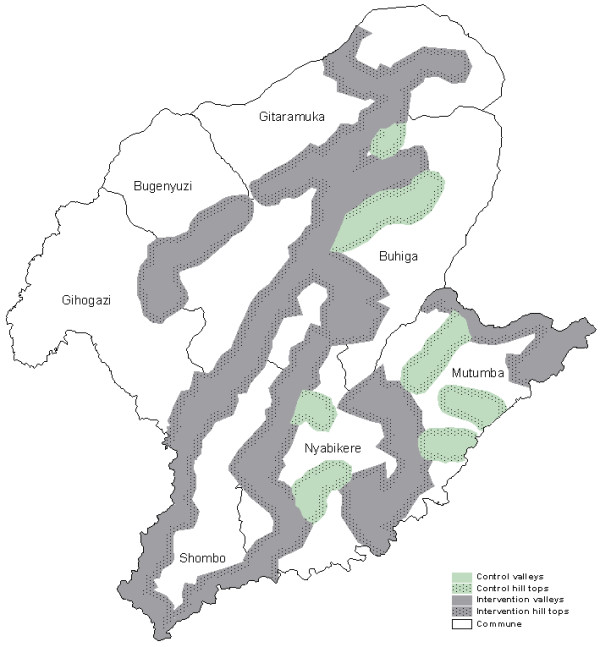
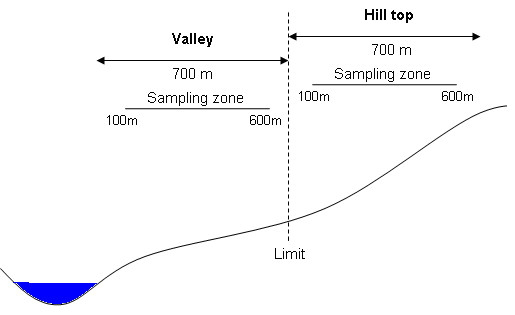
Methods: In Karuzi, in 2002-2005, vector control activities combining indoor residual spraying and long-lasting insecticidal nets were implemented. The interventions were done before the expected malaria transmission period and targeted the valleys between hills, with the expectation that this would also protect the populations living at higher altitudes. The impact on the Anopheles population and on malaria transmission was determined by nine cross-sectional surveys carried out at regular intervals throughout the study period.
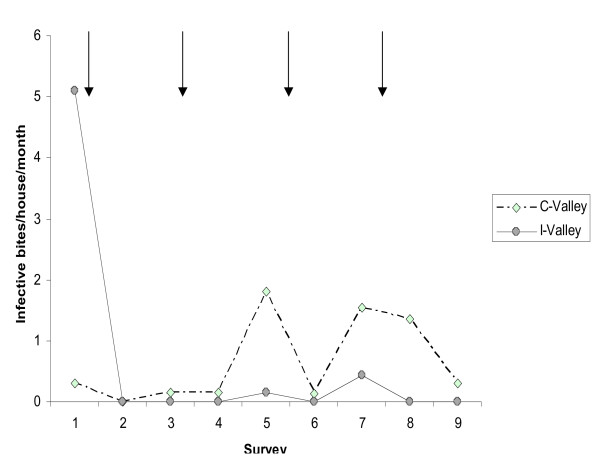
Results: Anopheles gambiae s.l. and Anopheles funestus represented 95% of the collected anopheline species. In the valleys, where the vector control activities were implemented, Anopheles density was reduced by 82% (95% CI: 69-90). Similarly, transmission was decreased by 90% (95% CI: 63%-97%, p = 0.001). In the sprayed valleys, Anopheles density was further reduced by 79.5% (95% CI: 51.7-91.3, p < 0.001) in the houses with nets as compared to houses without them. No significant impact on vector density and malaria transmission was observed in the hill tops. However, the intervention focused on the high risk areas near the valley floor, where 93% of the vectors are found and 90% of the transmission occurs.
Conclusion: Spatial targeted vector control effectively reduced Anopheles density and transmission in this highland district. Bed nets have an additional effect on Anopheles density though this did not translate in an additional impact on transmission. Though no impact was observed in the hilltops, the programme successfully covered the areas most at risk. Such a targeted strategy could prevent the emergence and spread of an epidemic from these high risk foci.
Figures
References
-
- World Health Organization The African summit on Roll Back Malaria, Abuja 25 april 2000. 2000.
-
- World Health Organization . In: Malaria epidemics: forecasting, prevention, early detection and control. From policy to practice: Report of an Informal Consultation. 8-10 December 2003. WHO G, editor. WHO/HTM/MAL/2004.1098. Leysin.Switzerland.; 2003. http://www.who.int/malaria/docs/Leysinreport.pdf
Publication types
MeSH terms
Substances
LinkOut - more resources
Full Text Sources
Medical
