


Tailoring the size distribution of ultrasound contrast agents: possible method for improving sensitivity in molecular imaging
- PMID: 18053409
- PMCID: PMC2367094
Tailoring the size distribution of ultrasound contrast agents: possible method for improving sensitivity in molecular imaging
Abstract
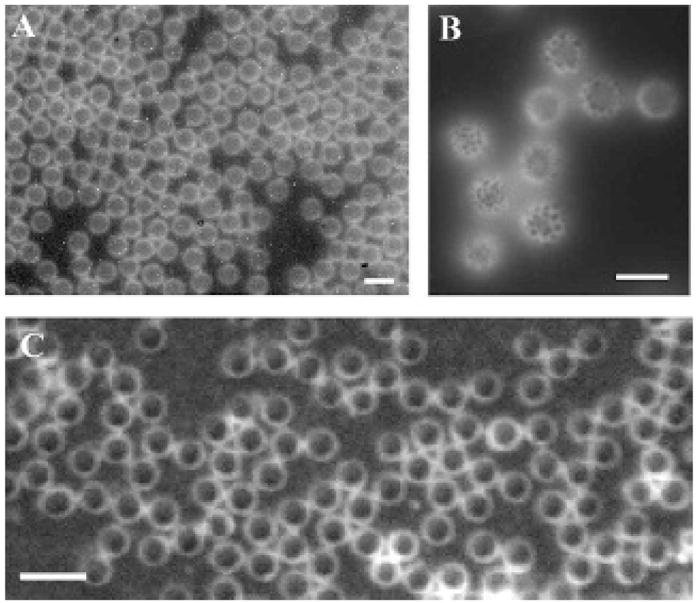
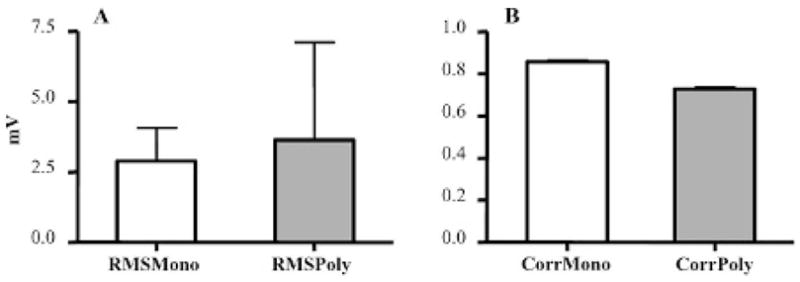
Encapsulated microbubble contrast agents incorporating an adhesion ligand in the microbubble shell are used for molecular imaging with ultrasound. Currently available microbubble agents are produced with techniques that result in a large size variance. Detection of these contrast agents depends on properties related to the microbubble diameter such as resonant frequency, and current ultrasound imaging systems have bandwidth limits that reduce their sensitivity to a polydisperse contrast agent population. For ultrasonic molecular imaging, in which only a limited number of targeted contrast agents may be retained at the site of pathology, it is important to optimize the sensitivity of the imaging system to the entire population of contrast agent. This article presents contrast agents with a narrow size distribution that are targeted for molecular imaging applications. The production of a functionalized, lipid-encapsulated, microbubble contrast agent with a monodisperse population is demonstrated, and we evaluate parameters that influence the size distribution and demonstrate initial acoustic testing.
Figures
References
-
- Lanza GM, Wallace KD, Scott MJ, et al. A novel site-targeted ultrasonic contrast agent with broad biomedical application. Circulation. 1996;94:3334–40. - PubMed
-
- Soman NR, Marsh JN, Hughes MS, et al. Acoustic activation of targeted liquid perfluorocarbon nanoparticles does not compromise endothelial integrity. IEEE Trans Nanobioscience. 2006;5:69–75. - PubMed
-
- Tiukinhoy-Laing SD, Buchanan K, Parikh D, et al. Fibrin targeting of tissue plasminogen activator-loaded echogenic liposomes. J Drug Target. 2007;15:109–14. - PubMed
-
- Leong-Poi H, Christiansen J, Klibanov AL, et al. Noninvasive assessment of angiogenesis by ultrasound and microbubbles targeted to alpha(v)-integrins. Circulation. 2003;107:455–60. - PubMed
-
- Rychak JJ, Lindner JR, Ley K, Klibanov AL. Deformable gas-filled microbubbles targeted to P-selectin. J Control Release. 2006;114:288–99. - PubMed
Publication types
MeSH terms
Substances
Grants and funding
LinkOut - more resources
Full Text Sources
Other Literature Sources