Surgical adverse outcomes and patients' evaluation of quality of care: inherent risk or reduced quality of care?
- PMID: 18055886
- PMCID: PMC2653187
- DOI: 10.1136/qshc.2006.021071
Surgical adverse outcomes and patients' evaluation of quality of care: inherent risk or reduced quality of care?
Abstract
Background: Previous research has shown that sicker patients are less satisfied with their healthcare, but specific effects of adverse health outcomes have not been investigated. The present study aimed to assess whether patients who experience adverse outcomes, in hospital or after discharge, differ in their evaluation of quality of care compared with patients without adverse outcomes.
Method: In hospital adverse outcomes were prospectively recorded by surgeons and surgical residents as part of routine care. Four weeks after discharge, patients were interviewed by telephone about the occurrence of post-discharge adverse outcomes, and their overall evaluation of quality of hospital care and specific suggestions for improvements in the healthcare provided.
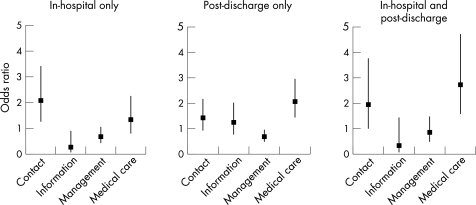
Results: Of 2145 surgical patients admitted to the Leiden University Medical Center in 2003, 1876 (88%) agreed to be interviewed. Overall evaluation was less favourable by patients who experienced post-discharge adverse outcomes only (average 19% lower). These patients were also more often dissatisfied (OR 2.02, 95% CI 1.24 to 3.31) than patients without adverse outcomes, and they more often suggested that improvements were needed in medical care (OR 2.07, 1.45 to 2.95) and that patients were discharged too early (OR 3.26, 1.72 to 6.20). The effect of in hospital adverse outcomes alone was not statistically significant. Patients with both in hospital and post-discharge adverse outcomes also found the quality of care to be lower (on average 33% lower) than patients without adverse outcomes.
Conclusions: Post-discharge adverse outcomes negatively influence patients' overall evaluation of quality of care and are perceived as being discharged too early, suggesting that patients need better information at discharge.
Conflict of interest statement
Competing interests: None.
References
-
- Delbanco T. Hospital medicine: understanding and drawing on the patient's perspective. Am J Med 2001111S2–S4. - PubMed
-
- Crow R, Gage H, Hampson S.et al The measurement of satisfaction with healthcare: implications for practice from a systematic review of the literature. Health Technol Assess 200261–250. - PubMed
Publication types
MeSH terms
LinkOut - more resources
Full Text Sources
Medical