


Adaptive evolution of proteins secreted during sperm maturation: an analysis of the mouse epididymal transcriptome
- PMID: 18056076
- PMCID: PMC2915769
- DOI: 10.1093/molbev/msm265
Adaptive evolution of proteins secreted during sperm maturation: an analysis of the mouse epididymal transcriptome
Abstract
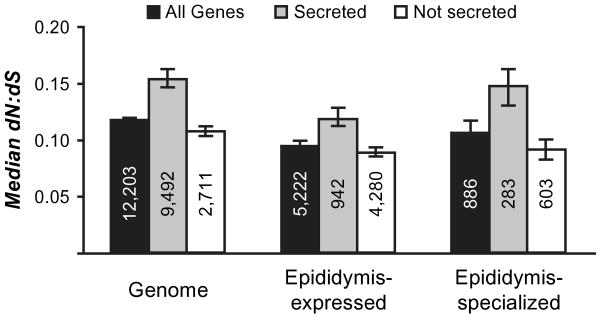
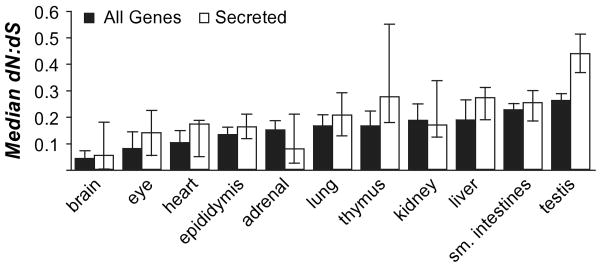
A common pattern observed in molecular evolution is that reproductive genes tend to evolve rapidly. However, most previous studies documenting this rapid evolution are based on genes expressed in just a few male reproductive organs. In mammals, sperm become motile and capable of fertilization only after leaving the testis, during their transit through the epididymis. Thus, genes expressed in the epididymis are expected to play important roles in male fertility. Here, we performed evolutionary genetic analyses on the epididymal transcriptome of mice. Overall, epididymis-expressed genes showed evidence of strong evolutionary constraint, a finding that contrasts with most previous analyses of genes expressed in other male reproductive organs. However, a subset of epididymis-specialized, secreted genes showed several signatures of adaptive evolution, including an increased rate of nonsynonymous evolution. Furthermore, this subset of genes was overrepresented on the X chromosome. Immunity and protein modification functions were significantly overrepresented among epididymis-specialized, secreted genes. These analyses identified a group of genes likely to be important in male reproductive success.
Figures
References
-
- Anderson MJ, Hessel JK, Dixson AF. Primate mating systems and the evolution of immune response. J Reprod Immunol. 2004;61:31–38. - PubMed
-
- Andres JA, Maroja LS, Bogdanowicz SM, Swanson WJ, Harrison RG. Molecular evolution of seminal proteins in field crickets. Mol Biol Evol. 2006;23:1574–1584. - PubMed
-
- Bedford JM, Hoskins DD. The mammalian spermatozoon: morphology, biochemistry, and physiology. In: Lamming GE, editor. Marshall's physiology of reproduction. London: Churchill Livingstone; 1990. pp. 379–568.
Publication types
MeSH terms
Substances
Grants and funding
LinkOut - more resources
Full Text Sources
Other Literature Sources
