


Equine infectious anemia virus entry occurs through clathrin-mediated endocytosis
- PMID: 18057237
- PMCID: PMC2258727
- DOI: 10.1128/JVI.01754-07
Equine infectious anemia virus entry occurs through clathrin-mediated endocytosis
Abstract
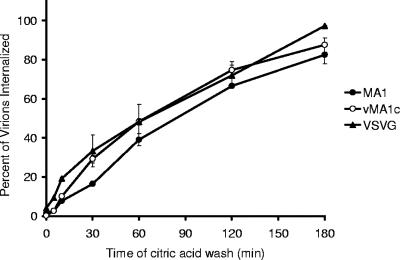
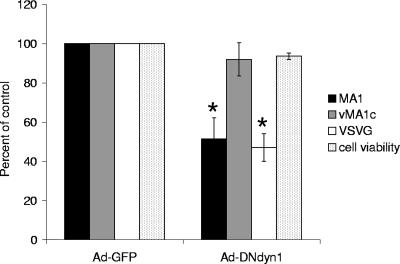
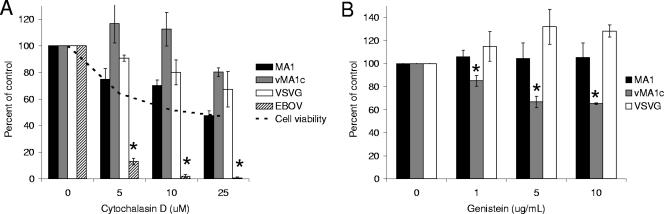
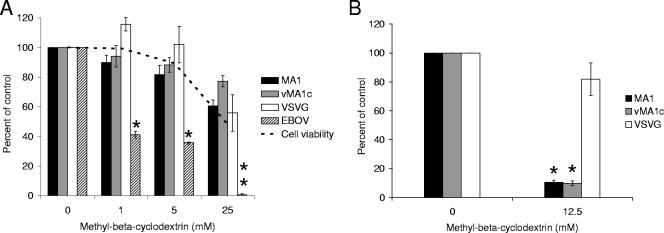
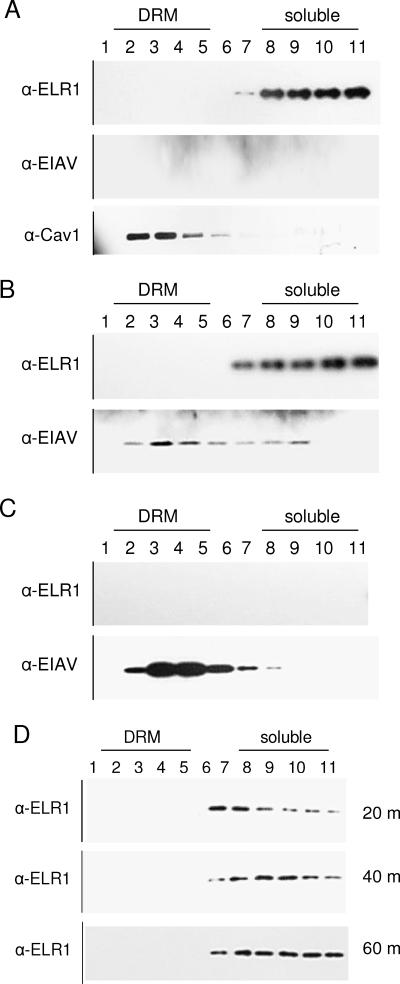
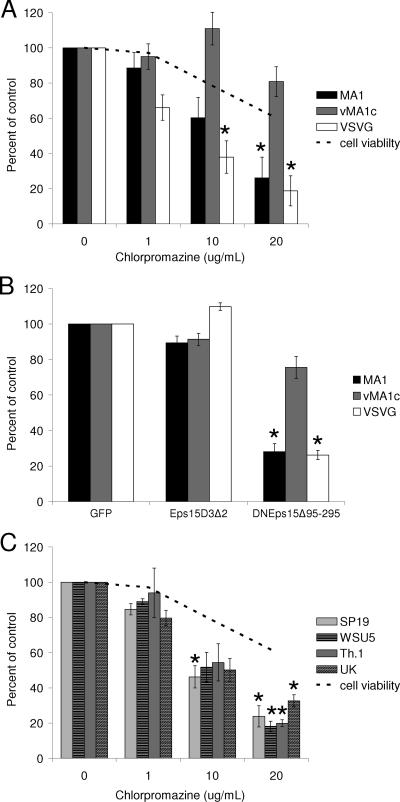
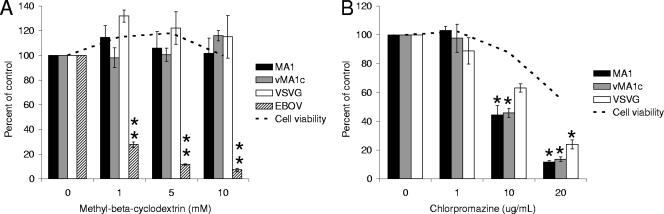
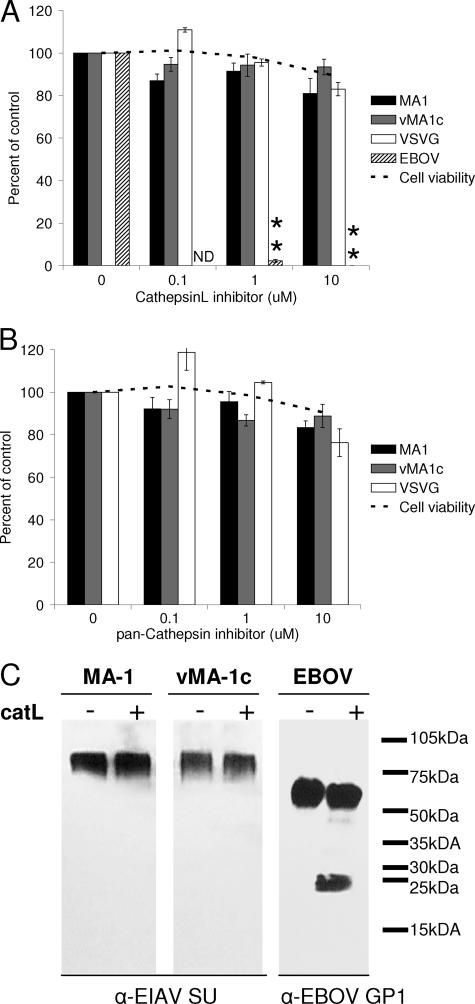
Entry of wild-type lentivirus equine infectious anemia virus (EIAV) into cells requires a low-pH step. This low-pH constraint implicates endocytosis in EIAV entry. To identify the endocytic pathway involved in EIAV entry, we examined the entry requirements for EIAV into two different cells: equine dermal (ED) cells and primary equine endothelial cells. We investigated the entry mechanism of several strains of EIAV and found that both macrophage-tropic and tissue culture-adapted strains utilize clathrin-coated pits for entry. In contrast, a superinfecting strain of EIAV, EIAV(vMA-1c), utilizes two mechanisms of entry. In cells such as ED cells that EIAV(vMA-1c) is able to superinfect, viral entry is pH independent and appears to be mediated by plasma membrane fusion, whereas in cells where no detectable superinfection occurs, EIAV(vMA-1c) entry that is low-pH dependent occurs through clathrin-coated pits in a manner similar to wild-type virus. Regardless of the mechanism of entry being utilized, the internalization kinetics of EIAV is rapid with 50% of cell-associated virions internalizing within 60 to 90 min. Cathepsin inhibitors did not prevent EIAV entry, suggesting that the low-pH step required by wild-type EIAV is not required to activate cellular cathepsins.
Figures
References
-
- Barnard, R. J., and J. A. Young. 2003. Alpharetrovirus envelope-receptor interactions. Curr. Top. Microbiol. Immunol. 281107-136. - PubMed
-
- Benmerah, A., M. Bayrou, N. Cerf-Bensussan, and A. Dautry-Varsat. 1999. Inhibition of clathrin-coated pit assembly by an Eps15 mutant. J. Cell Sci. 1121303-1311. - PubMed
Publication types
MeSH terms
Substances
Grants and funding
LinkOut - more resources
Full Text Sources
