


Redirecting lipoic acid ligase for cell surface protein labeling with small-molecule probes
- PMID: 18059260
- PMCID: PMC2654346
- DOI: 10.1038/nbt1355
Redirecting lipoic acid ligase for cell surface protein labeling with small-molecule probes
Abstract
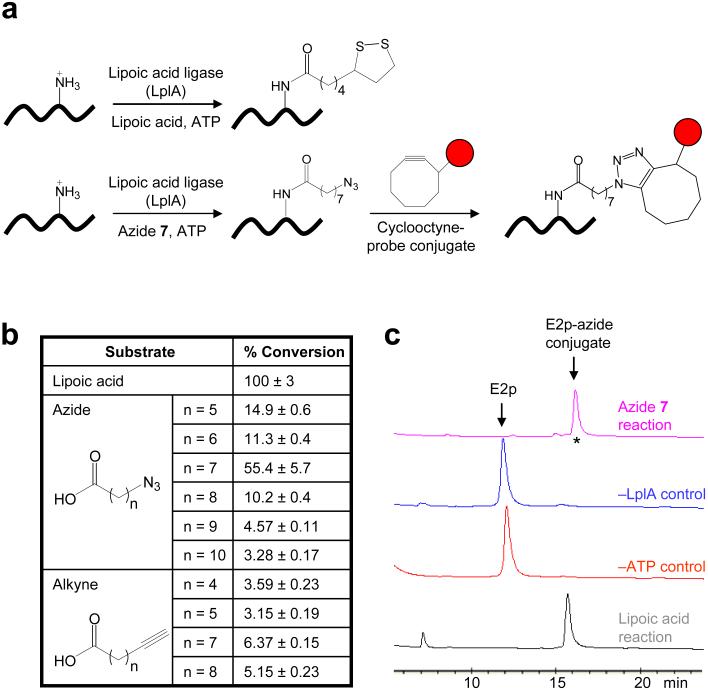
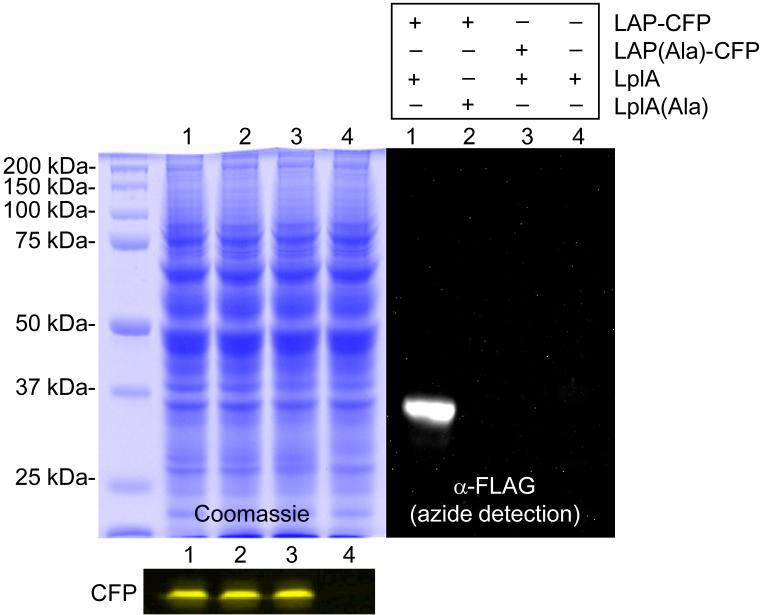
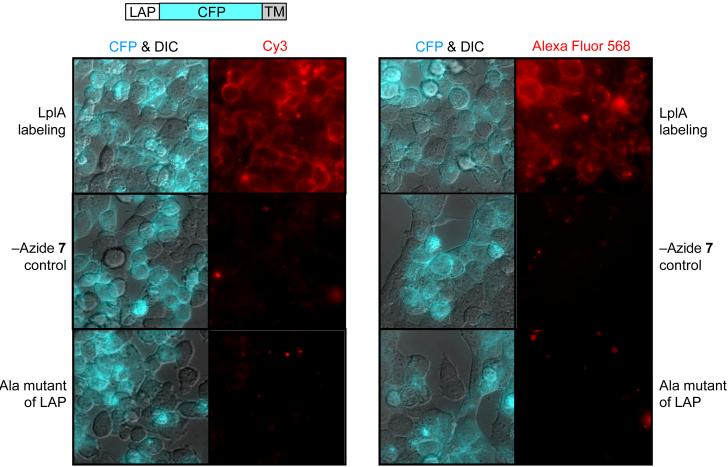
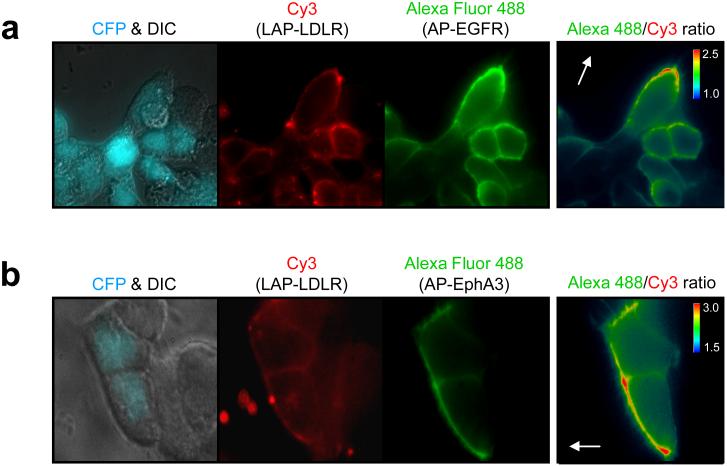
Live cell imaging is a powerful method to study protein dynamics at the cell surface, but conventional imaging probes are bulky, or interfere with protein function, or dissociate from proteins after internalization. Here, we report technology for covalent, specific tagging of cellular proteins with chemical probes. Through rational design, we redirected a microbial lipoic acid ligase (LplA) to specifically attach an alkyl azide onto an engineered LplA acceptor peptide (LAP). The alkyl azide was then selectively derivatized with cyclo-octyne conjugates to various probes. We labeled LAP fusion proteins expressed in living mammalian cells with Cy3, Alexa Fluor 568 and biotin. We also combined LplA labeling with our previous biotin ligase labeling, to simultaneously image the dynamics of two different receptors, coexpressed in the same cell. Our methodology should provide general access to biochemical and imaging studies of cell surface proteins, using small fluorophores introduced via a short peptide tag.
Figures
References
-
- Debant A, Ponzio G, Clauser E, Contreres JO, Rossi B. Receptor cross-linking restores an insulin metabolic effect altered by mutation on tyrosine 1162 and tyrosine 1163. Biochemistry. 1989;28:14–17. - PubMed
-
- Weiss A, Littman DR. Signal transduction by lymphocyte antigen receptors. Cell. 1994;76:263–274. - PubMed
Publication types
MeSH terms
Substances
Grants and funding
LinkOut - more resources
Full Text Sources
Other Literature Sources
Research Materials
