


Potentiation of HIV-1 expression in microglial cells by nicotine: involvement of transforming growth factor-beta 1
- PMID: 18060582
- PMCID: PMC8374949
- DOI: 10.1007/s11481-007-9098-7
Potentiation of HIV-1 expression in microglial cells by nicotine: involvement of transforming growth factor-beta 1
Abstract
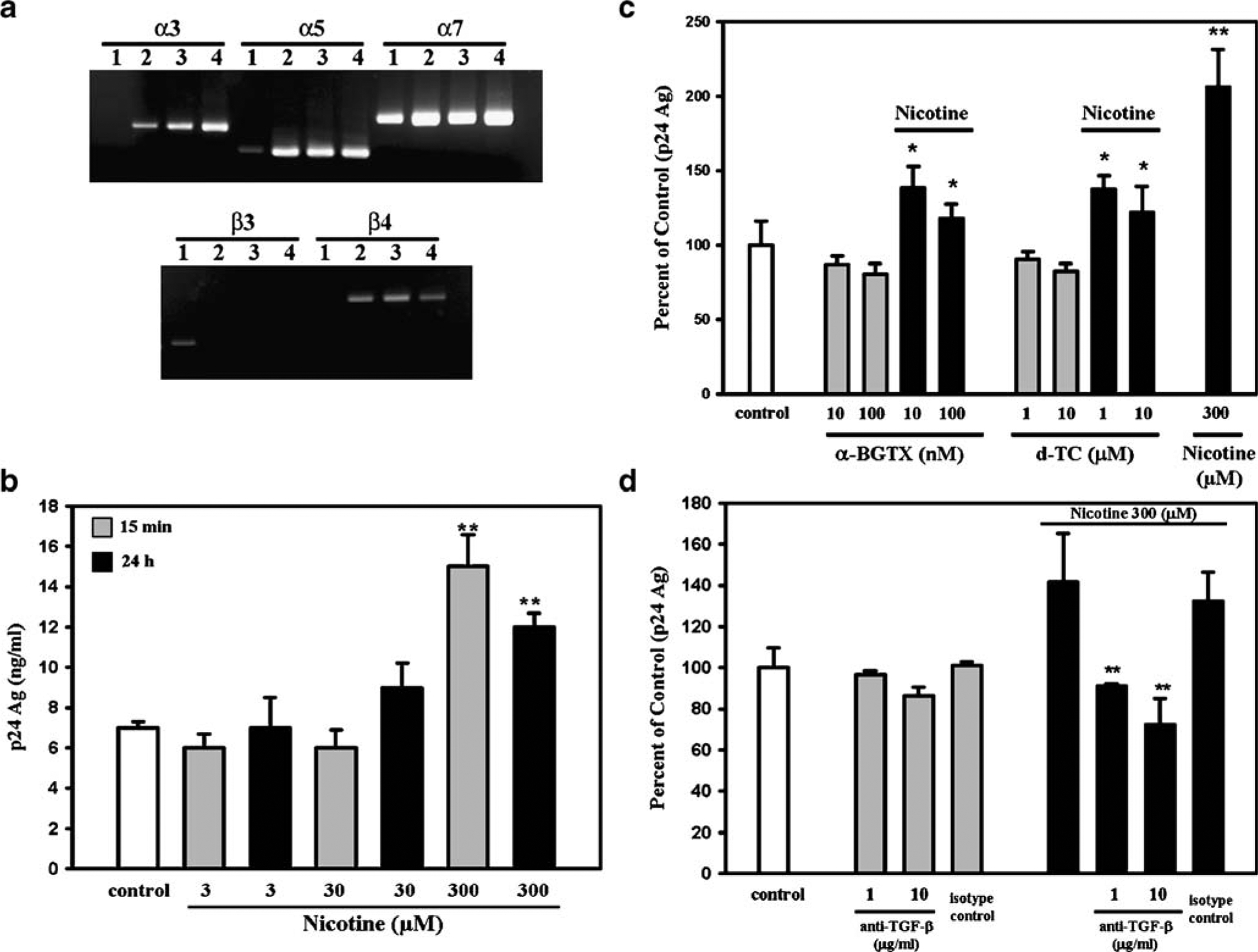
HIV-1 infection and nicotine addiction are global public health crises. In the central nervous system, HIV-1 causes a devastating neurodegenerative disease. It is well recognized that microglial cells play a pivotal role in the neuropathogenesis of HIV-1 and that drugs of abuse not only contribute to the spread of this agent but may facilitate viral expression in these brain macrophages. Nicotine has been shown to stimulate the production of HIV-1 by in vitro-infected alveolar macrophages, and the HIV-1 protein gp120 binds to nicotinic receptors. In this study, we demonstrated the constitutive expression of nicotinic acetylcholine receptor mRNA in primary human microglial cells and showed that the pretreatment of microglia with nicotine increased HIV-1 expression in a concentration-dependent manner, as measured by p24 antigen levels in culture supernatants. We also found that nicotine robustly altered the gene expression profile of HIV-1-infected microglia and that the transforming growth factor-beta1 is involved in the enhanced expression of HIV-1 by nicotine.
Conflict of interest statement
None of the authors has a commercial or other association that might pose a conflict of interest with the current study.
Figures
References
-
- Abbud RA, Finegan CK, Guay LA, Rich EA (1995) Enhanced production of human immunodeficiency virus type 1 by in vitro-infected alveolar macrophages from otherwise healthy cigarette smokers. J Infect Dis 172:859–863 - PubMed
-
- Bell JE (2004) An update on the neuropathology of HIV in the HAART era. Histopathology 45:549–559 - PubMed
-
- Bracci L, Lozzi L, Rustici M, Neri P (1992) Binding of HIV-1 gp120 to the nicotinic receptor. FEBS Lett 311:115–118 - PubMed
-
- Chong IW, Lin SR, Hwang JJ, Huang MS, Wang TH, Hung JY, Paulauskis JD (2002) Expression and regulation of the macrophage inflammatory protein-1 alpha gene by nicotine in rat alveolar macrophages. Eur Cytokine Netw 13:242–249 - PubMed
-
- Gekker G, Hu S, Sheng WS, Rock RB, Lokensgard JR, Peterson PK (2006) Cocaine-induced HIV-1 expression in microglia involves sigma-1 receptors and transforming growth factor-beta1. Int Immunopharmacol 6:1029–1033 - PubMed
Publication types
MeSH terms
Substances
Grants and funding
LinkOut - more resources
Full Text Sources
