


Kinetics and mechanism of Dionaea muscipula trap closing
- PMID: 18065564
- PMCID: PMC2245849
- DOI: 10.1104/pp.107.108241
Kinetics and mechanism of Dionaea muscipula trap closing
Abstract
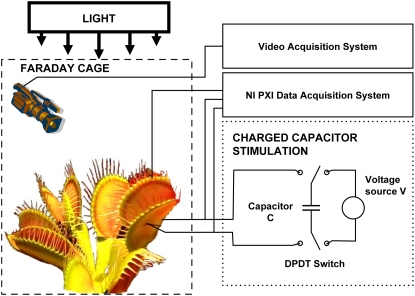
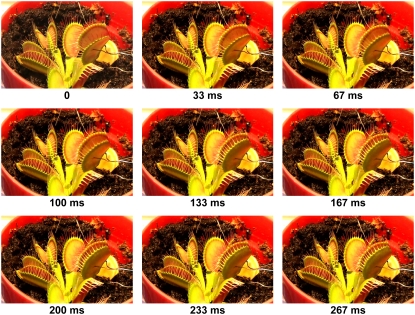
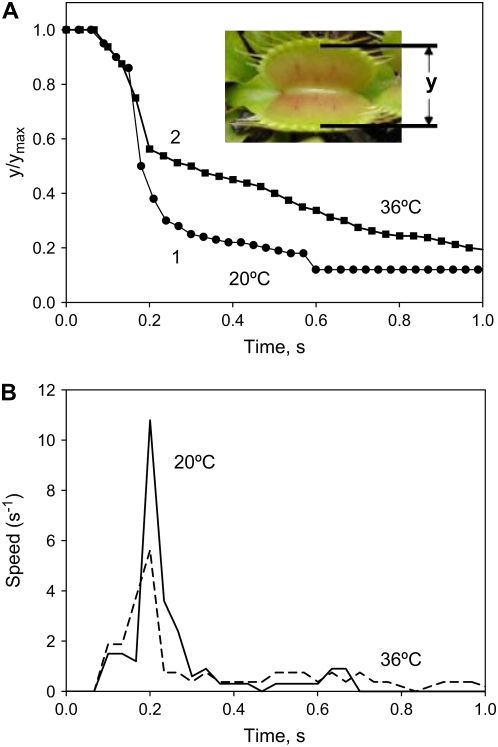
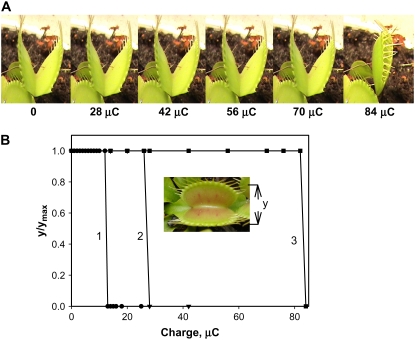
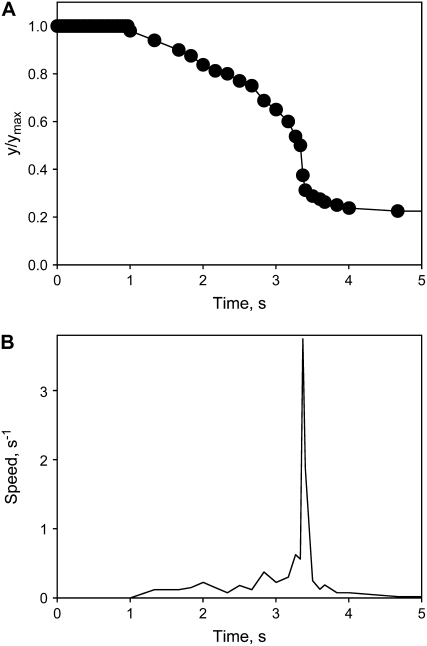
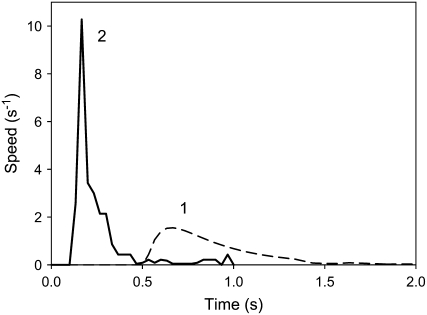
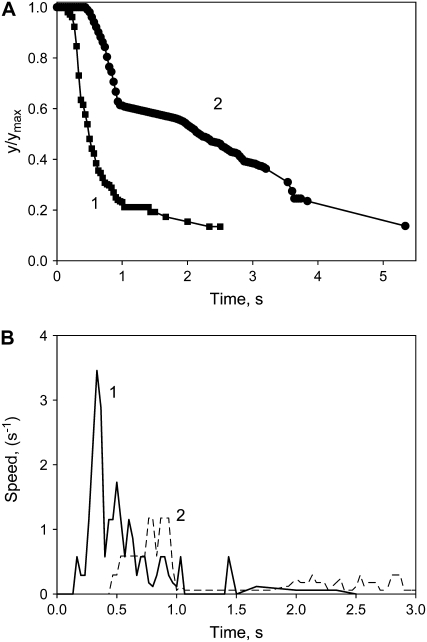
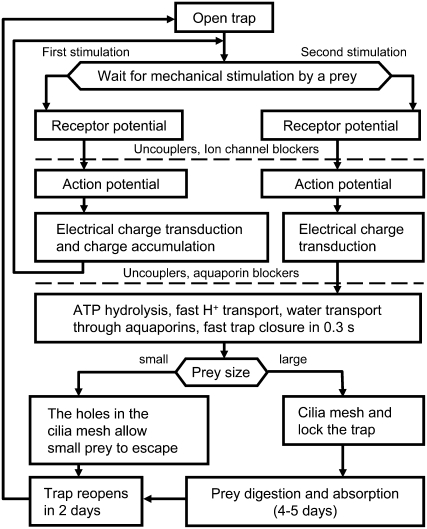
The Venus flytrap (Dionaea muscipula) possesses an active trapping mechanism to capture insects with one of the most rapid movements in the plant kingdom, as described by Darwin. This article presents a detailed experimental investigation of trap closure by mechanical and electrical stimuli and the mechanism of this process. Trap closure consists of three distinctive phases: a silent phase with no observable movement; an accelerated movement of the lobes; and the relaxation of the lobes in their closed state, resulting in a new equilibrium. Uncouplers and blockers of membrane channels were used to investigate the mechanisms of different phases of closing. Uncouplers increased trap closure delay and significantly decreased the speed of trap closure. Ion channel blockers and aquaporin inhibitors increased time of closing. Transmission of a single electrical charge between a lobe and the midrib causes closure of the trap and induces an electrical signal propagating between both lobes and midrib. The Venus flytrap can accumulate small subthreshold charges, and when the threshold value is reached, the trap closes. Repeated application of smaller charges demonstrates the summation of stimuli. The cumulative character of electrical stimuli points to the existence of electrical memory in the Venus flytrap. The observed fast movement can be explained by the hydroelastic curvature model without invoking buckling instability. The new hydroelastic curvature mechanism provides an accurate description of the authors' experimental data.
Figures
References
-
- Bobji MS (2005) Springing the trap. J Biosci 30 143–146 - PubMed
-
- Braam J (2005) In touch: plant responses to mechanical stimuli. New Phytol 165 373–389 - PubMed
-
- Brown WH (1916) The mechanism of movement and the duration of the effect of stimulation in the leaves of Dionaea. Am J Bot 3 68–90
-
- Brown WH, Sharp LW (1910) The closing response in Dionaea. Bot Gaz 49 290–302
Publication types
MeSH terms
Substances
LinkOut - more resources
Full Text Sources
Other Literature Sources
