. 2008 Jan;10(1):53-60.
doi: 10.1038/ncb1668. Epub 2007 Dec 9.

Phosphorylation of histone H3 at threonine 11 establishes a novel chromatin mark for transcriptional regulation

Affiliations

Phosphorylation of histone H3 at threonine 11 establishes a novel chromatin mark for transcriptional regulation

Eric Metzger et al. Nat Cell Biol. 2008 Jan.

Erratum in

  • Nat Cell Biol. 2008 Feb;10(2):245

Abstract

Posttranslational modifications of histones such as methylation, acetylation and phosphorylation regulate chromatin structure and gene expression. Here we show that protein-kinase-C-related kinase 1 (PRK1) phosphorylates histone H3 at threonine 11 (H3T11) upon ligand-dependent recruitment to androgen receptor target genes. PRK1 is pivotal to androgen receptor function because PRK1 knockdown or inhibition impedes androgen receptor-dependent transcription. Blocking PRK1 function abrogates androgen-induced H3T11 phosphorylation and inhibits androgen-induced demethylation of histone H3. Moreover, serine-5-phosphorylated RNA polymerase II is no longer observed at androgen receptor target promoters. Phosphorylation of H3T11 by PRK1 accelerates demethylation by the Jumonji C (JmjC)-domain-containing protein JMJD2C. Thus, phosphorylation of H3T11 by PRK1 establishes a novel chromatin mark for gene activation, identifying PRK1 as a gatekeeper of androgen receptor-dependent transcription. Importantly, levels of PRK1 and phosphorylated H3T11 correlate with Gleason scores of prostate carcinomas. Finally, inhibition of PRK1 blocks proliferation of androgen receptor-induced tumour cell proliferation, making PRK1 a promising therapeutic target.


Figures
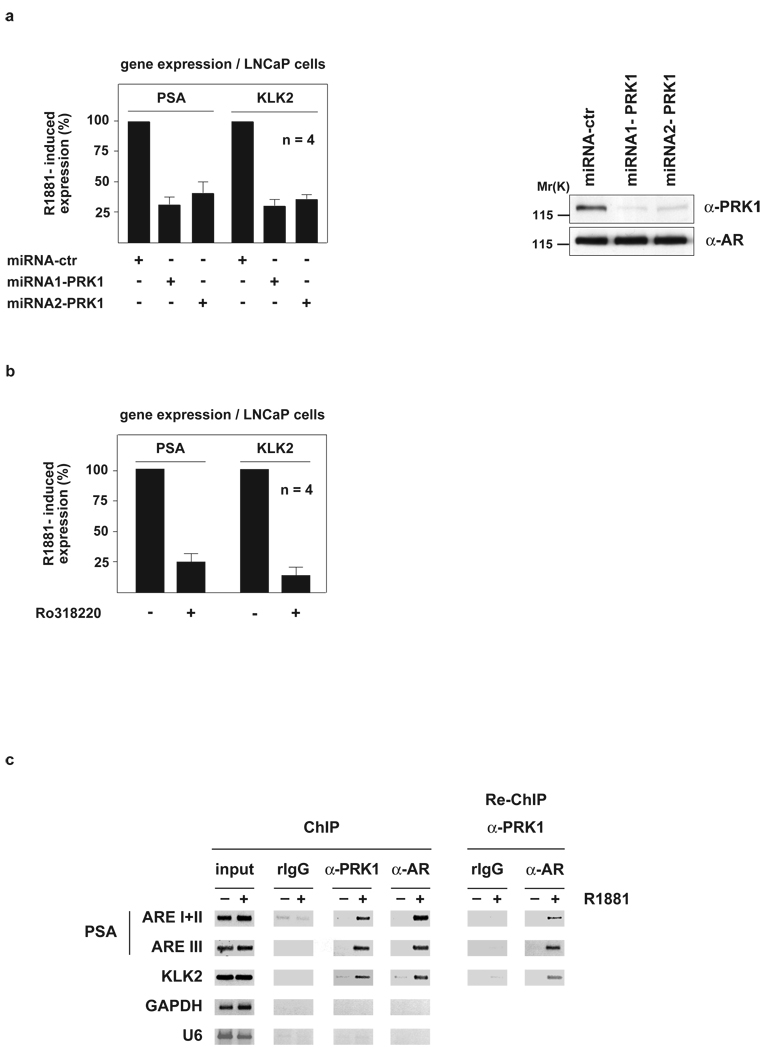
Figure 1
Figure 1
PRK1 controls AR-dependent gene expression and associates with chromatin. LNCaP cells were cultivated in the presence or absence of the AR agonist R1881. miRNA-mediated PRK1 knockdown (a) or the PRK1 inhibitor Ro318220 (b) reduce expression of the endogenous PSA and KLK2 genes (a, left panel, b). Western blot analysis (a, right panel) verified the specific miRNA-mediated knockdown of PRK1. Bars represent mean +SD (n=4). ChIP and Re-ChIP (c) using the indicated antibodies demonstrate androgen-dependent association of AR and PRK1 at promoters of AR-regulated genes. The precipitated chromatin was amplified by PCR using primers flanking the AREs in the promoter region of the PSA and KLK2 genes, or the promoters of the unrelated GAPDH and U6 genes.
Figure 2
Figure 2
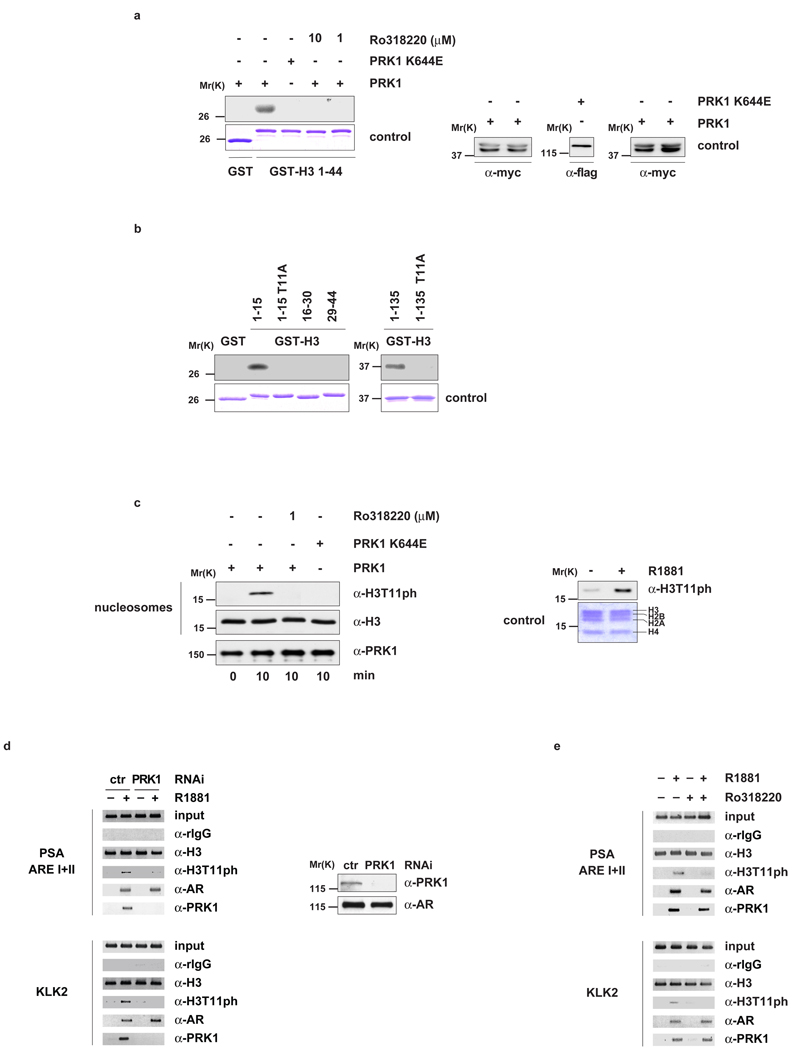
PRK1 phosphorylates histone H3 at threonine 11 (H3T11). Bacterially expressed GST and GST-H3 (a, b) or nucleosomes from HeLa cells (c, left panel) were incubated for the indicated time with active PRK1 or the kinase dead mutant PRK1 K644E in the presence or absence of the inhibitor Ro318220. Coomassie blue staining (a and b, lower panels) and Western blot analyses (a, right panel) show the amounts of GST fusion proteins and PRK1 used. Western blots were decorated with the indicated antibodies (c, left panel). Nucleosomes purified from LNCaP cells cultivated in the presence or absence of R1881 for 30 minutes were analysed in Western blot (c, right panel). For ChIP (d, e), LNCaP cells were cultivated in the presence or absence of the AR agonist R1881, transfected with either siRNA (d) or treated with or without Ro318220 (e) as indicated, and subjected to ChIP with the indicated antibodies. The precipitated chromatin was amplified by PCR using primers flanking AREs in the promoter region of the PSA and KLK2 genes. Western blot analysis (d, right panel) verified the specific siRNA-mediated knockdown of PRK1.
Figure 3
Figure 3
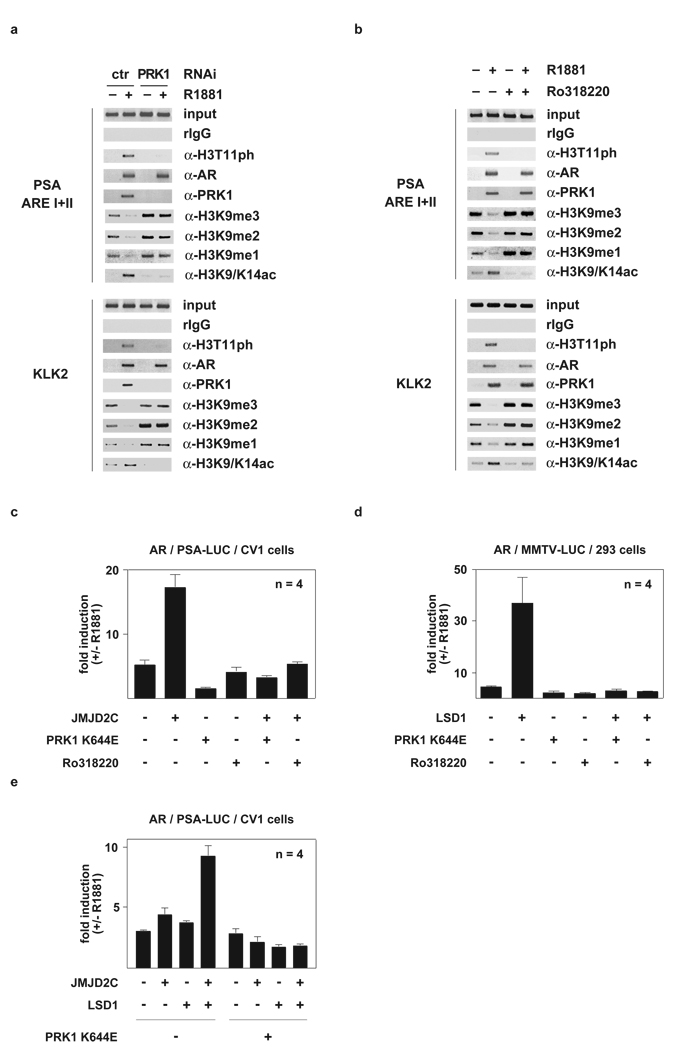
PRK1 controls modifications of histone H3 and AR-dependent gene expression. For ChIP (a, b) and transient transfections (c, d, e), cells were cultivated in the presence or absence of the AR agonist R1881 and the inhibitor Ro318220 (b, c, d), or transfected with siRNA (a). ChIP analyses were performed with the indicated antibodies. The precipitated chromatin was amplified by PCR using primers flanking AREs in the promoter region of the PSA and KLK2 genes. For transient transfections, CV1 (c, e) or 293 (d) cells were co-transfected with AR expression plasmid and AR-dependent reporters. Bars represent mean +SD (n=4).
Figure 4
Figure 4
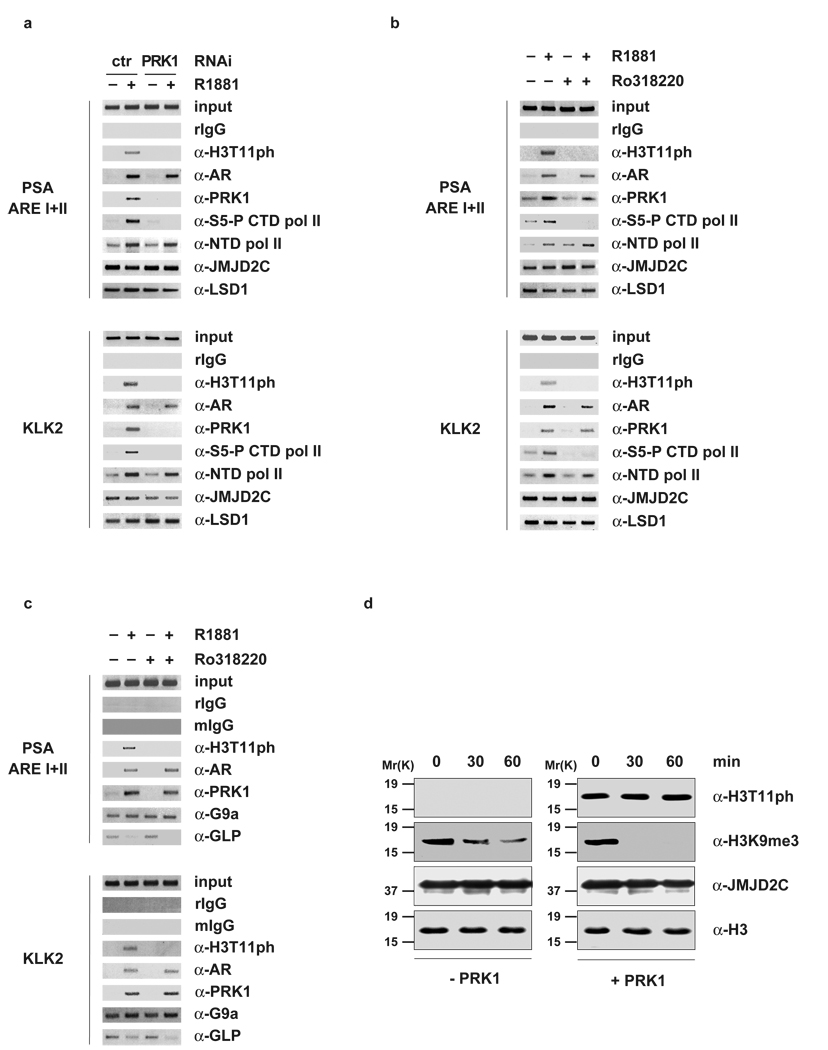
PRK1 controls transition to the initiation complex and accelerates demethylation by JMJD2C. For ChIP (a, b, c), cells were cultivated in the presence or absence of the AR agonist R1881 and the inhibitor Ro318220 (b, c), or transfected with siRNA (a). ChIP analyses were performed with the indicated antibodies. The precipitated chromatin was amplified by PCR using primers flanking AREs in the promoter region of the PSA and KLK2 genes. Untreated nucleosomes (d, left panel) and nucleosomes phosphorylated at H3T11 in vitro (d, right panel) were incubated with 10 µg bacterially expressed and purified His-JMJD2C for the indicated times. Western blots were decorated with the indicated antibodies.
Figure 5
Figure 5
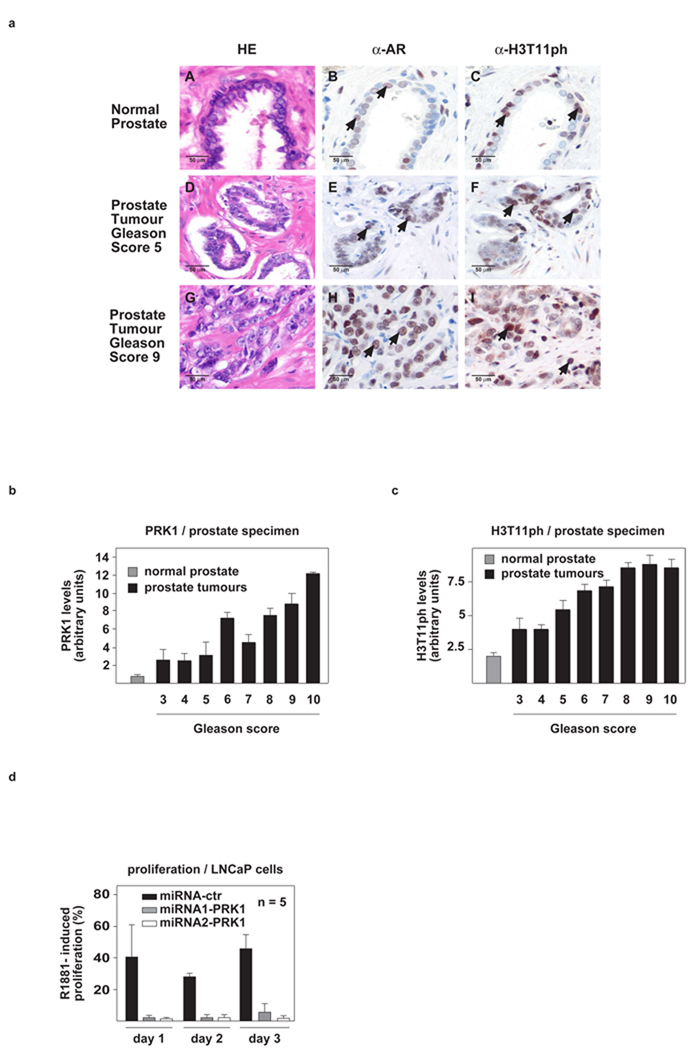
PRK1 and H3T11ph levels positively correlate with the malignancy of prostate cancer and control tumour cell proliferation. (a), Immunohistochemical staining of AR and H3T11ph in human normal and tumour prostate. AR (B, E, H) and H3T11ph (C, F, I) immunoreactivity is detected in the secretory epithelium of normal prostate (B, C, arrows) and prostate carcinoma cells (E, F, H, I, arrows). Hematoxilin-eosin (HE) stained sections are shown in A, D, and G. All sections were taken from the same radical prostatectomy specimen (magnification: ×250). (b, c) The correlation of elevated PRK1 and H3T11ph levels with high Gleason score in a panel of 111 human prostate carcinomas is highly significant: r=0.499, p<0.001 (b) and r=0.450, p<0.001 (c). Normal prostate specimens (n=20) are included as a control. (d) In LNCaP cells, miRNA-mediated PRK1 knockdown severely reduces R1881-induced cell proliferation. Bars represent mean +SD (n≥4).

Comment in

References

    1. Strahl BD, Allis CD. The language of covalent histone modifications. Nature. 2000;403:41–45. - PubMed
    1. Phatnani HP, Greenleaf AL. Phosphorylation and functions of the RNA polymerase II CTD. Genes Dev. 2006;20:2922–2936. - PubMed
    1. Metzger E, et al. LSD1 demethylates repressive histone marks to promote androgen-receptor-dependent transcription. Nature. 2005;437:436–439. - PubMed
    1. Wissmann M, et al. Cooperative demethylation by JMJD2C and LSD1 promotes androgen receptor-dependent gene expression. Nat. Cell. Biol. 2007;9:347–353. - PubMed
    1. Kang Z, Pirskanen A, Janne OA, Palvimo JJ. Involvement of proteasome in the dynamic assembly of the androgen receptor transcription complex. J. Biol. Chem. 2002;277:48366–48371. - PubMed

Publication types

MeSH terms