


Glial cells: old cells with new twists
- PMID: 18068219
- PMCID: PMC2365468
- DOI: 10.1016/j.acthis.2007.10.003
Glial cells: old cells with new twists
Abstract
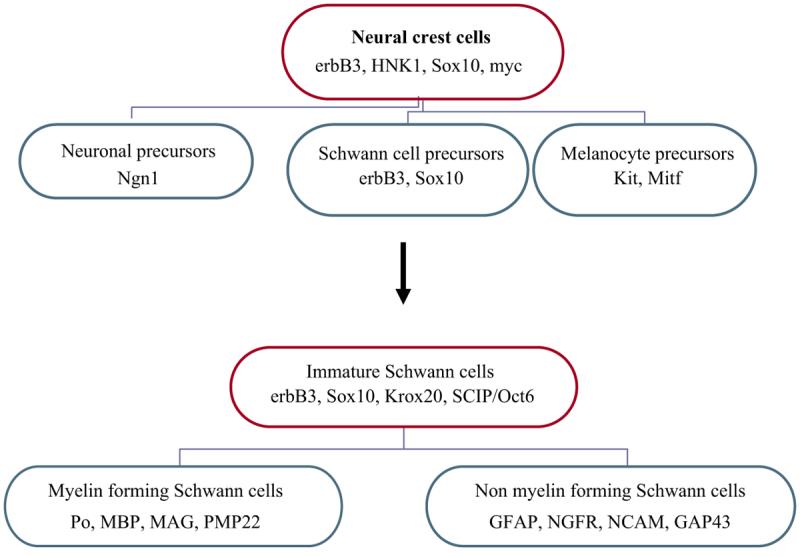
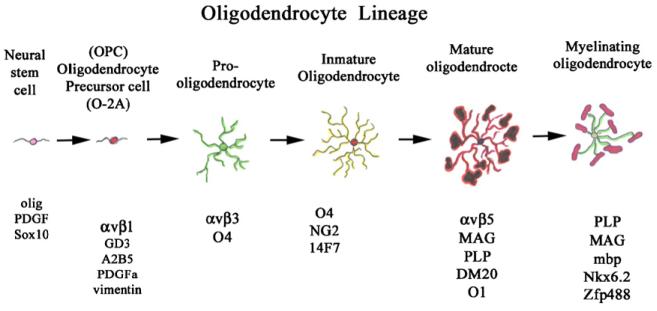
Based on their characteristics and function--migration, neural protection, proliferation, axonal guidance and trophic effects--glial cells may be regarded as probably the most versatile cells in our body. For many years, these cells were considered as simply support cells for neurons. Recently, it has been shown that they are more versatile than previously believed--as true stem cells in the nervous system--and are important players in neural function and development. There are several glial cell types in the nervous system: the two most abundant are oligodendrocytes in the central nervous system and Schwann cells in the peripheral nervous system. Although both of these cells are responsible for myelination, their developmental origins are quite different. Oligodendrocytes originate from small niche populations from different regions of the central nervous system, while Schwann cells develop from a stem cell population (the neural crest) that gives rise to many cell derivatives besides glia and which is a highly migratory group of cells.
Figures
References
-
- Asakura K, Miller DJ, Murray K, Bansal R, Pfeiffer SE, Rodriguez M. Monoclonal autoantibody SCH94.03, which promotes central nervous system remyelination, recognizes an antigen on the surface of oligodendrocytes. J Neurosci Res. 1996;43:273–81. - PubMed
-
- Augustine K, Liu ET, Sadler TW. Antisense attenuation of Wnt-1 and Wnt-3a expression in whole embryo culture reveals roles for these genes in craniofacial, spinal cord, and cardiac morphogenesis. Dev Genet. 1993;14:500–20. - PubMed
-
- Baker CV, Bronner-Fraser M. The origins of the neural crest. Part II: An evolutionary perspective. Mech Dev. 1997;69:13–29. - PubMed
Publication types
MeSH terms
Grants and funding
LinkOut - more resources
Full Text Sources
