


Cancer survivorship: challenges and changing paradigms
- PMID: 18076919
- PMCID: PMC2665172
- DOI: 10.1016/j.juro.2007.09.029
Cancer survivorship: challenges and changing paradigms
Abstract
Purpose: We summarize the potential issues faced by cancer survivors, define a conceptual framework for cancer survivorship, describe challenges associated with improving the quality of survivorship care and outline proposed survivorship programs that may be implemented going forward.
Materials and methods: We performed a nonsystematic review of current cancer survivorship literature. Given the comprehensive scope and high profile, the recent report by the Institute of Medicine, From Cancer Patient to Cancer Survivor: Lost in Transition, served as the principal guide for the review.
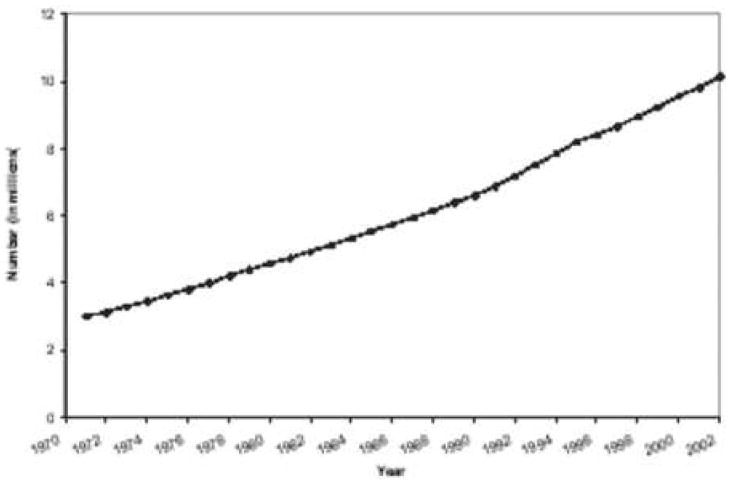
Results: In recognition of the increasing number of cancer survivors in the United States survivorship has become an important health care concern. The recent report by the Institute of Medicine comprehensively outlined deficits in the care provided to cancer survivors, and proposed mechanisms to improve the coordination and quality of followup care for this increasing number of Americans. Measures to achieve these objectives include improving communication between health care providers through a survivorship care plan, providing evidence based surveillance guidelines and assessing different models of survivorship care. Implementing coordinated survivorship care broadly will require additional health care resources, and commitment from health care providers and payers. Research demonstrating the effectiveness of survivorship care will be important on this front.
Conclusions: Potential shortcomings in the recognition and management of ongoing issues faced by cancer survivors may impact the overall quality of long-term care in this increasing population. Although programs to address these issues have been proposed, there is substantial work to be done in this area.
Figures
References
-
- Oeffinger KC, McCabe MS. Models for delivering survivorship care. J Clin Oncol. 2006;24:5117–5124. - PubMed
-
- Hewitt M, Greenfield S, Stovall E. From Cancer Patient to Cancer Survivor: Lost in Transition. Washington, D. C.: The National Academies Press; 2006.
-
- Miller SC, Sanda MG, Dunn RL, Montie JE, Pimentel H, Sandler HM, et al. Long-term outcomes among localized prostate cancer survivors: health-related quality-of-life changes after radical prostatectomy, external radiation and brachytherapy. J Clin Oncol. 2005;23:2772–80. - PubMed
-
- Shahinian VB, Kuo YF, Freeman JL, Goodwin JS. Risk of fracture after androgen deprivation for prostate cancer. N Engl J Med. 2005;352:154–64. - PubMed
-
- Keating NL, O’Malley AJ, Smith MR. Diabetes and cardiovascular disease during androgen deprivation therapy for prostate cancer. J Clin Oncol. 2006;24:4448–56. - PubMed
Publication types
MeSH terms
Grants and funding
LinkOut - more resources
Full Text Sources
Medical
