


Runs of homozygosity reveal highly penetrant recessive loci in schizophrenia
- PMID: 18077426
- PMCID: PMC2148402
- DOI: 10.1073/pnas.0710021104
Runs of homozygosity reveal highly penetrant recessive loci in schizophrenia
Abstract
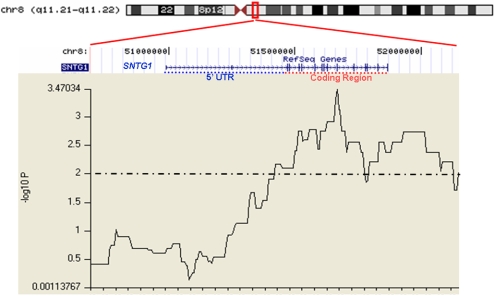
Evolutionarily significant selective sweeps may result in long stretches of homozygous polymorphisms in individuals from outbred populations. We developed whole-genome homozygosity association (WGHA) methodology to characterize this phenomenon in healthy individuals and to use this genomic feature to identify genetic risk loci for schizophrenia (SCZ). Applying WGHA to 178 SCZ cases and 144 healthy controls genotyped at 500,000 markers, we found that runs of homozygosity (ROHs), ranging in size from 200 kb to 15 mb, were common in unrelated Caucasians. Properties of common ROHs in healthy subjects, including chromosomal location and presence of nonancestral haplotypes, converged with prior reports identifying regions under selective pressure. This interpretation was further supported by analysis of multiethnic HapMap samples genotyped with the same markers. ROHs were significantly more common in SCZ cases, and a set of nine ROHs significantly differentiated cases from controls. Four of these 9 "risk ROHs" contained or neighbored genes associated with SCZ (NOS1AP, ATF2, NSF, and PIK3C3). Several of these risk ROHs were very rare in healthy subjects, suggesting that recessive effects of relatively high penetrance may explain a proportion of the genetic liability for SCZ. Other risk ROHs feature haplotypes that are also common in healthy individuals, possibly indicating a source of balancing selection.
Conflict of interest statement
Conflict of interest statement: C.L. is employed with Golden Helix and holds >5% equity in the company. Golden Helix subsequently developed a commercial version of the data analysis methodologies described in this paper.
Figures
References
Publication types
MeSH terms
Substances
Grants and funding
LinkOut - more resources
Full Text Sources
Medical
Miscellaneous
