


Transient mitogen-activated protein kinase activation is confined to a narrow temporal window required for the induction of two-trial long-term memory in Aplysia
- PMID: 18077681
- PMCID: PMC6673619
- DOI: 10.1523/JNEUROSCI.4262-07.2007
Transient mitogen-activated protein kinase activation is confined to a narrow temporal window required for the induction of two-trial long-term memory in Aplysia
Abstract
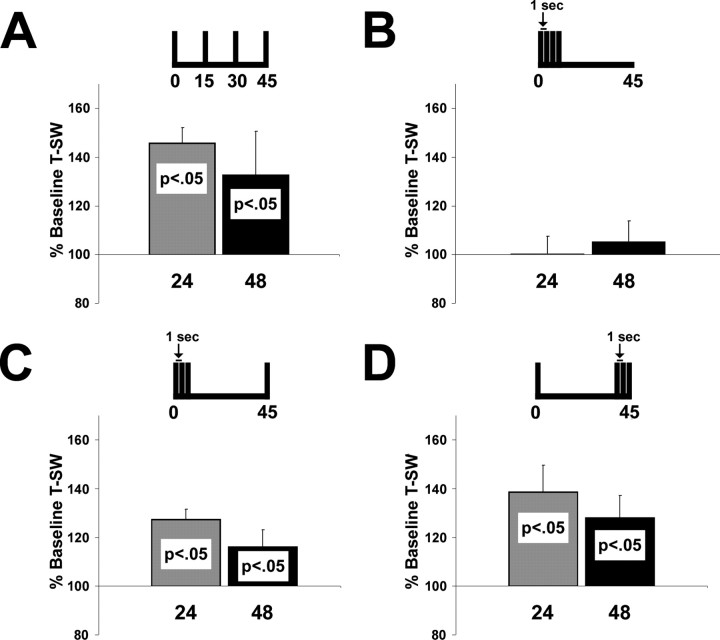
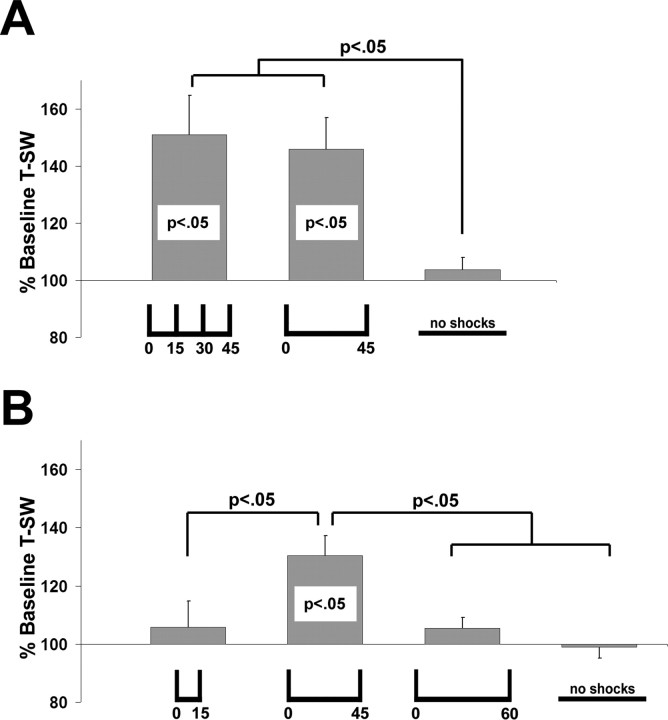
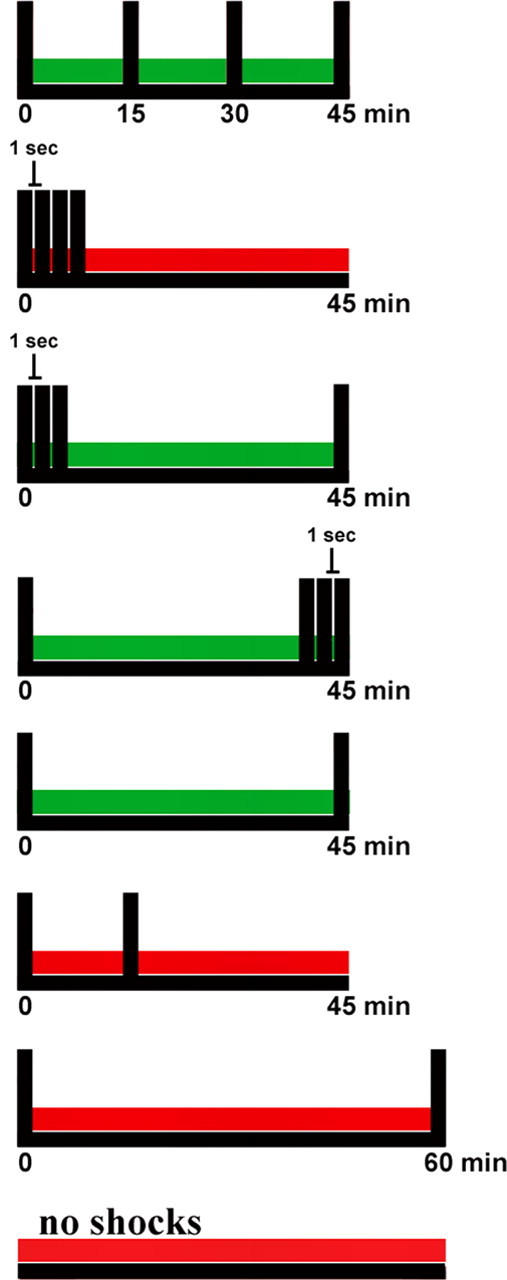
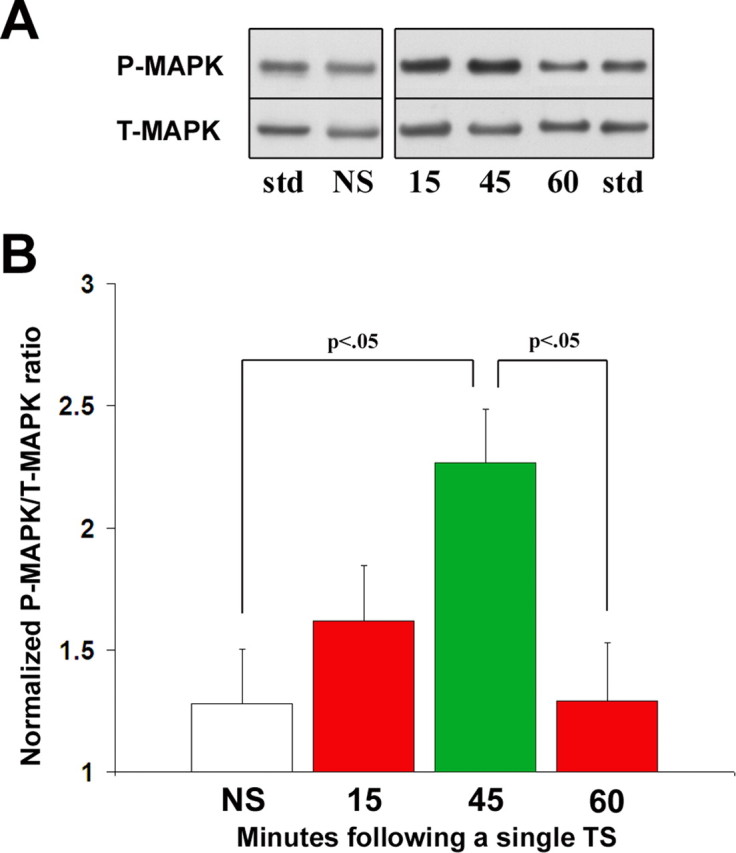
Although it is commonly appreciated that spaced training is superior to massed training in memory formation, the molecular mechanisms underlying this feature of memory are largely unknown. We previously described the selective benefit of multiple spaced (vs massed) training trials in the induction of long-term memory (LTM) for sensitization in Aplysia californica. We now report that LTM can be induced with only two spaced training trials [tail shocks (TSs)] when the second TS is administered 45 min after the first. In contrast, spacing intervals of 15 and 60 min are ineffective. This surprisingly narrow permissive training window for two-trial LTM is accompanied by an equally narrow window of transient mitogen-activated protein kinase (MAPK) activation, a necessary signaling molecule for LTM induction, at 45 min after a single TS. Thus, the transient recruitment of MAPK following a single TS may provide a narrow molecular window for two-trial LTM formation.
Figures
References
-
- Ajay SM, Bhalla US. A role for ERKII in synaptic pattern selectivity on the time-scale of minutes. Eur J Neurosci. 2004;20:2671–2680. - PubMed
-
- Brembs B, Lorenzetti FD, Reyes FD, Baxter DA, Byrne JH. Operant reward learning in Aplysia: neuronal correlates and mechanisms. Science. 2002;296:1706–1709. - PubMed
-
- Casadio A, Martin KC, Giustetto M, Zhu H, Chen M, Bartsch D, Bailey CH, Kandel ER. A transient, neuron-wide form of CREB-mediated long-term facilitation can be stabilized at specific synapses by local protein synthesis. Cell. 1999;99:221–237. - PubMed
-
- Cepeda NJ, Pashler H, Vul E, Wixted JT, Rohrer D. Distributed practice in verbal recall tasks: a review and quantitative synthesis. Psychol Bull. 2006;132:354–380. - PubMed
-
- Donovan JJ, Radosevich DJ. A meta-analytic review of the distribution of practice effect: now you see it, now you don't. J Applied Psychol. 1999;84:795–805.
Publication types
MeSH terms
Substances
Grants and funding
LinkOut - more resources
Full Text Sources
Medical
