


TRAIL-R deficiency in mice enhances lymph node metastasis without affecting primary tumor development
- PMID: 18079967
- PMCID: PMC2129237
- DOI: 10.1172/JCI33061
TRAIL-R deficiency in mice enhances lymph node metastasis without affecting primary tumor development
Abstract
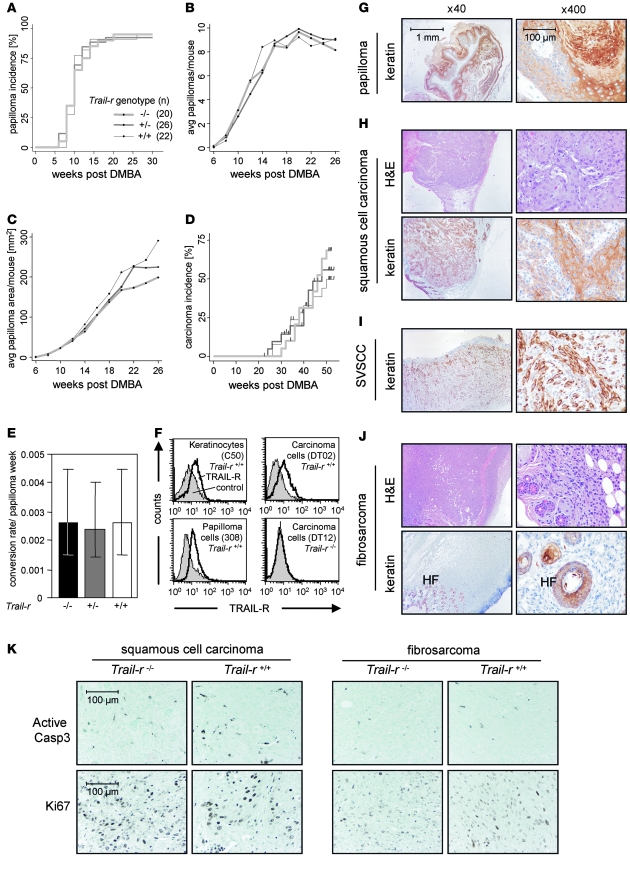
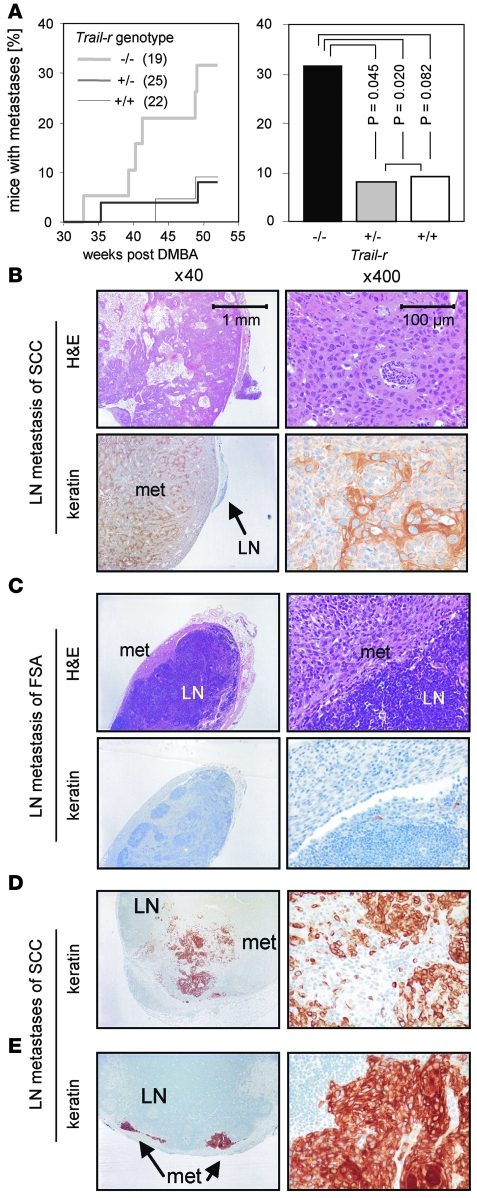
TRAIL is a promising anticancer agent due to its ability to selectively induce apoptosis in established tumor cell lines but not nontransformed cells. Herein, we demonstrate a role for the apoptosis-inducing TRAIL receptor (TRAIL-R) as a metastasis suppressor. Although mouse models employing tumor transplantation have shown that TRAIL can reduce tumor growth, autochthonous tumor models have generated conflicting results with respect to the physiological role of the TRAIL system during tumorigenesis. We used a multistage model of squamous cell carcinoma to examine the role of TRAIL-R throughout all steps of tumor development. DMBA/TPA-treated TRAIL-R-deficient mice showed neither an increase in number or growth rate of benign papillomas nor an increase in the rate of progression to squamous cell carcinoma. However, metastasis to lymph nodes was significantly enhanced, indicating a role for TRAIL-R specifically in the suppression of metastasis. We also found that adherent TRAIL-R-expressing skin carcinoma cells were TRAIL resistant in vitro but were sensitized to TRAIL upon detachment by inactivation of the ERK signaling pathway. As detachment from the primary tumor is an obligatory step in metastasis, this provides a possible mechanism by which TRAIL-R could inhibit metastasis. Hence, treatment of cancer patients with agonists of the apoptosis-inducing receptors for TRAIL may prove useful in reducing the incidence of metastasis.
Figures



Comment in
-
TRAIL-R deficiency in mice promotes susceptibility to chronic inflammation and tumorigenesis.J Clin Invest. 2008 Jan;118(1):111-23. doi: 10.1172/JCI29900. J Clin Invest. 2008. PMID: 18079962 Free PMC article.
References
-
- Falschlehner C., Emmerich C.H., Gerlach B., Walczak H. TRAIL signalling: Decisions between life and death. Int. J. Biochem. Cell Biol. 2007;39:1462–1475. - PubMed
-
- Wu G.S., Burns T.F., Zhan Y., Alnemri E.S., El-Deiry W.S. Molecular cloning and functional analysis of the mouse homologue of the KILLER/DR5 tumor necrosis factor-related apoptosis-inducing ligand (TRAIL) death receptor. Cancer Res. 1999;59:2770–2775. - PubMed
-
- Walczak H., et al. Tumoricidal activity of tumor necrosis factor-related apoptosis- inducing ligand in vivo. Nat. Med. 1999;5:157–163. - PubMed
-
- Koschny R., Walczak H., Ganten T.M. The promise of TRAIL-potential and risks of a novel anticancer therapy. J. Mol. Med. 2007;85:923–935. - PubMed
Publication types
MeSH terms
Substances
Grants and funding
LinkOut - more resources
Full Text Sources
Other Literature Sources
Medical
Molecular Biology Databases
Research Materials
Miscellaneous
