


Neuropharmacology of the endocannabinoid signaling system-molecular mechanisms, biological actions and synaptic plasticity
- PMID: 18084639
- PMCID: PMC2139910
- DOI: 10.2174/157015907780866910
Neuropharmacology of the endocannabinoid signaling system-molecular mechanisms, biological actions and synaptic plasticity
Abstract
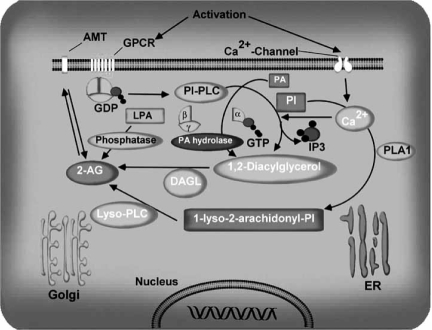
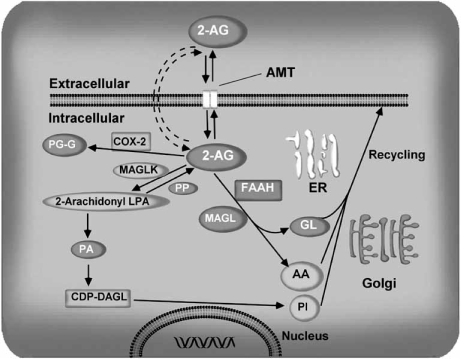
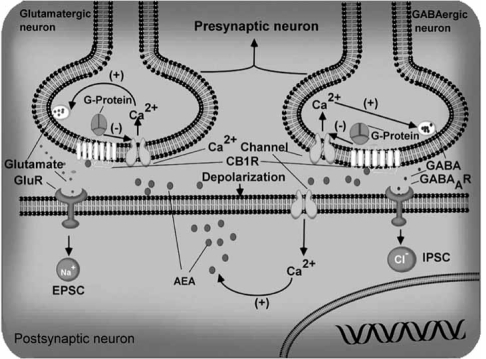
The endocannabinoid signaling system is composed of the cannabinoid receptors; their endogenous ligands, the endocannabinoids; the enzymes that produce and inactivate the endocannabinoids; and the endocannabinoid transporters. The endocannabinoids are a new family of lipidic signal mediators, which includes amides, esters, and ethers of long-chain polyunsaturated fatty acids. Endocannabinoids signal through the same cell surface receptors that are targeted by Delta(9)-tetrahydrocannabinol (Delta(9)THC), the active principles of cannabis sativa preparations like hashish and marijuana. The biosynthetic pathways for the synthesis and release of endocannabinoids are still rather uncertain. Unlike neurotransmitter molecules that are typically held in vesicles before synaptic release, endocannabinoids are synthesized on demand within the plasma membrane. Once released, they travel in a retrograde direction and transiently suppress presynaptic neurotransmitter release through activation of cannabinoid receptors. The endocannabinoid signaling system is being found to be involved in an increasing number of pathological conditions. In the brain, endocannabinoid signaling is mostly inhibitory and suggests a role for cannabinoids as therapeutic agents in central nervous system (CNS) disease. Their ability to modulate synaptic efficacy has a wide range of functional consequences and provides unique therapeutic possibilities. The present review is focused on new information regarding the endocannabinoid signaling system in the brain. First, the structure, anatomical distribution, and signal transduction mechanisms of cannabinoid receptors are described. Second, the synthetic pathways of endocannabinoids are discussed, along with the putative mechanisms of their release, uptake, and degradation. Finally, the role of the endocannabinoid signaling system in the CNS and its potential as a therapeutic target in various CNS disease conditions, including alcoholism, are discussed.
Keywords: Alcoholism; CB1 receptors; CNS; alcohol-drinking behavior; endocannabinoids; reward; synaptic plasticity; therapy.
Figures
References
-
- Abood ME, Ditto KE, Noel MA, Showalter VM, Tao Q. Isolation and expression of a mouse CB1 cannabinoid receptor gene. Comparison of binding properties with those of native CB1 receptors in mouse brain and N18TG2 neuroblastoma cells. Biochem Pharmacol. 1997;53:207–214. - PubMed
-
- Akinshola BE, Chakrabarti A, Onaivi ES. In-vitro and in-vivo action of cannabinoids. Neurochem Res. 1999;24:1233–1240. - PubMed
-
- Akinshola BE, Taylor RE, Ogunseitan AB, Onaivi ES. Anandamide inhibition of recombinant AMPA receptor subunits in Xenopus oocytes is increased by forskolin and 8-bromo-cyclic AMP. Naunyn Schmiedebergs Arch Pharmacol. 1999;360:242–248. - PubMed
-
- Alger BE. Retrograde signaling in the regulation of synaptic transmission: focus on endocannabinoids. Prog Neurobiol. 2002;68:247–286. - PubMed
Grants and funding
LinkOut - more resources
Full Text Sources