


Stimulant alcohol effects prime within session drinking behavior
- PMID: 18084744
- PMCID: PMC3039601
- DOI: 10.1007/s00213-007-1039-x
Stimulant alcohol effects prime within session drinking behavior
Abstract
Rationale: Individual differences in subjective alcohol effects have been shown to differ by risk status (e.g., family history of alcoholism) and to predict future risk for alcohol-related problems. Presumably, individual differences in both stimulant and sedative responses affect the rewarding value of drinking which, in turn, impacts future drinking behavior. Although plausible, this theoretical model is largely untested.
Objectives: The current study attempted to provide experimental evidence for the impact of subjective alcohol responses on within session drinking behavior.
Materials and methods: Using a placebo-controlled between-subjects alcohol administration paradigm, experiences and evaluations of stimulant and sedative alcohol effects (after a target dose of 0.06 g%) were assessed as predictors of ad-libitum consumption in the context of anticipatory stress.
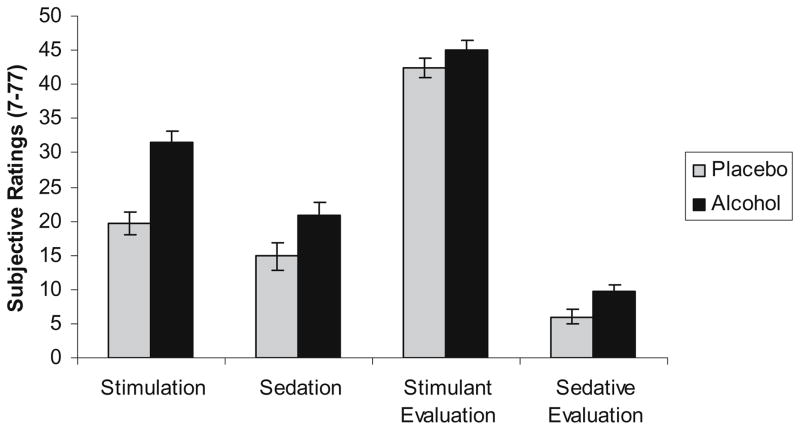
Results: Analyses indicated that an initial dose of alcohol increased experiences of both stimulation and sedation although stimulant effects were evaluated much more positively. In addition, stimulant effects after a priming dose predicted further consumption, whereas sedative effects did not.
Conclusions: At least among moderate to heavy drinking college students, stimulant alcohol effects are more reinforcing and predict within session drinking behavior under social stress. Increased attention should be given to stimulant alcohol effects as a risk factor for excessive consumption in this population. Incorporating information about stimulant alcohol effects in prevention and intervention programs may also be important if additional research supports the current results.
Figures
References
-
- American Psychiatric Association. Diagnostic and statistical manual of mental disorders: DSM-IV-TR. Washington, DC: American Psychiatric Association; 2000.
-
- Babor TF, Stephens RS, Marlatt GA. Verbal report methods in clinical research on alcoholism: response bias and its minimization. J Stud Alc. 1987;48:410–424. - PubMed
-
- Bales RF. Cultural differences in rates of alcoholism. Q J Stud Alcohol. 1946;6:480–499. - PubMed
-
- Cohen J, Cohen P. Applied multiple regression/correlation analysis for the behavioral sciences. 2. Erlbaum Associates; Hillsdale: L: 1983.
-
- Cappell H, Herman CP. Alcohol and tension reduction; a review. Q J Stud Alcohol. 1972;33:33–64. - PubMed
Publication types
MeSH terms
Substances
Grants and funding
LinkOut - more resources
Full Text Sources
Medical
