Neonatal amygdala lesions: co-occurring impact on social/fear-related behavior and cocaine sensitization in adult rats
- PMID: 18085884
- PMCID: PMC2895979
- DOI: 10.1037/0735-7044.121.6.1316
Neonatal amygdala lesions: co-occurring impact on social/fear-related behavior and cocaine sensitization in adult rats
Abstract
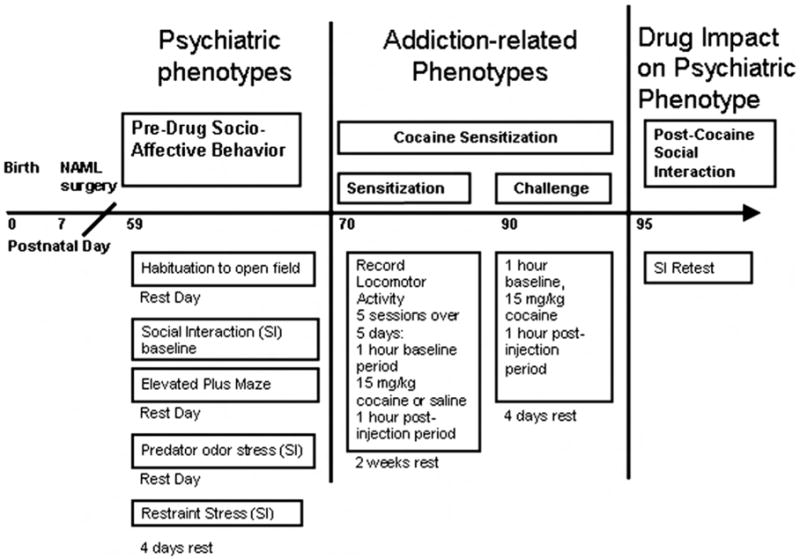
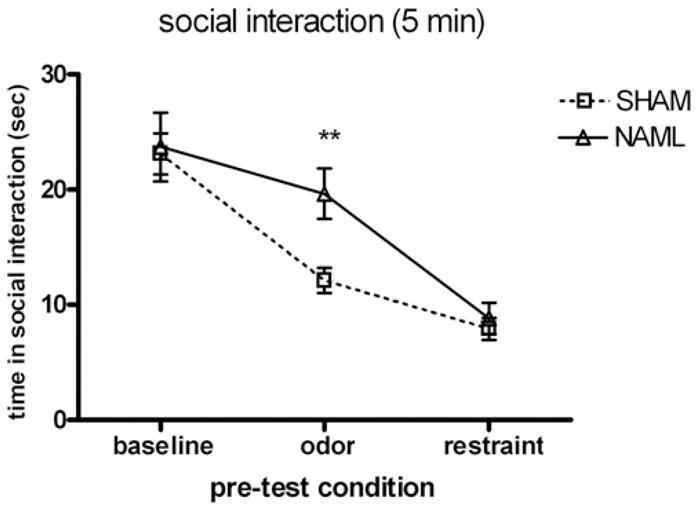
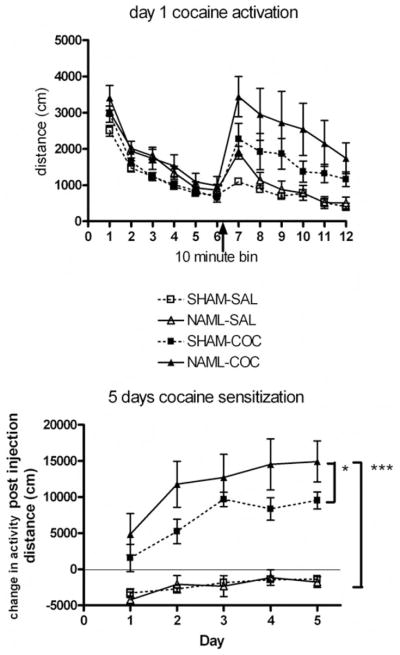
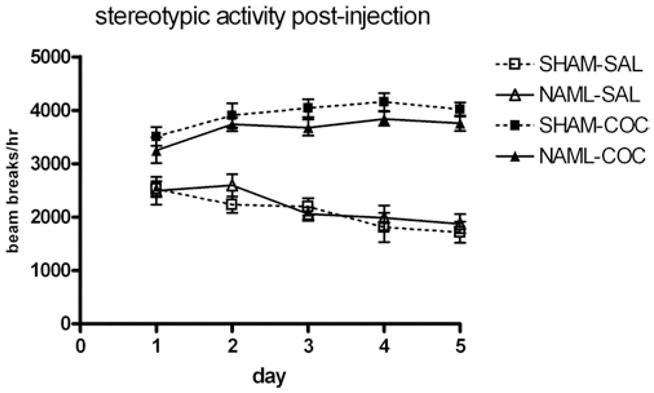
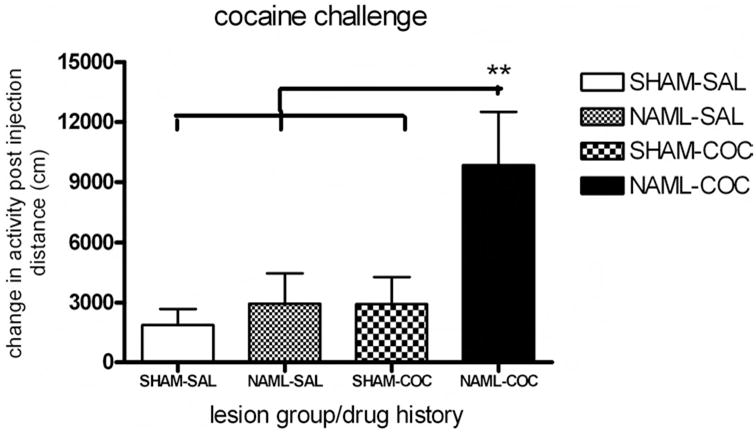
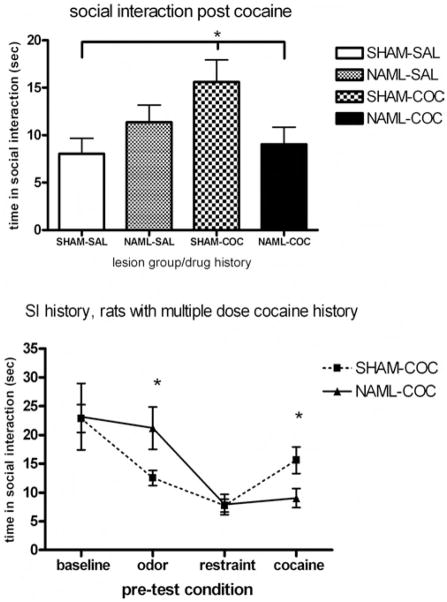
Neurodevelopmental abnormalities of temporal-limbic structures may underlie both adult psychiatric syndromes and increased addiction vulnerability, leading to high frequencies of "dual diagnosis" disorders. Although the amygdala is implicated in various mental disorders and drug addiction, no studies have explored the impact of early developmental damage to the amygdala on phenotypes relating to mental illness and addictions as co-occurring processes. We tested rats with neonatal amygdala lesions (NAML) vs. SHAM-operated controls in a battery of tests--novel field activity, elevated plus maze (EPM), and social interaction (SI) at baseline and after odor and restraint stress--followed by measures of cocaine sensitization (15 mg/kg vs. saline x 5 days + challenge session 2 weeks later) and remeasurement of SI. NAMLs showed increased novelty-related locomotion, less fear responding in the EPM, and resistance to predator-odor- but not to restraint-induced suppression of SI. NAMLs also had elevated cocaine sensitization profiles, and cocaine history differentially affected subsequent SI in NAMLs compared with SHAMs. NAMLs may provide models for understanding a shared neurobiological basis for and complex interactions among psychiatric symptoms, drug exposure history, and addiction vulnerability.
Figures
References
-
- Adolphs R, Tranel D, Damasio AR. The human amygdala in social judgment. Nature. 1998;393:470–474. - PubMed
-
- American Psychological Association. Ethical principles of psychologists and code of conduct. Washington, DC: Author; 2002.
-
- Anand A, Shekhar A. Brain imaging studies in mood and anxiety disorders: Special emphasis on the amygdala. Annals of the New York Academy of Sciences. 2003;985:370–388. - PubMed