


Real-time analysis of alarm pheromone emission by the pea aphid (acyrthosiphon pisum) under predation
- PMID: 18092189
- PMCID: PMC2758399
- DOI: 10.1007/s10886-007-9397-8
Real-time analysis of alarm pheromone emission by the pea aphid (acyrthosiphon pisum) under predation
Abstract
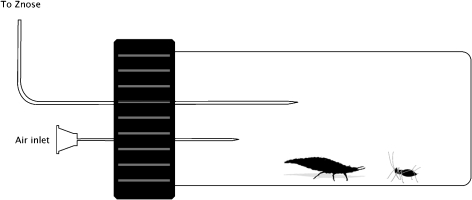
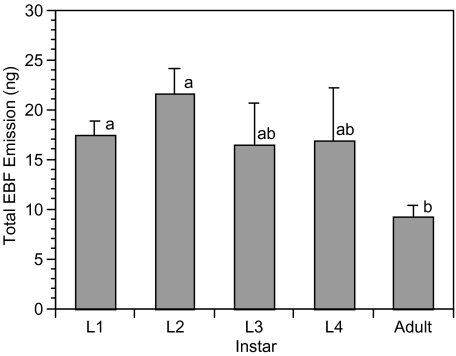
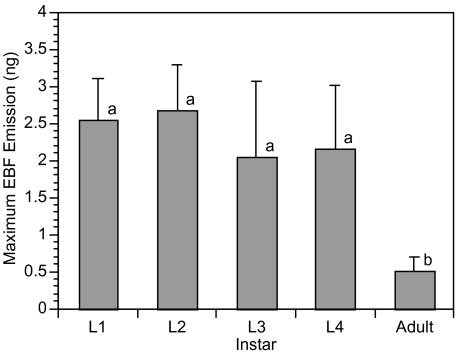
Upon attack by predators or parasitoids, aphids emit volatile chemical alarm signals that warn other aphids of a potential risk of predation. Release rate of the major constituent of the alarm pheromone in pea aphids (Acyrthosiphon pisum), (E)-b-farnesene (EBF), was measured for all nymphal and the adult stage as aphids were attacked individually by lacewing (Chrysoperla carnae) larvae. Volatilization of EBF from aphids under attack was quantified continuously for 60 min at 2-min intervals with a rapid gas chromatography technique (zNose) to monitor headspace emissions. After an initial burst, EBF volatilization declined exponentially, and detectable amounts were still present after 30 min in most cases. Total emission of EBF averaged 16.33 +/- 1.54 ng and ranged from 1.18 to 48.85 ng. Emission was higher in nymphs as compared to adults. No differences between pea aphid life stages were detected for their speed of alarm signal emission in response to lacewing larvae attack. This is the first time that alarm pheromone emission from single aphids has been reported.
Figures


References
-
- Boo, K. S., Chung, I. B., Han K. S., Pickett, J. A., and Wadhams, L. J. 1998. Response of the lacewing Chrysopa cognata to pheromones of its aphid prey. J. Chem. Ecol. 24:631–643. - DOI
-
- Braendle, C., and Weisser, W. W. 2001. Variation in escape behavior of red and green clones of the pea aphid. J. Insect Behav. 14:497–509. - DOI
-
- Dixon, A. F. G. 1998. Aphid Ecology. Chapman & Hall, London.
Publication types
MeSH terms
Substances
LinkOut - more resources
Full Text Sources
