


Exploring social contextual correlates of computer ownership and frequency of use among urban, low-income, public housing adult residents
- PMID: 18093903
- PMCID: PMC2223187
- DOI: 10.2196/jmir.9.4.e35
Exploring social contextual correlates of computer ownership and frequency of use among urban, low-income, public housing adult residents
Abstract
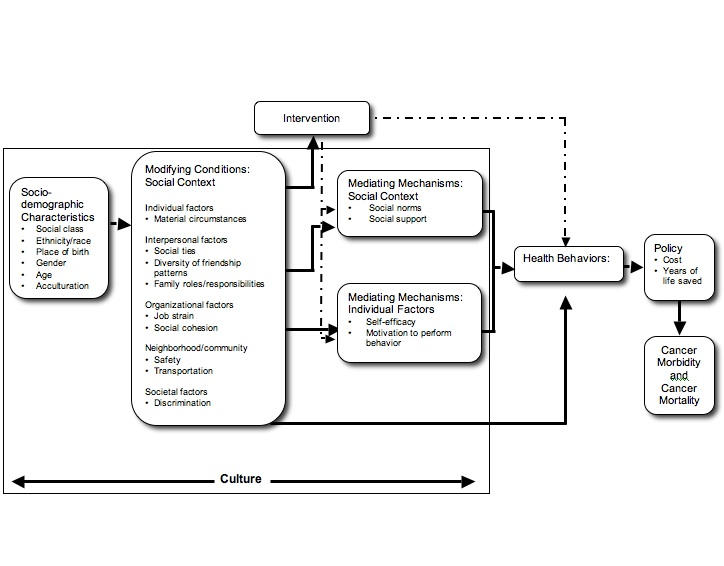
Background: As advances in computer access continue to be made, there is a need to better understand the challenges of increasing access for racial/ethnic minorities, particularly among those with lower incomes. Larger social contextual factors, such as social networks and neighborhood factors, may influence computer ownership and the number of places where individuals have access to computers.
Objectives: We examined the associations of sociodemographic and social contextual factors with computer ownership and frequency of use among 1554 adults living in urban public housing.
Methods: Bivariate associations between dependent variables (computer ownership and regular computer use) and independent variables were used to build multivariable logistic models adjusted for age and site clusters.
Results: Participants (N = total weighted size of 2270) were on average 51.0 (+/- 21.4) years old, primarily African American or Hispanic, and earned less than US $20000 per year. More than half owned a computer, and 42% were regular computer users. Reporting computer ownership was more likely if participants lived above the poverty level (OR = 1.78, 95% CI = 1.39-2.29), completed high school (OR = 2.46, 95% CI = 1.70-3.55), were in financial hardship (OR = 1.38, 95% CI = 1.06-1.81), were employed and supervised others (OR = 1.94, 95% CI = 1.08-3.46), and had multiple role responsibilities (OR = 2.18, 95% CI = 1.31-3.61). Regular computer use was more likely if participants were non-Hispanic (OR = 1.94, 95% CI = 1.30-2.91), lived above the poverty level (OR = 2.84, 95% CI = 1.90-4.24), completed high school (OR = 4.43, 95% CI = 3.04-6.46), were employed and supervised others (OR = 2.41, 95% CI = 1.37-4.22), felt safe in their neighborhood (OR = 1.57, 95% CI = 1.08-2.30), and had greater social network ties (OR = 3.09, 95% CI = 1.26-7.59).
Conclusions: Disparities in computer ownership and use are narrowing, even among those with very low incomes; however, identifying factors that contribute to disparities in access for these groups will be necessary to ensure the efficacy of future technology-based interventions. A unique finding of our study is that it may be equally as important to consider specific social contextual factors when trying to increase access and use among low-income minorities, such as social network ties, household responsibilities, and neighborhood safety.
Conflict of interest statement
None declared.
References
-
- Institute of Medicine, authors. Speaking of Health: Assessing Health Communication Strategies for Diverse Populations. Washington, DC: National Academy Press; 2002. - PubMed
-
- Institute of Medicine, authors. Health and Behavior: The Interplay of Biological, Behavioral, and Societal Influences. Washington, DC: National Academy Press; 2001. - PubMed
-
- Viswanath V. Public communications and its role in reducing and eliminating health disparities. In: Thomson GE, Mitchell F, Williams MB, editors. Examining the Health Disparities Research Plan of the National Institutes of Health. Washington, DC: National Academy Press; 2006.
-
- Fox S, Rainie L. Online health care revolution: how the Web helps Americans take better care of themselves. Washington, DC: Pew Internet & American Life Project; 2000. [2007 Nov 18]. http://www.pewinternet.org/pdfs/PIP_Health_Report.pdf.
-
- Hesse Bradford W, Nelson David E, Kreps Gary L, Croyle Robert T, Arora Neeraj K, Rimer Barbara K, Viswanath Kasisomayajula. Trust and sources of health information: the impact of the Internet and its implications for health care providers: findings from the first Health Information National Trends Survey. Arch Intern Med. 2005;165(22):2618–24. doi: 10.1001/archinte.165.22.2618. http://archinte.ama-assn.org/cgi/pmidlookup?view=long&pmid=16344419165/22/2618 - DOI - PubMed
Publication types
MeSH terms
Grants and funding
LinkOut - more resources
Full Text Sources
Research Materials
