


Launching the T-cell-lineage developmental programme
- PMID: 18097446
- PMCID: PMC3131407
- DOI: 10.1038/nri2232
Launching the T-cell-lineage developmental programme
Abstract
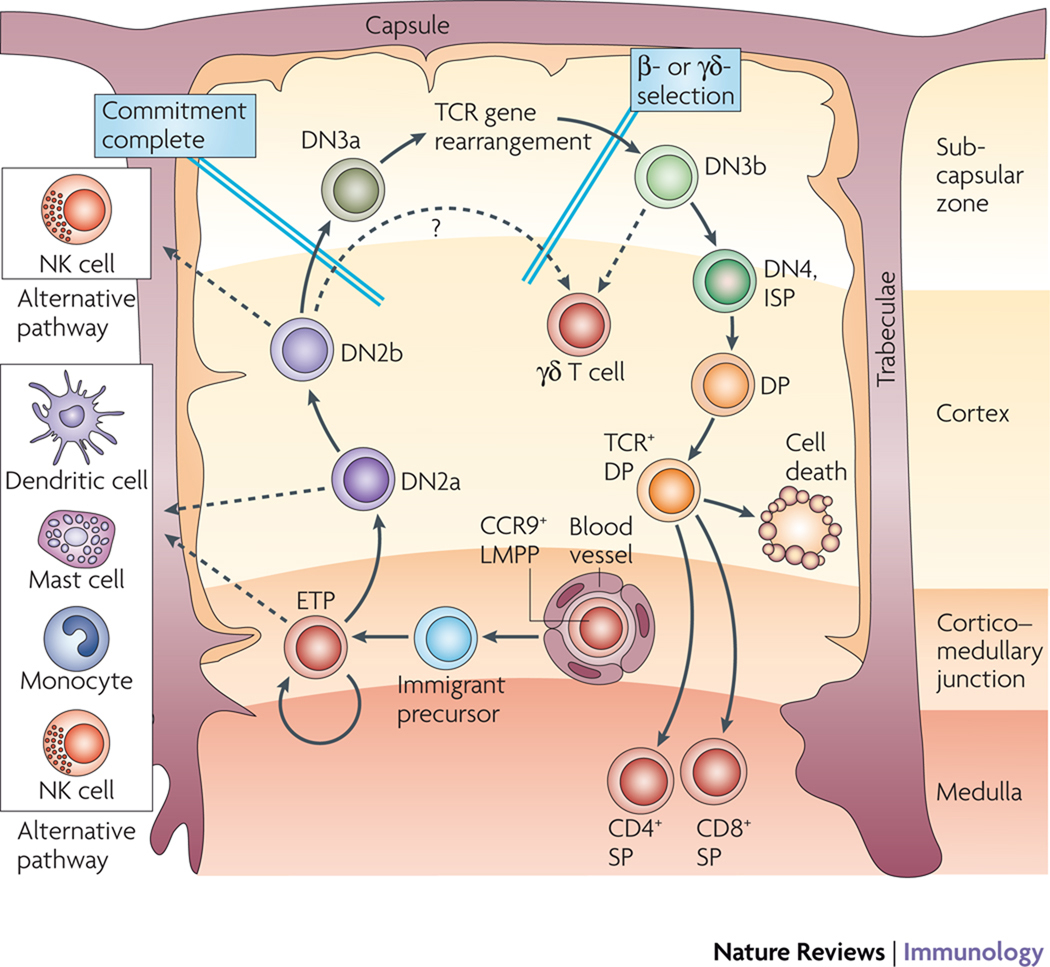
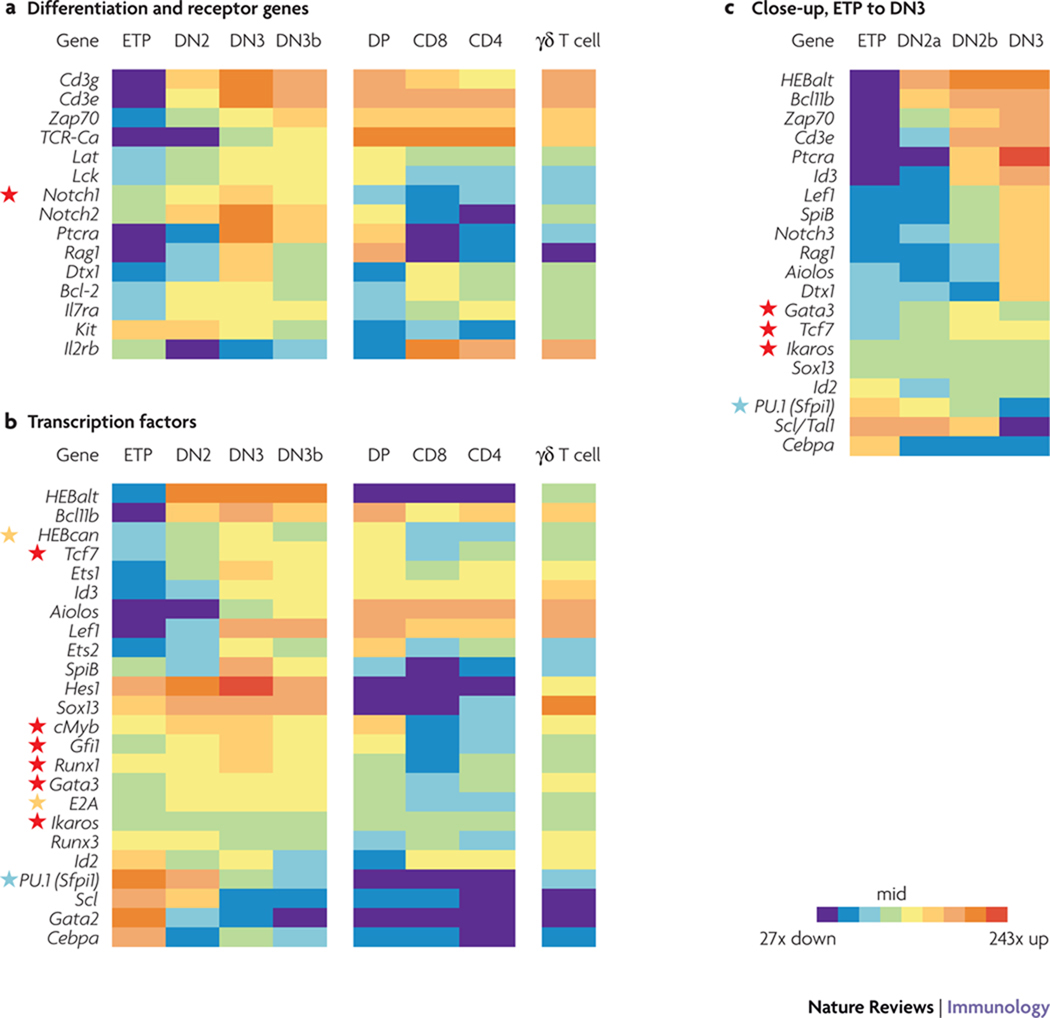
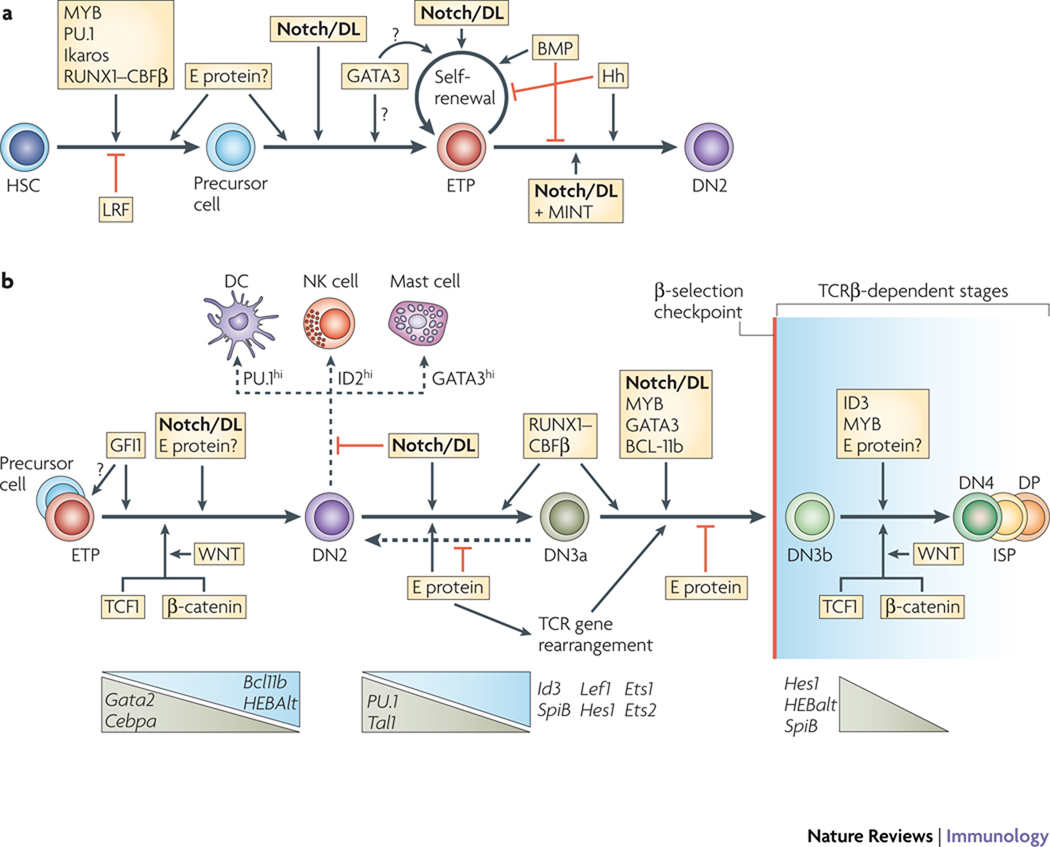
Multipotent blood progenitor cells enter the thymus and begin a protracted differentiation process in which they gradually acquire T-cell characteristics while shedding their legacy of developmental plasticity. Notch signalling and basic helix-loop-helix E-protein transcription factors collaborate repeatedly to trigger and sustain this process throughout the period leading up to T-cell lineage commitment. Nevertheless, the process is discontinuous with separately regulated steps that demand roles for additional collaborating factors. This Review discusses new evidence on the coordination of specification and commitment in the early T-cell pathway; effects of microenvironmental signals; the inheritance of stem-cell regulatory factors; and the ensemble of transcription factors that modulate the effects of Notch and E proteins, to distinguish individual stages and to polarize T-cell-lineage fate determination.
Figures
References
-
- Hayday AC, Pennington DJ. Key factors in the organized chaos of early T cell development. Nature Immunol. 2007;8:137–144. - PubMed
-
- Anderson MK. At the crossroads: diverse roles of early thymocyte transcriptional regulators. Immunol. Rev. 2006;209:191–211. - PubMed
-
- Petrie HT. Cell migration and the control of post-natal T-cell lymphopoiesis in the thymus. Nature Rev. Immunol. 2003;3:859–866. - PubMed
-
- Rothenberg EV. Stepwise specification of lymphocyte developmental lineages. Curr. Opin. Genet. Dev. 2000;10:370–379. - PubMed
-
- Shortman K, et al. The linkage between T-cell and dendritic cell development in the mouse thymus. Immunol. Rev. 1998;165:39–46. - PubMed
Publication types
MeSH terms
Grants and funding
LinkOut - more resources
Full Text Sources
Other Literature Sources
Medical
