Mechanistic analysis of electroporation-induced cellular uptake of macromolecules
- PMID: 18156311
- PMCID: PMC2782745
- DOI: 10.3181/0704-RM-113
Mechanistic analysis of electroporation-induced cellular uptake of macromolecules
Abstract
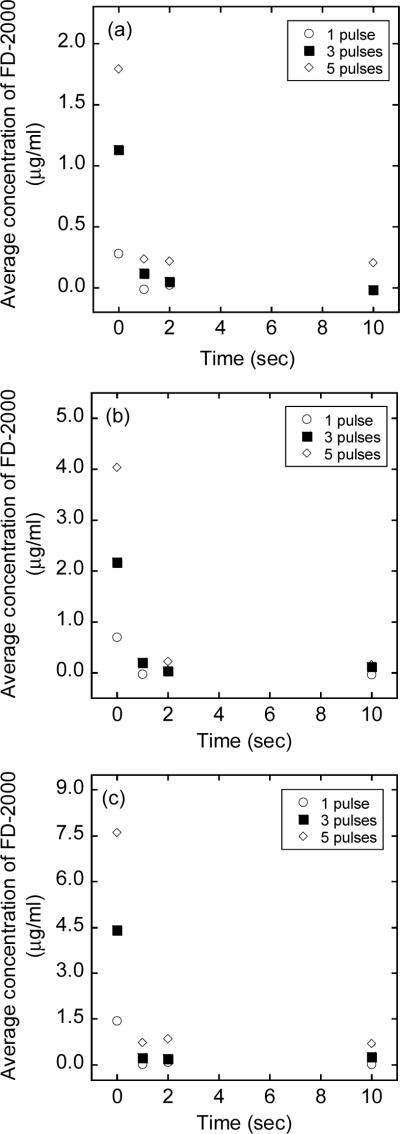
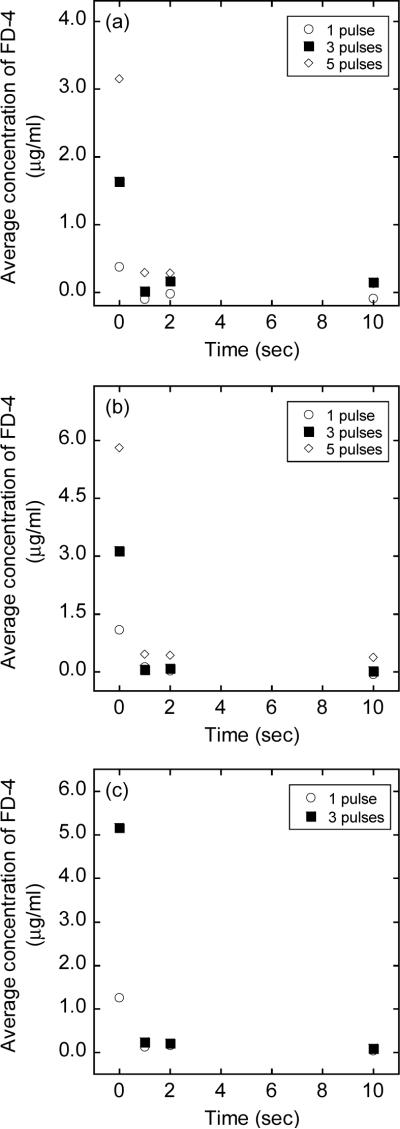
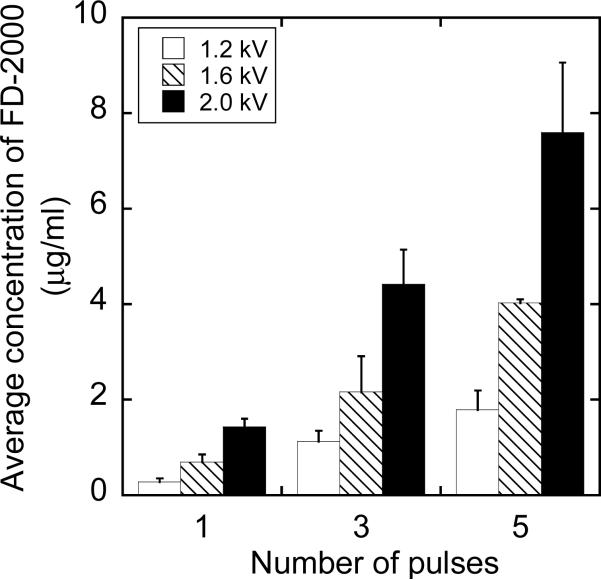
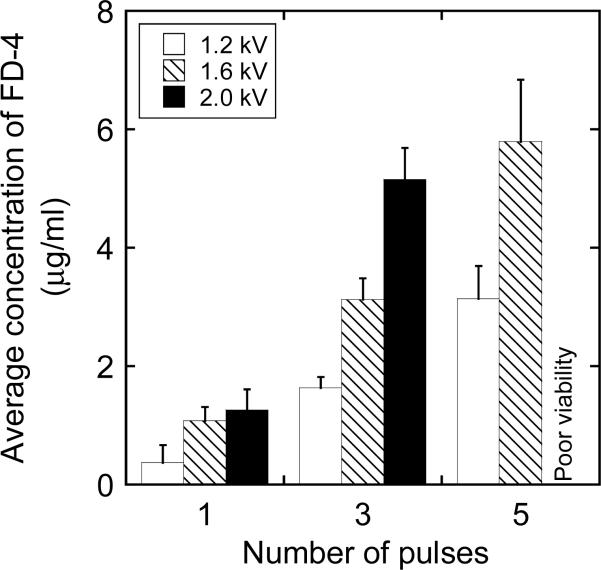
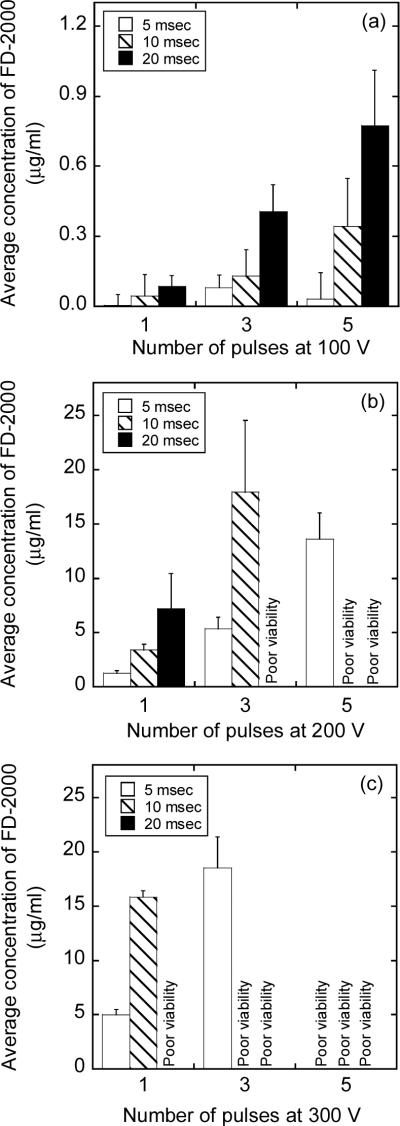
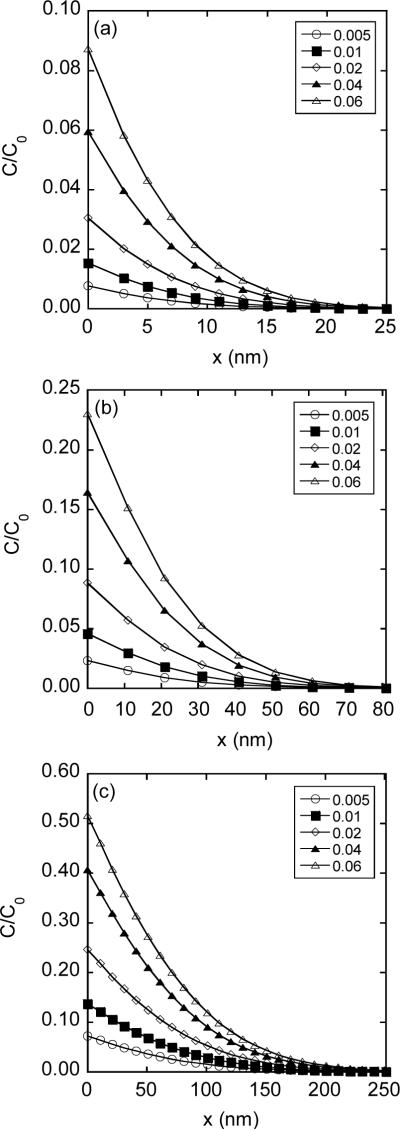
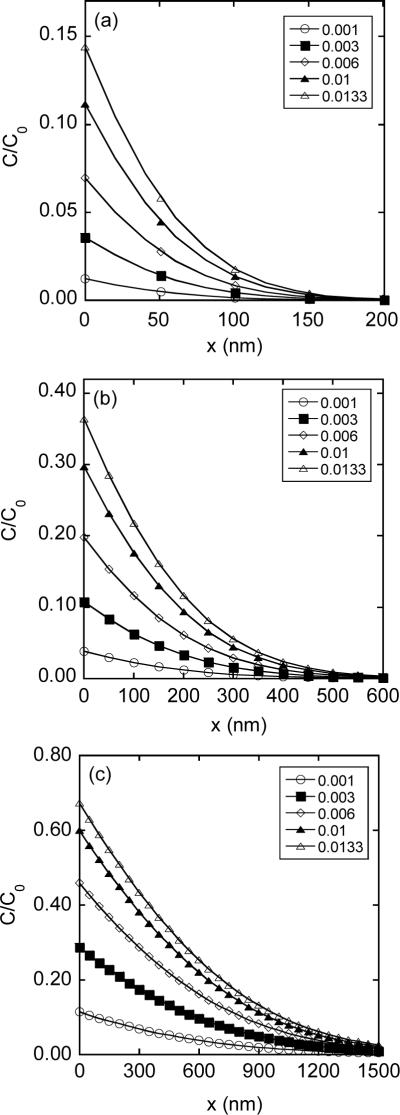
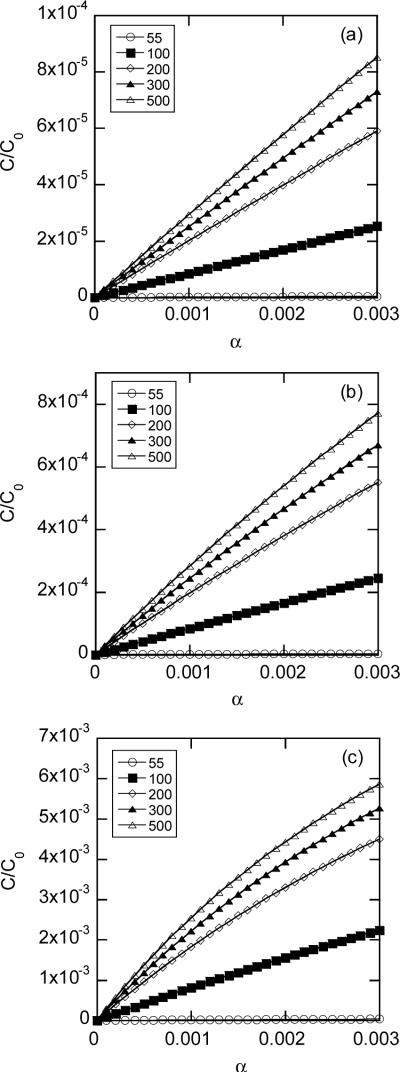
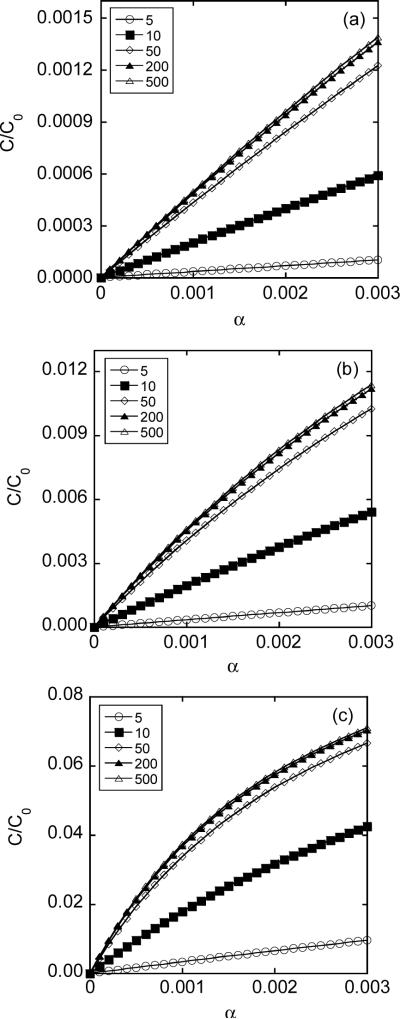
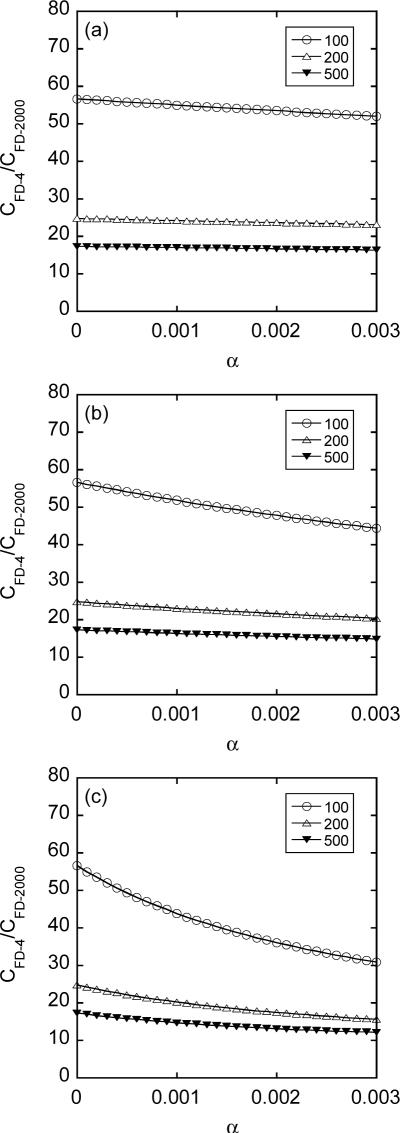
Pulsed electric field has been widely used as a nonviral gene delivery platform. The delivery efficiency can be improved through quantitative analysis of pore dynamics and intracellular transport of plasmid DNA. To this end, we investigated mechanisms of cellular uptake of macromolecules during electroporation. In the study, fluorescein isothiocyanate-labeled dextran (FD) with molecular weight of 4,000 (FD-4) or 2,000,000 (FD-2000) was added into suspensions of a murine mammary carcinoma cell (4T1) either before or at different time points (ie, 1, 2, or 10 sec) after the application of different pulsed electric fields (in high-voltage mode: 1.2-2.0 kV in amplitude, 99 microsec in duration, and 1-5 pulses; in low-voltage mode: 100-300 V in amplitude, 5-20 msec in duration, and 1-5 pulses). The intracellular concentrations of FD were quantified using a confocal microscopy technique. To understand transport mechanisms, a mathematical model was developed for numerical simulation of cellular uptake. We observed that the maximum intracellular concentration of FD-2000 was less than 3% of that in the pulsing medium. The intracellular concentrations increased linearly with pulse number and amplitude. In addition, the intracellular concentration of FD-2000 was approximately 40% lower than that of FD-4 under identical pulsing conditions. The numerical simulations predicted that the pores larger than FD-4 lasted <10 msec after the application of pulsed fields if the simulated concentrations were on the same order of magnitude as the experimental data. In addition, the simulation results indicated that diffusion was negligible for cellular uptake of FD molecules. Taken together, the data suggested that large pores induced in the membrane by pulsed electric fields disappeared rapidly after pulse application and convection was likely to be the dominant mode of transport for cellular uptake of uncharged macromolecules.
Figures
References
-
- Verma IM, Somia N. Gene therapy -- promises, problems and prospects. Nature. 1997;389:239–242. - PubMed
-
- Kay MA, Glorioso JC, Naldini L. Viral vectors for gene therapy: the art of turning infectious agents into vehicles of therapeutics. Nat Med. 2001;7:33–40. - PubMed
-
- Wang Y, Yuan F. Delivery of viral vectors to tumor cells: extracellular transport, systemic distribution, and strategies for improvement. Ann Biomed Eng. 2006;34:114–127. - PubMed
-
- Zaharoff DA, Barr RC, Li CY, Yuan F. Electromobility of plasmid DNA in tumor tissues during electric field-mediated gene delivery. Gene Ther. 2002;9:1286–1290. - PubMed
-
- Zaharoff DA, Yuan F. Effects of pulse strength and pulse duration on in vitro DNA electromobility. Bioelectrochemistry. 2004;62:37–45. - PubMed
Publication types
MeSH terms
Substances
Grants and funding
LinkOut - more resources
Full Text Sources
Other Literature Sources