


The laboratory diagnosis of syphilis
- PMID: 18159528
- PMCID: PMC2095002
- DOI: 10.1155/2005/597580
The laboratory diagnosis of syphilis
Abstract
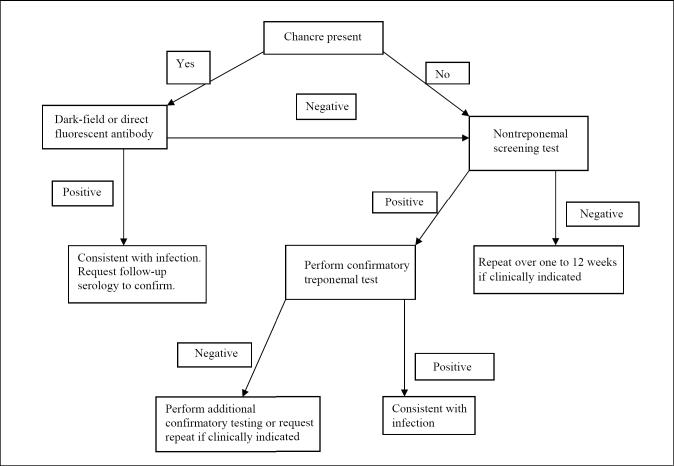
Syphilis has several clinical manifestations, making laboratory testing a very important aspect of diagnosis. In North America, many unsuspected cases are discovered by laboratory testing. The etiological agent, Treponema pallidum, cannot be cultured, and there is no single optimal alternative test. Serological testing is the most frequently used approach in the laboratory diagnosis of syphilis. The present paper discusses the various serological and alternative tests currently available along with their limitations, and relates their results to the likely corresponding clinical stage of the disease. The need to use multiple tests is discussed, and the importance of quality control is noted. The complexity of syphilis serology means that the services of reference laboratories and clinical experts are often needed.
Keywords: Canada; Laboratory diagnosis; Nontreponemal tests; Serology; Syphilis; Treponema pallidum; Treponemal tests.
Figures
References
-
- Larsen SA, Pope V, Johnson RE, Kennedy EJ Jr. A Manual of Tests for Syphilis. Washington DC: American Public Health Association, 1998.
-
- Norris SJ, Pope V, Johnson RE, Larsen SA. Treponema and other human host-associated spirochetes. In: Murray PR, Baron EJ, Jorgensen JH, Pfaller MA, Yolken RH, eds. Manual of Clinical Microbiology. Washington DC: American Society for Microbiology, 2003:955-971.
LinkOut - more resources
Full Text Sources
Other Literature Sources
