


Cell signaling and nuclear receptors: new opportunities for molecular pharmaceuticals in liver disease
- PMID: 18159925
- PMCID: PMC2387130
- DOI: 10.1021/mp700098c
Cell signaling and nuclear receptors: new opportunities for molecular pharmaceuticals in liver disease
Abstract
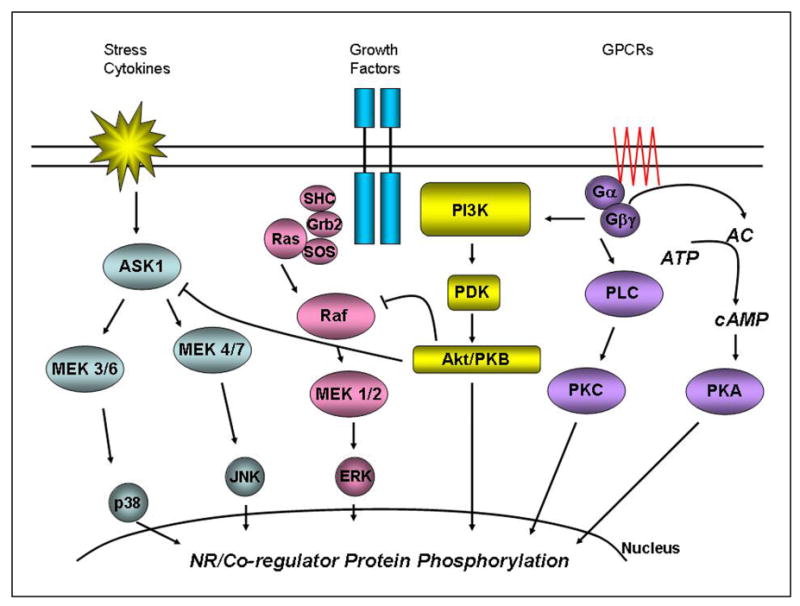
Liver-enriched nuclear receptors (NRs) collectively function as metabolic and toxicological "sensors" that mediate liver-specific gene-activation in mammals. NR-mediated gene-environment interaction regulates important steps in the hepatic uptake, metabolism, and excretion of glucose, fatty acids, lipoproteins, cholesterol, bile acids, and xenobiotics. Hence, liver-enriched NRs play pivotal roles in the overall control of energy homeostasis in mammals. While it is well-recognized that ligand-binding is the primary mechanism behind activation of NRs, recent research reveals that multiple signal transduction pathways modulate NR-function in liver. The interface between specific signal transduction pathways and NRs helps to determine their overall responsiveness to various environmental and physiological stimuli. In general, phosphorylation of hepatic NRs regulates multiple biological parameters including their transactivation capacity, DNA binding, subcellular location, capacity to interact with protein-cofactors, and protein stability. Certain pathological conditions including inflammation, morbid obesity, hyperlipidemia, atherosclerosis, insulin resistance, and type-2 diabetes are known to modulate selected signal transduction pathways in liver. This review will focus upon recent insights regarding the molecular mechanisms that comprise the interface between disease-mediated activation of hepatic signal transduction pathways and liver-enriched NRs. This review will also highlight the exciting opportunities presented by this new knowledge to develop novel molecular and pharmaceutical strategies for combating these increasingly prevalent human diseases.
Figures
References
Publication types
MeSH terms
Substances
Grants and funding
LinkOut - more resources
Full Text Sources
Medical
