


Action and outcome encoding in the primate caudate nucleus
- PMID: 18160658
- PMCID: PMC6673449
- DOI: 10.1523/JNEUROSCI.3060-07.2007
Action and outcome encoding in the primate caudate nucleus
Abstract
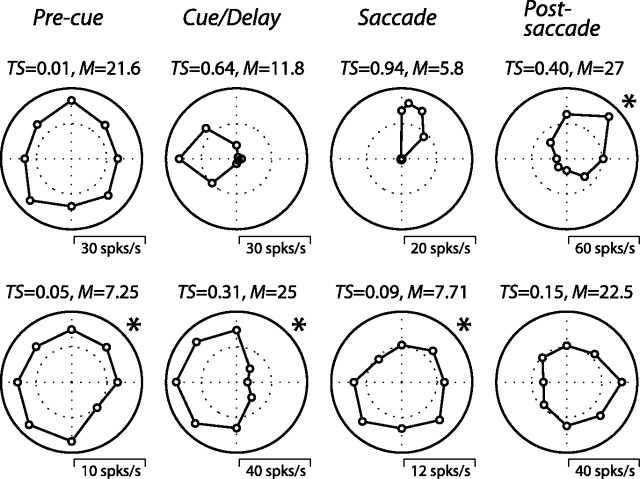
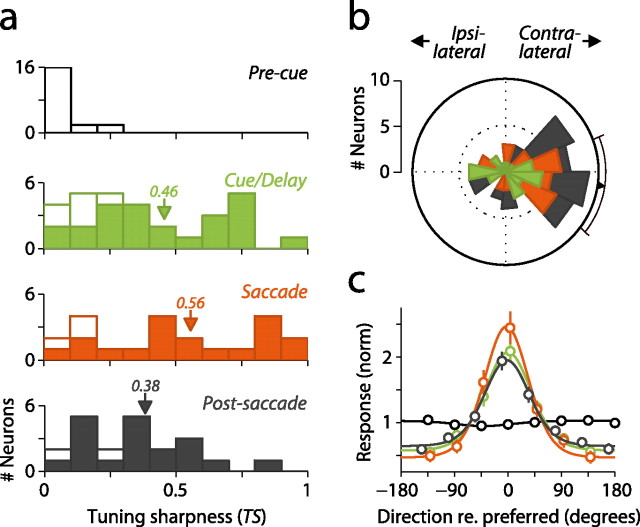
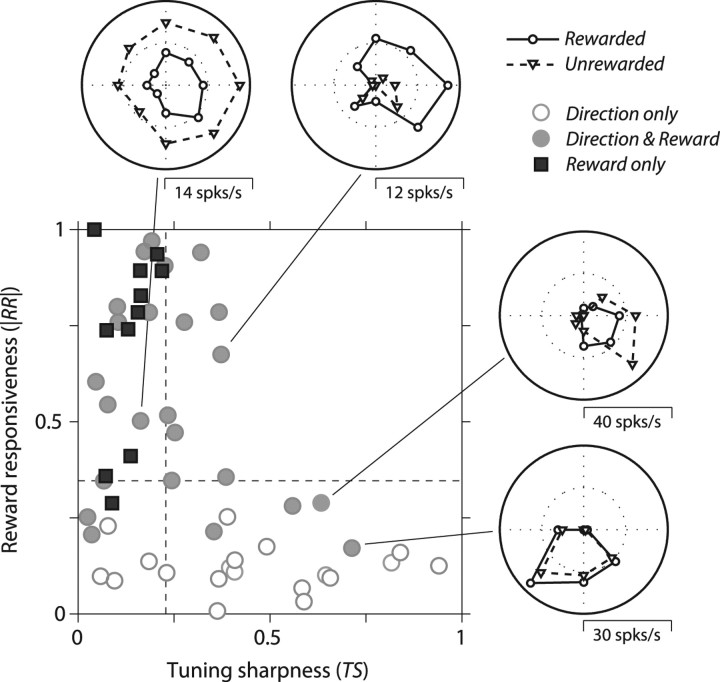
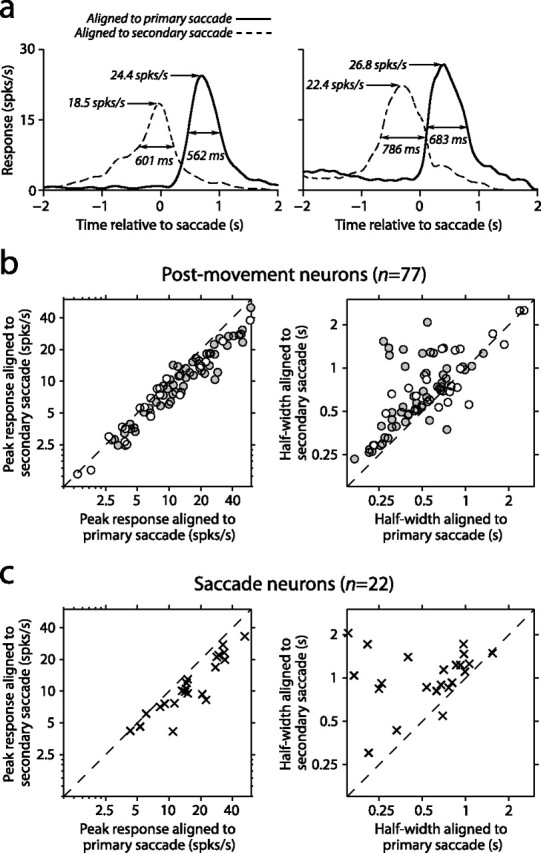
The basal ganglia appear to have a central role in reinforcement learning. Previous experiments, focusing on activity preceding movement execution, support the idea that dorsal striatal neurons bias action selection according to the expected values of actions. However, many phasically active striatal neurons respond at a time too late to initiate or select movements. Given the data suggesting a role for the basal ganglia in reinforcement learning, postmovement activity may therefore reflect evaluative processing important for learning the values of actions. To better understand these postmovement neurons, we determined whether individual striatal neurons encode information about saccade direction, whether a reward had been received, or both. We recorded from phasically active neurons in the caudate nucleus while monkeys performed a probabilistically rewarded delayed saccade task. Many neurons exhibited peak responses after saccade execution (77 of 149) that were often tuned for the direction of the preceding saccade (61 of 77). Of those neurons responding during the reward epoch, one subset showed direction tuning for the immediately preceding saccade (43 of 60), whereas another subset responded differentially on rewarded versus unrewarded trials (35 of 60). We found that there was relatively little overlap of these properties in individual neurons. The encoding of action and outcome was performed by largely separate populations of caudate neurons that were active after movement execution. Thus, striatal neurons active primarily after a movement appear to be segregated into two distinct groups that provide complimentary information about the outcomes of actions.
Figures






Comment in
-
Attaching values to actions: action and outcome encoding in the primate caudate nucleus.J Neurosci. 2008 Apr 30;28(18):4579-80. doi: 10.1523/JNEUROSCI.0858-08.2008. J Neurosci. 2008. PMID: 18448632 Free PMC article. No abstract available.
References
-
- Alexander GE, DeLong MR, Strick PL. Parallel organization of functionally segregated circuits linking basal ganglia and cortex. Annu Rev Neurosci. 1986;9:357–381. - PubMed
-
- Anderson ME, Horak FB. Influence of the globus pallidus on arm movements in monkeys. III. Timing of movement-related information. J Neurophysiol. 1985;54:433–448. - PubMed
-
- Apicella P, Ljungberg T, Scarnati E, Schultz W. Responses to reward in monkey dorsal and ventral striatum. Exp Brain Res. 1991;85:491–500. - PubMed
-
- Apicella P, Scarnati E, Ljungberg T, Schultz W. Neuronal activity in monkey striatum related to the expectation of predictable environmental events. J Neurophysiol. 1992;68:945–960. - PubMed
MeSH terms
LinkOut - more resources
Full Text Sources
