Runt-related transcription factor 2 (RUNX2) and RUNX2-related osteogenic genes are down-regulated throughout osteogenesis in type 1 diabetes mellitus
- PMID: 18162513
- PMCID: PMC2276714
- DOI: 10.1210/en.2007-1408
Runt-related transcription factor 2 (RUNX2) and RUNX2-related osteogenic genes are down-regulated throughout osteogenesis in type 1 diabetes mellitus
Abstract
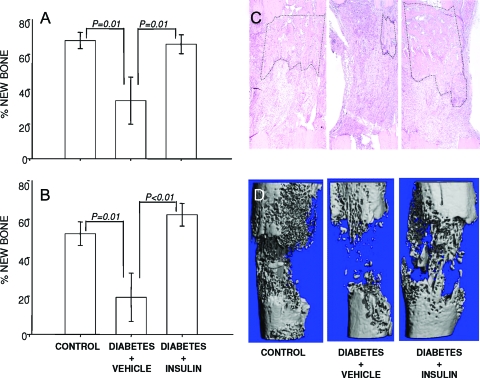
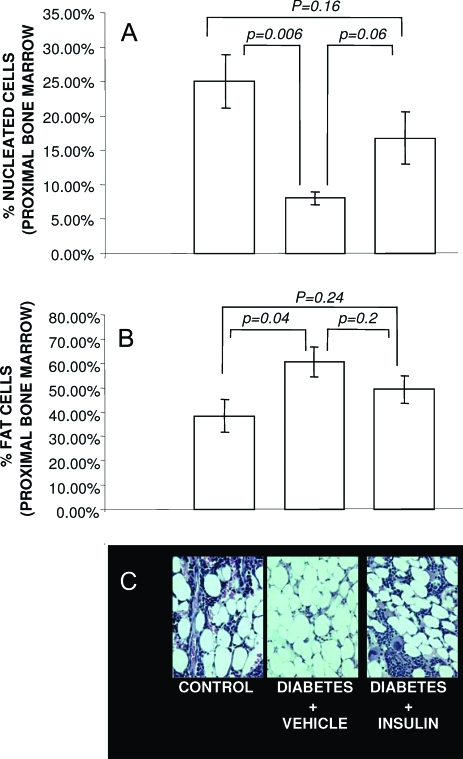
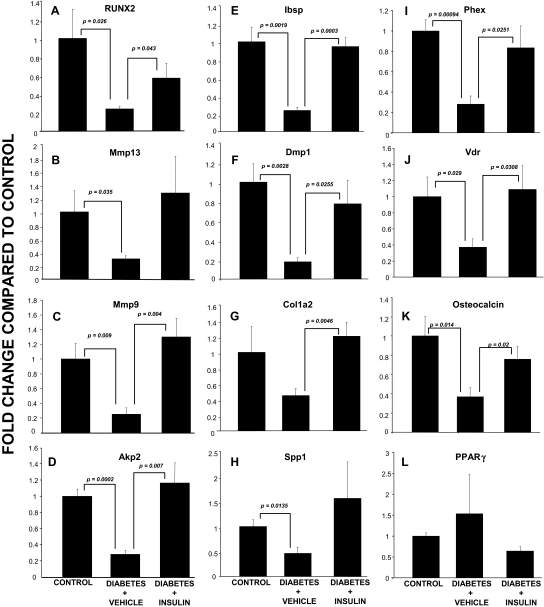
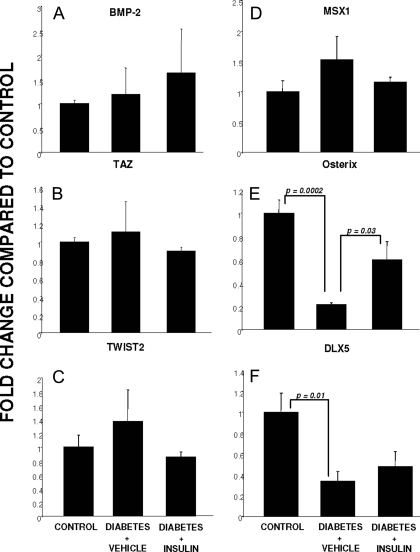
Type 1 diabetes mellitus is associated with a number of disorders of skeletal health, conditions that rely, in part, on dynamic bone formation. A mouse model of distraction osteogenesis was used to study the consequences of streptozotocin-induced diabetes and insulin treatment on bone formation and osteoblastogenesis. In diabetic mice compared with control mice, new bone formation was decreased, and adipogenesis was increased in and around, respectively, the distraction gaps. Although insulin treatment restored bone formation to levels observed in nondiabetic control mice, it failed to significantly decrease adipogenesis. Molecular events altered during de novo bone formation in untreated type 1 diabetes mellitus, yet restored with insulin treatment were examined so as to clarify specific osteogenic genes that may contribute to diabetic bone disease. RNA from distraction gaps was analyzed by gene microarray and quantitative RT-PCR for osteogenic genes of interest. Runt-related transcription factor 2 (RUNX2), and several RUNX2 target genes, including matrix metalloproteinase-9, Akp2, integrin binding sialoprotein, Dmp1, Col1a2, Phex, Vdr, osteocalcin, and osterix, were all significantly down-regulated in the insulin-deficient, hyperglycemic diabetic animals; however, insulin treatment of diabetic animals significantly restored their expression. Expression of bone morphogenic protein-2, transcriptional coactivator with PDZ-binding motif, and TWIST2, all important regulators of RUNX2, were not impacted by the diabetic condition, suggesting that the defect in osteogenesis resides at the level of RUNX2 expression and its activity. Together, these data demonstrate that insulin and/or glycemic status can regulate osteogenesis in vivo, and systemic insulin therapy can, in large part, rescue the diabetic bone phenotype at the tissue and molecular level.
Figures
References
-
- Ahmed ML, Connors MH, Drayer NM, Jones JS, Dunger DB 1998 Pubertal growth in IDDM is determined by HbA1c levels, sex, and bone age. Diabetes Care [Erratum (1998) 21:1382] 21:831–835 - PubMed
-
- Salerno M, Argenziano A, Di Maio S, Gasparini N, Formicola S, De Filippo G, Tenore A 1997 Pubertal growth, sexual maturation, and final height in children with IDDM. Effects of age at onset and metabolic control. Diabetes Care 20:721–724 - PubMed
-
- Hampson G, Evans C, Petitt RJ, Evans WD, Woodhead SJ, Peters JR, Ralston SH 1998 Bone mineral density, collagen type 1 α 1 genotypes and bone turnover in premenopausal women with diabetes mellitus. Diabetologia 41:1314–1320 - PubMed
-
- Heap J, Murray MA, Miller SC, Jalili T, Moyer-Mileur LJ 2004 Alterations in bone characteristics associated with glycemic control in adolescents with type 1 diabetes mellitus. J Pediatr 144:56–62 - PubMed
-
- Kayath MJ, Dib SA, Vieira JG 1994 Prevalence and magnitude of osteopenia associated with insulin-dependent diabetes mellitus. J Diabetes Complications 8:97–104 - PubMed
Publication types
MeSH terms
Substances
Grants and funding
LinkOut - more resources
Full Text Sources
Medical
Miscellaneous