


Being overweight modifies the association between cardiovascular risk factors and microalbuminuria in adolescents
- PMID: 18166555
- PMCID: PMC3722048
- DOI: 10.1542/peds.2007-3594
Being overweight modifies the association between cardiovascular risk factors and microalbuminuria in adolescents
Abstract
Objective: The goal was to determine the association between cardiovascular risk factors and microalbuminuria in a nationally representative sample of adolescents and to determine whether being overweight modifies this association.
Methods: We analyzed cross-sectional data from the National Health and Nutrition Examination Survey (1999-2004) for 2515 adolescents 12 to 19 years of age. Cardiovascular risk factors included abdominal obesity, impaired fasting glucose, diabetes mellitus, insulin resistance, high triglyceride levels, low high-density lipoprotein cholesterol levels, hypertension, smoking, and the metabolic syndrome. Microalbuminuria was defined as a urinary albumin/creatinine ratio of 30 to 299 mg/g in a random morning sample. Overweight was defined as BMI of > or = 95th percentile, according to the Centers for Disease Control and Prevention 2000 growth charts.
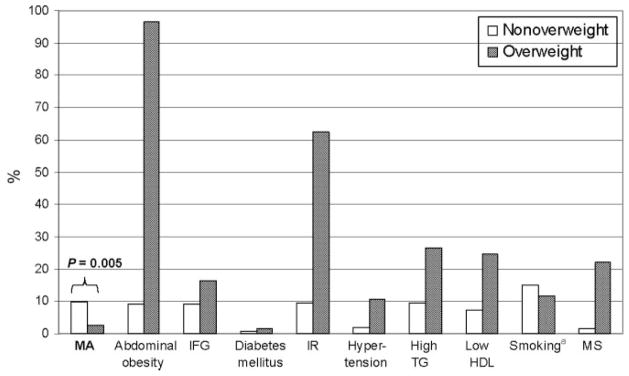
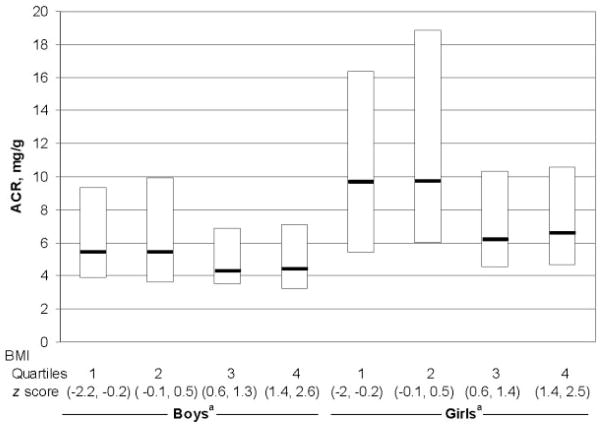
Results: Microalbuminuria was present in 8.9% of adolescents. The prevalence of microalbuminuria was higher among nonoverweight adolescents than among overweight adolescents. The median albumin/creatinine ratio decreased with increasing BMI z scores. The association of microalbuminuria with cardiovascular risk factors differed according to BMI category. Among nonoverweight adolescents, microalbuminuria was not associated with any cardiovascular disease risk factor except for overt diabetes mellitus. Among overweight adolescents, however, microalbuminuria was associated with impaired fasting glucose, insulin resistance, hypertension, and smoking, as well as diabetes mellitus.
Conclusion: For the majority of adolescents, microalbuminuria is not associated with cardiovascular risk factors. Among overweight adolescents, however, microalbuminuria is associated with cardiovascular risk factors. The prognostic importance of microalbuminuria in overweight and nonoverweight adolescents with regard to future cardiovascular and renal disease needs to be defined in prospective studies conducted specifically in children.
Conflict of interest statement
The authors have indicated they have no financial relationships relevant to this article to disclose.
Figures
References
-
- Ogden CL, Carroll MD, Curtin LR, McDowell MA, Tabak CJ, Flegal KM. Prevalence of overweight and obesity in the United States, 1999–2004. JAMA. 2006;295:1549–1555. - PubMed
-
- Ogden CL, Kuczmarski RJ, Flegal KM, et al. Centers for Disease Control and Prevention 2000 growth charts for the United States: improvements to the 1977 National Center for Health Statistics version. Pediatrics. 2002;109:45–60. - PubMed
-
- Caballero AE. Endothelial dysfunction in obesity and insulin resistance: a road to diabetes and heart disease. Obes Res. 2003;11:1278–1289. - PubMed
-
- Ritz E. Albuminuria and vascular damage: the vicious twins. N Engl J Med. 2003;348:2349–2352. - PubMed
Publication types
MeSH terms
Grants and funding
LinkOut - more resources
Full Text Sources
